🍄 Field Safety Rules — Hudson Valley AT
- Confirm 100%, not 95%. Every ID feature must match before you pick — one uncertain feature means leave it.
- Always check the base. Dig up any white or pale mushroom — a volva (cup at the base) means Amanita. Do not eat it.
- Spore print is your double-check. White spore print + ring + volva = deadly Amanita. Rusty brown print on wood = Galerina.
- Never eat puffballs without cutting in half. Pure white all the way through = safe to proceed. Any outline of a mushroom shape = Amanita button. Discard immediately.
- Clusters on wood require extra caution. Galerina marginata grows on wood and can be mixed in with edible honey mushrooms and oyster mushrooms.
- When in doubt, leave it out. There is no mushroom worth dying over.
Edible Mushrooms
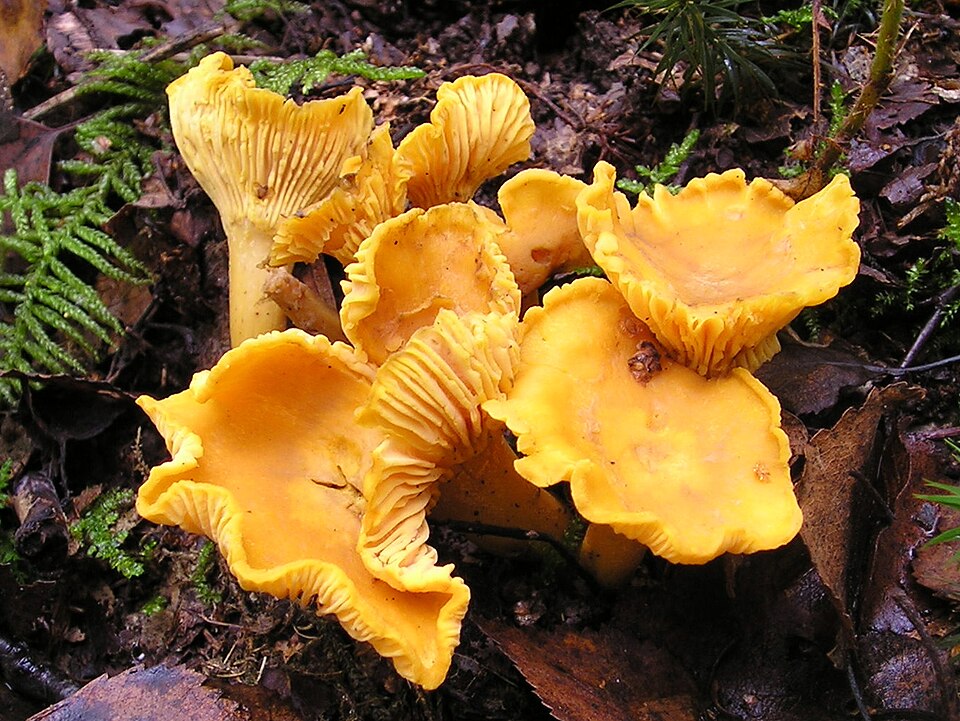
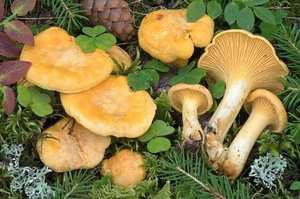
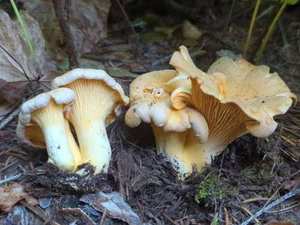
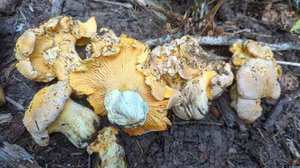
- Cap: Golden-yellow, wavy irregular margins, 3–12 cm wide
- Gills: False gills — forked ridges that run down the stem (not true blade gills)
- Stem: Solid, same color as cap, no ring or volva
- Smell: Fruity, apricot-like aroma — unmistakable
- Flesh: White to pale yellow, does not change color when cut
- Spore print: Pale yellow to cream
Mixed hardwood and conifer forests; AT trail corridors, near oak, beech, and hemlock. Fruits June–August after rain. Found singly or scattered — never in clusters.
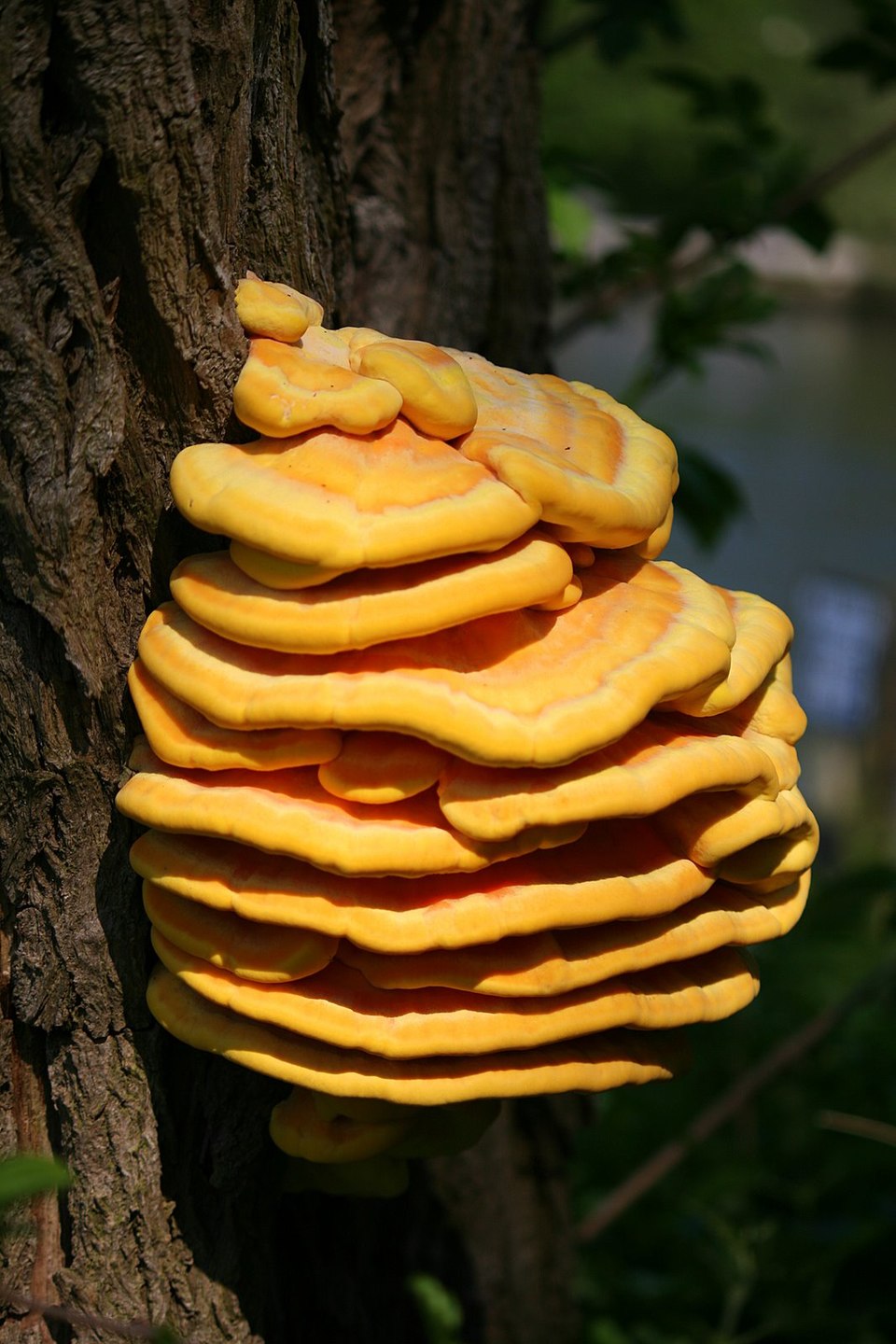
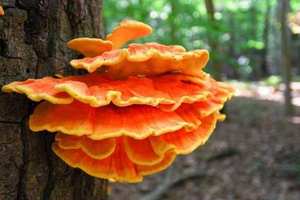
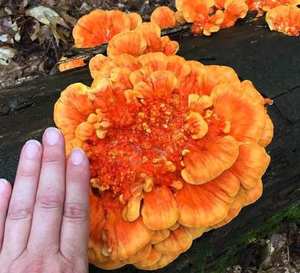
- Appearance: Bright orange and yellow shelf/bracket fungus — vivid, unmistakable
- Cap: Fan-shaped overlapping shelves, suede-like top surface
- Pores: Tiny pale yellow/cream pores on underside — no gills at all
- Flesh: White, firm, chicken-like texture when young; crumbly when old
- No stem, no gills, no ring — unique bracket appearance
On dead or dying hardwoods (oak, cherry, locust) on the AT. Hudson Valley: August–October. Grows in large showy brackets, easy to spot from the trail.
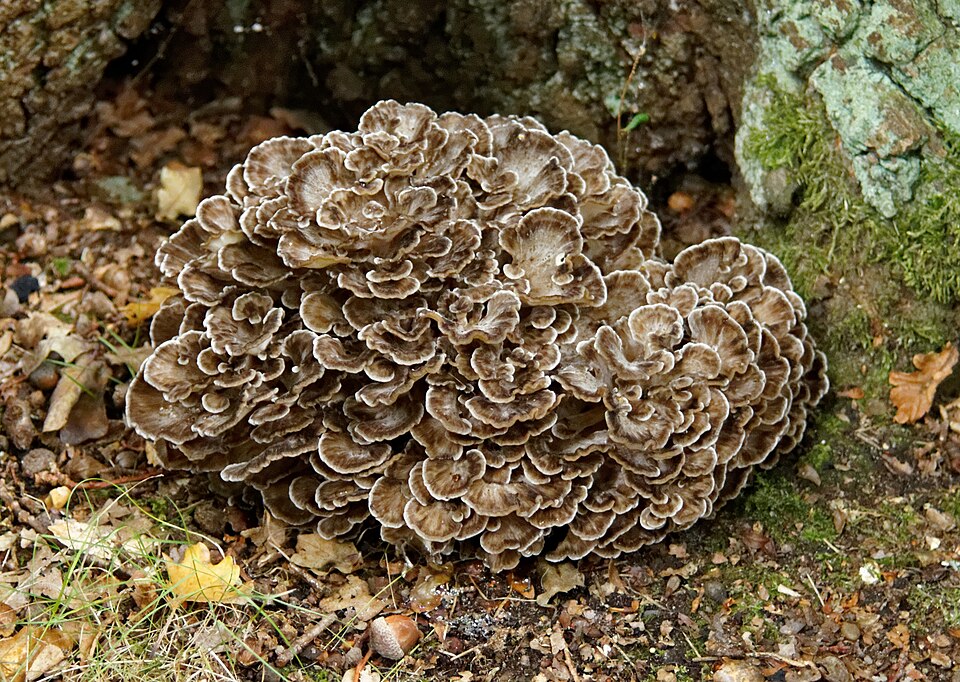
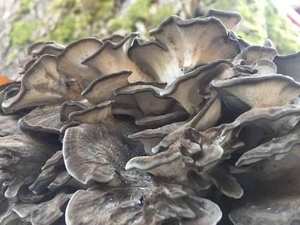
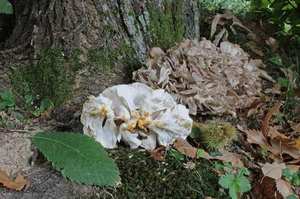
- Appearance: Overlapping gray-brown fan-shaped caps, like a ruffled hen sitting on the ground
- Cap: Multiple small caps (2–8 cm each) fused at base; top gray-brown, edges pale
- Pores: White pores on underside — no gills
- Stem: Branching white stem system fused at a central base
- Can weigh 5–20 lbs; hard to miss when found
- Spore print: White
Base of old-growth oaks on the AT corridor; also at stumps and buried roots. September–November. Returns to same host tree year after year.
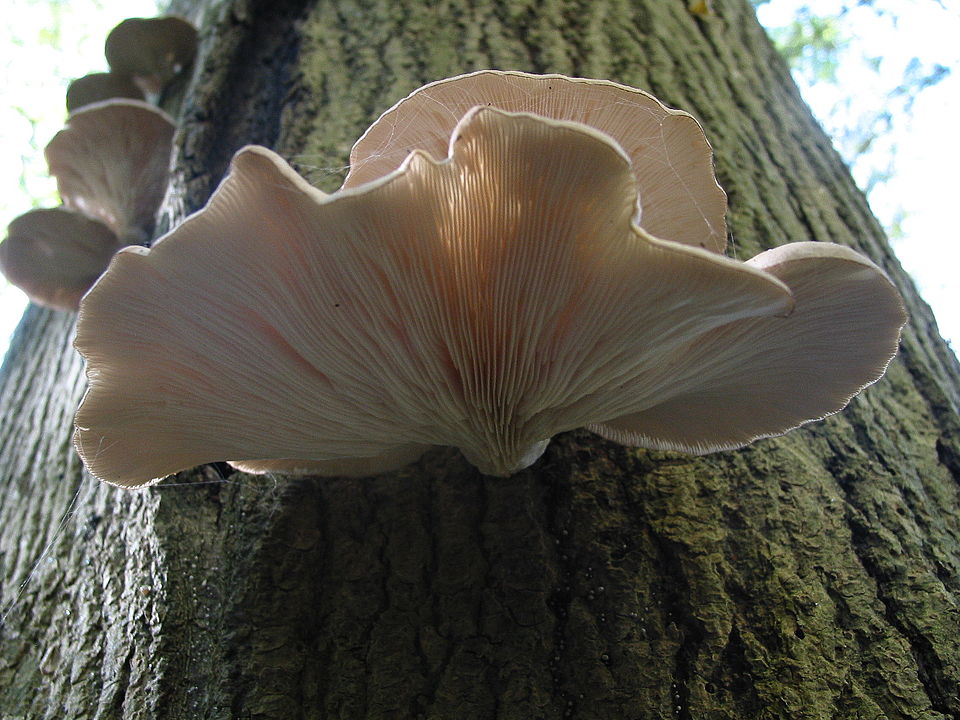
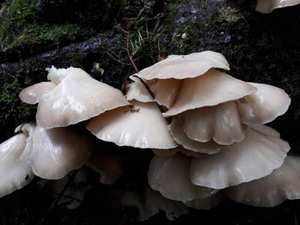
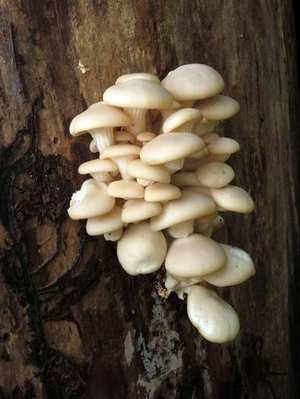
- Cap: Oyster-shaped, white to pale gray-brown, 5–20 cm wide
- Gills: White, running down a very short or off-center stem
- Stem: Short, lateral, white, firm — sometimes absent
- Smell: Mild, pleasant, faint anise in fresh specimens
- Grows in clusters on dead hardwood
- Spore print: White to pale lilac-gray
On dead or dying hardwood — beech, aspen, alder along the AT. Best in cool weather (October–April). Cluster growth on logs or standing dead trees is diagnostic.
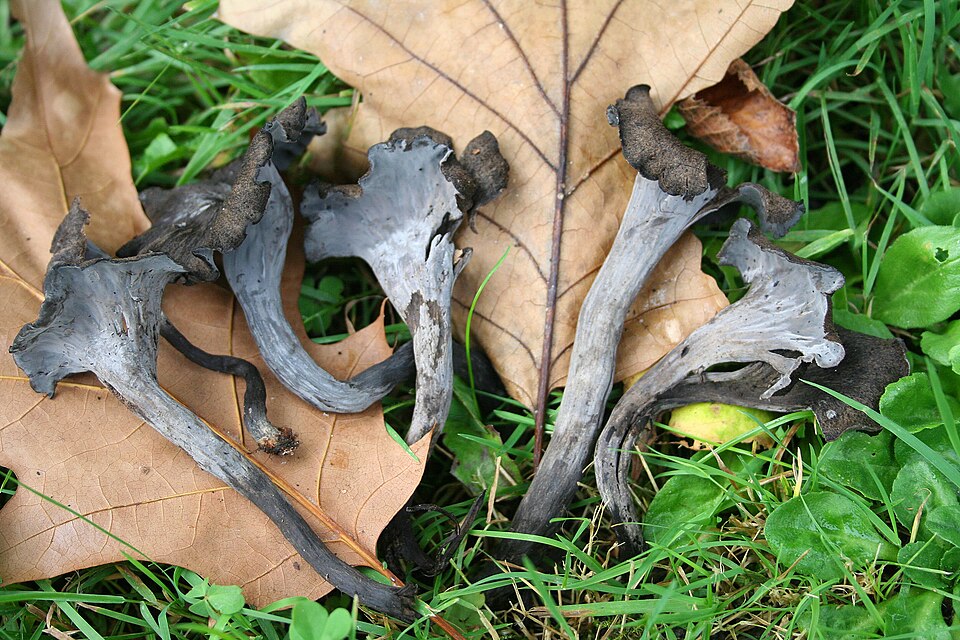
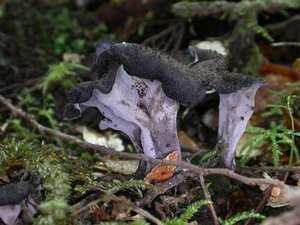
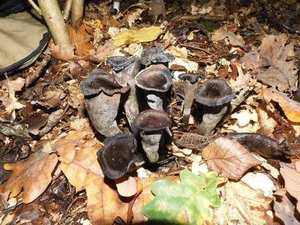
- Shape: Hollow trumpet/vase-shaped; charcoal black to dark gray
- No true gills — outer surface smooth to slightly wrinkled
- Flesh: Thin, fragile, gray to black
- Smell: Distinctly fruity, almost like dried fruit
- No ring, no volva, completely hollow stem
Mixed hardwood under beech and oak on the AT. July–October. Often camouflaged in leaf litter — look carefully. Grows in scattered groups.
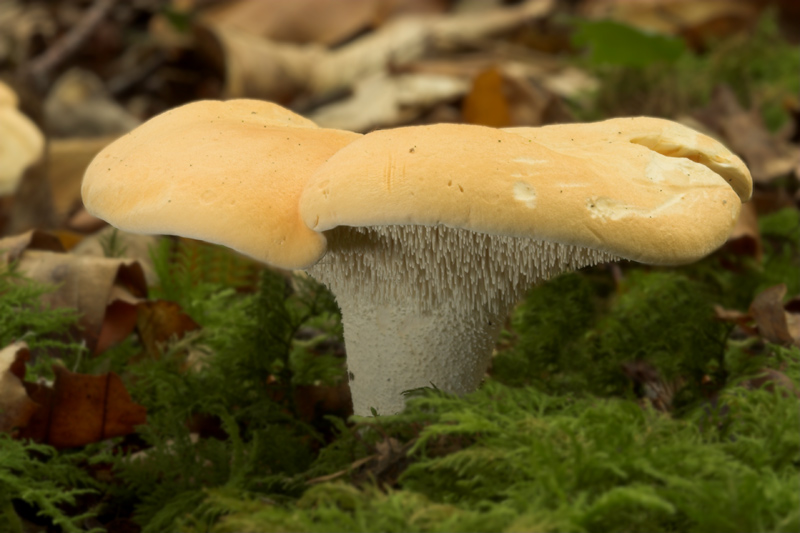
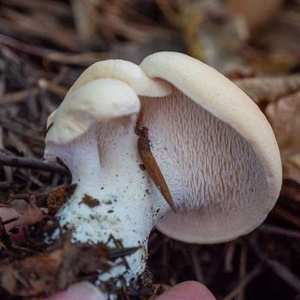
- Cap: Pale tan to cream, irregular, 4–17 cm wide
- Teeth: Unique downward-pointing spines/teeth on underside (not gills, not pores)
- Stem: Pale, solid, same color as cap or paler
- Flesh: White, firm, mild taste — does not bruise
- The downward teeth are the diagnostic feature — no other common mushroom has them
Mixed woods — oak, beech, hemlock on the AT. September–November. Prefers mossy forest floors.
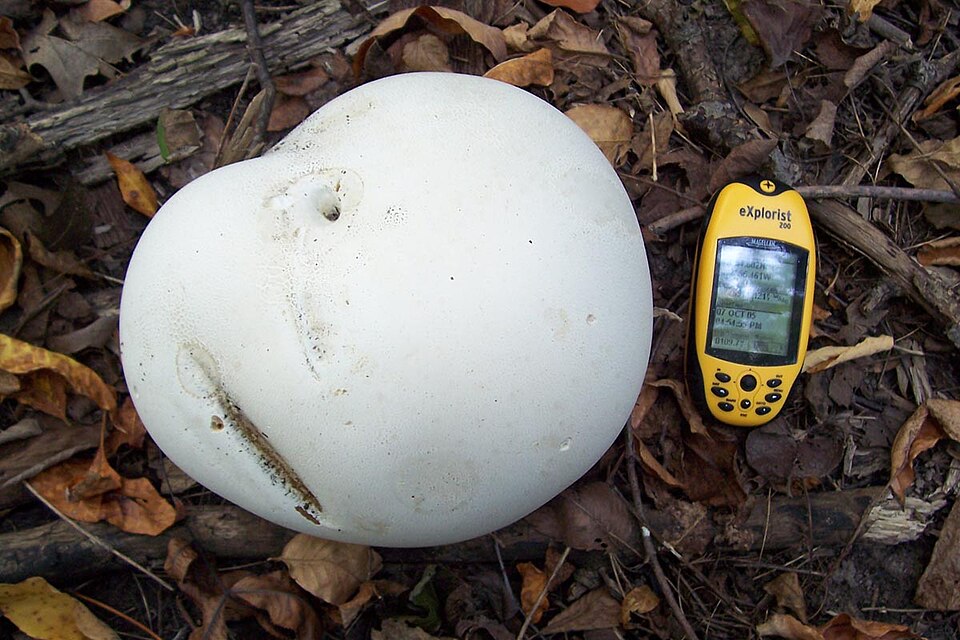
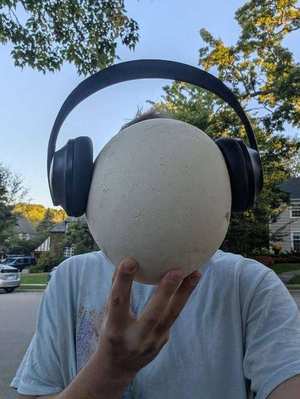
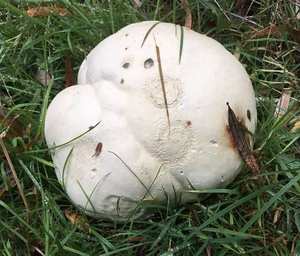
- Shape: Large white sphere, 20–60 cm diameter — like a volleyball or soccer ball
- Exterior: White, smooth, no stem visible at ground level
- Interior: MUST be pure white all the way through when cut — like a marshmallow
- No gills, no stem, no ring, no volva visible
- As it ages, interior turns yellow-green-brown — NOT safe to eat at that stage
Meadows, forest edges, disturbed ground on the AT corridor. August–October. Often found in grassy clearings or woodland edges.
Toxic Mushrooms
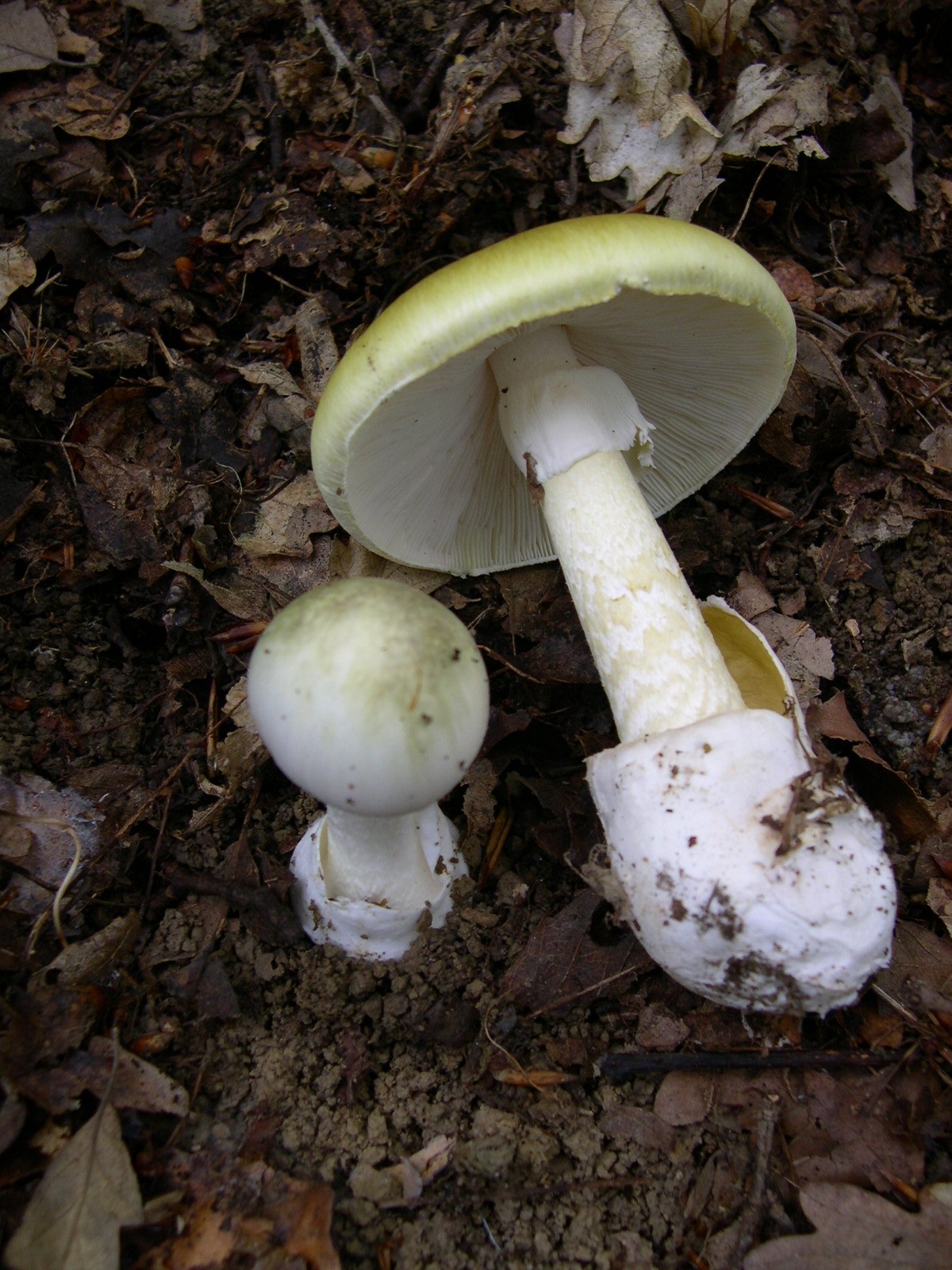
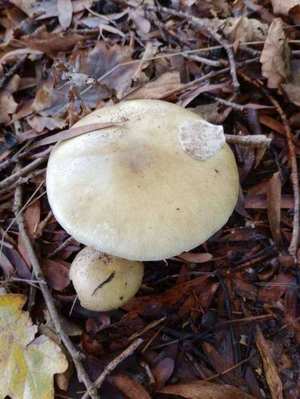
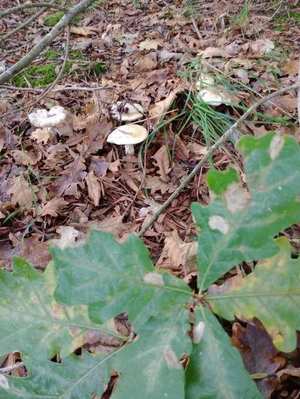
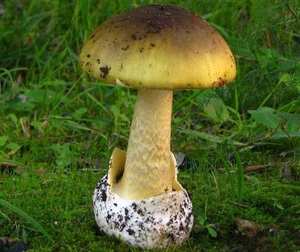
- Cap: Pale green to yellow-green, 5–15 cm, smooth — color can vary to pale white
- Gills: Free, white — never attached to stem
- Stem: White, with a skirt-like ring (annulus) and a cup at base (volva)
- Base: Volva — white egg-like cup at soil level, often buried — ALWAYS dig and check
- Spore print: White
- No distinctive smell when fresh
Contains amatoxins — responsible for 90%+ of all fatal mushroom poisonings worldwide. A single cap can kill an adult. There is NO antidote.
6–24 hours GI phase; apparent recovery (honeymoon period); then liver/kidney failure at 48–96 hours.
Under oak and other hardwoods on the AT. Introduced with European trees. Summer–fall. Increasingly common in the Northeast.
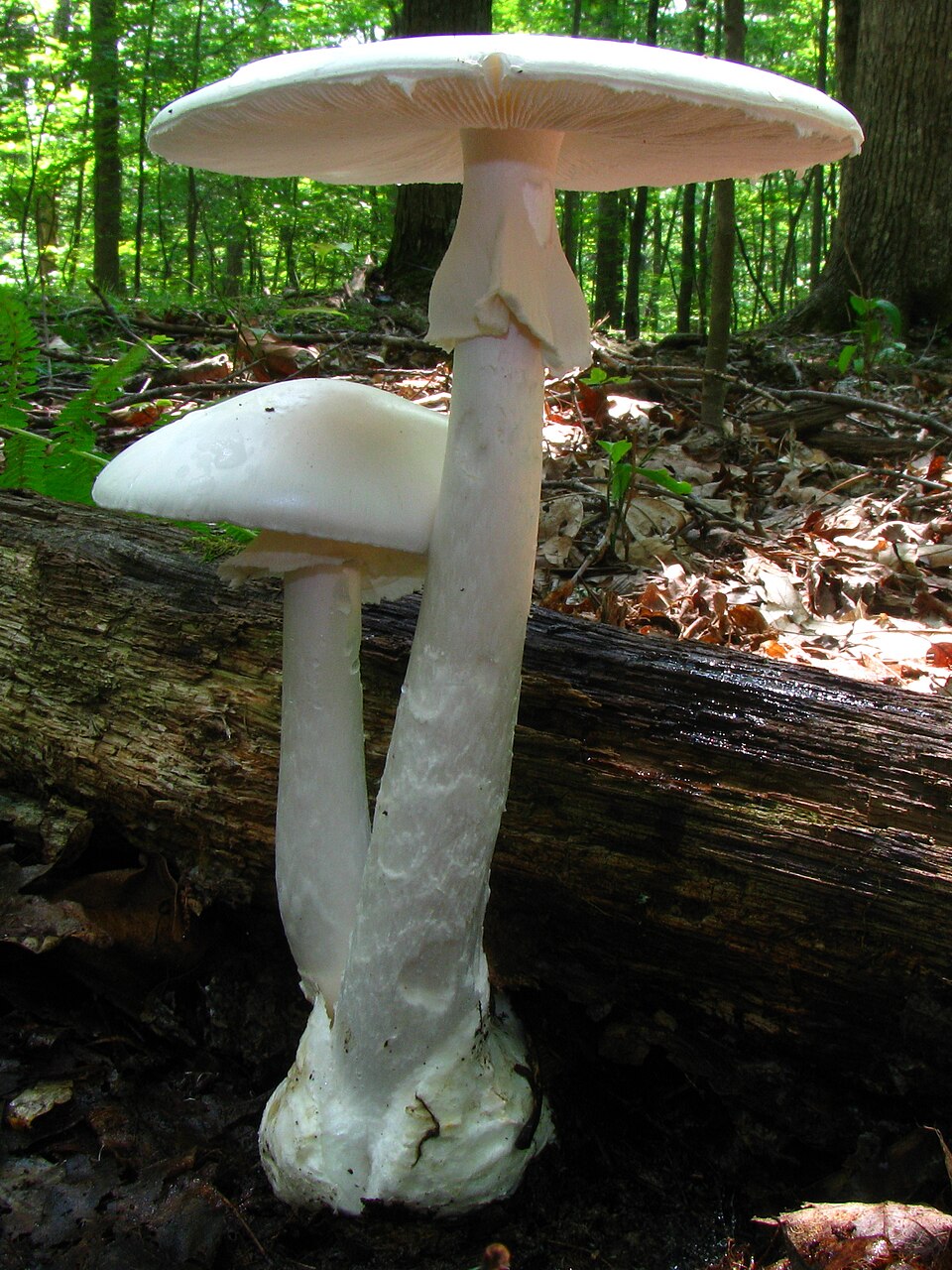
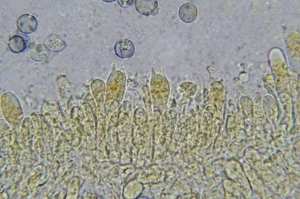
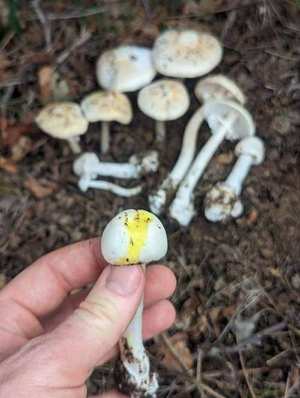
- Cap: Bright white, 5–12 cm, smooth — pure angelic white
- Gills: Free, white
- Stem: White with skirt ring (annulus) and white volva cup at base
- Everything is white — cap, gills, stem, ring, volva
- Spore print: White
- Faint honey-like smell that becomes unpleasant with age
Same amatoxin profile as Death Cap. Equally deadly. Pure white appearance leads to fatal confusion with edible white mushrooms and puffball buttons.
6–24 hours delayed onset — by the time symptoms appear, serious organ damage may be underway.
Mixed hardwood and conifer forests. Common throughout Hudson Valley. Summer–fall.
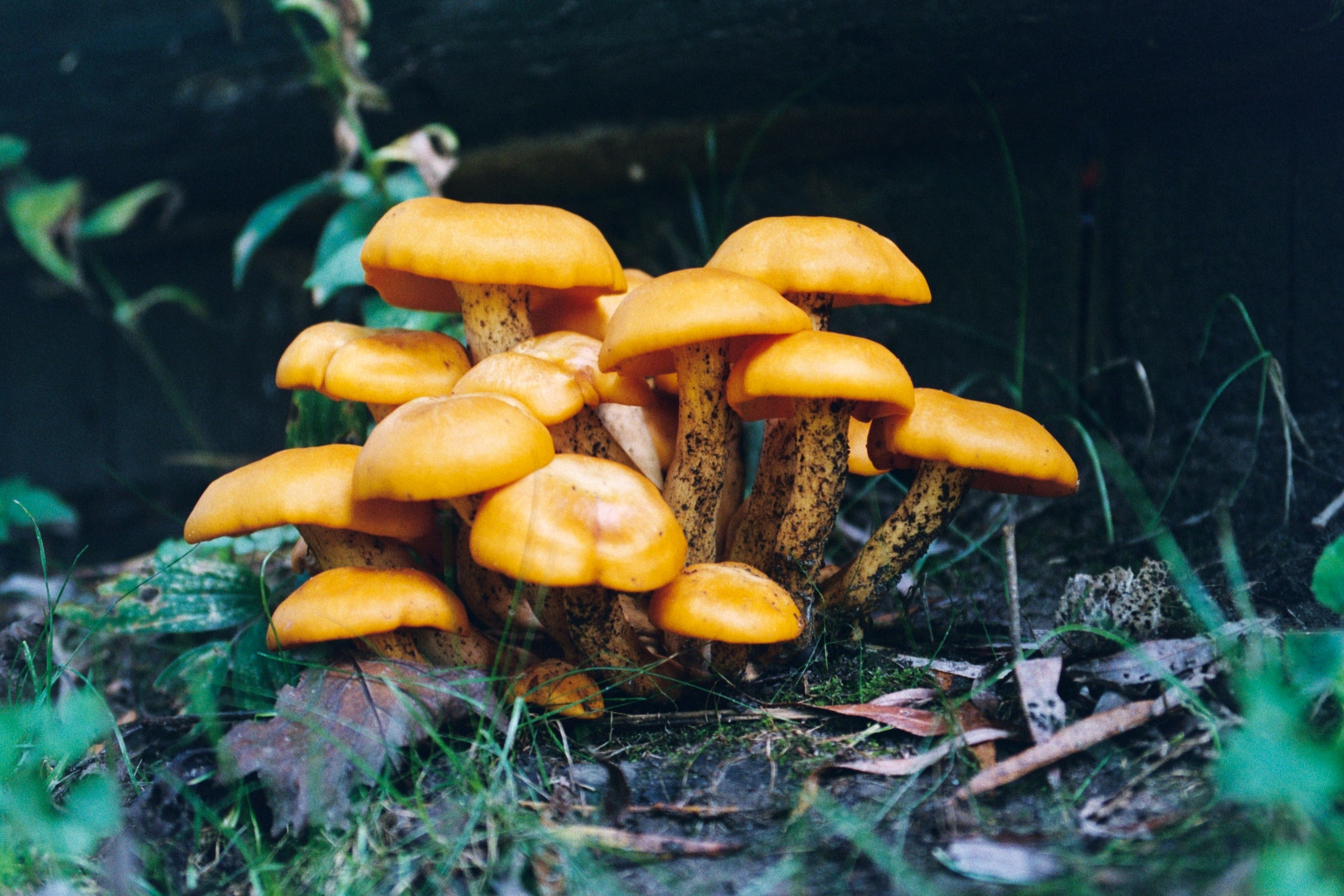
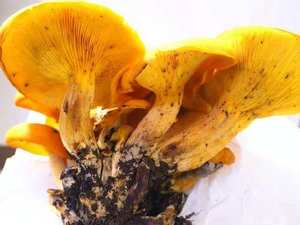
- Cap: Bright orange to orange-yellow, 8–20 cm — similar color to chanterelle
- Gills: TRUE sharp blade-like gills (chanterelle has false forked ridges — the critical difference)
- Growth: Always in dense clusters at base of trees or buried wood
- Stem: Tapered, often fused with other stems in the cluster
- Bioluminescent: Gills glow faint green in complete darkness
- Spore print: Cream to white
Contains illudin toxins — causes severe vomiting and diarrhea within 1–3 hours. Not usually fatal but extremely unpleasant. Primary cause of chanterelle poisonings.
30 min – 3 hours after ingestion.
Clusters at base of hardwood trees and stumps — especially oak. Summer–fall on the AT.
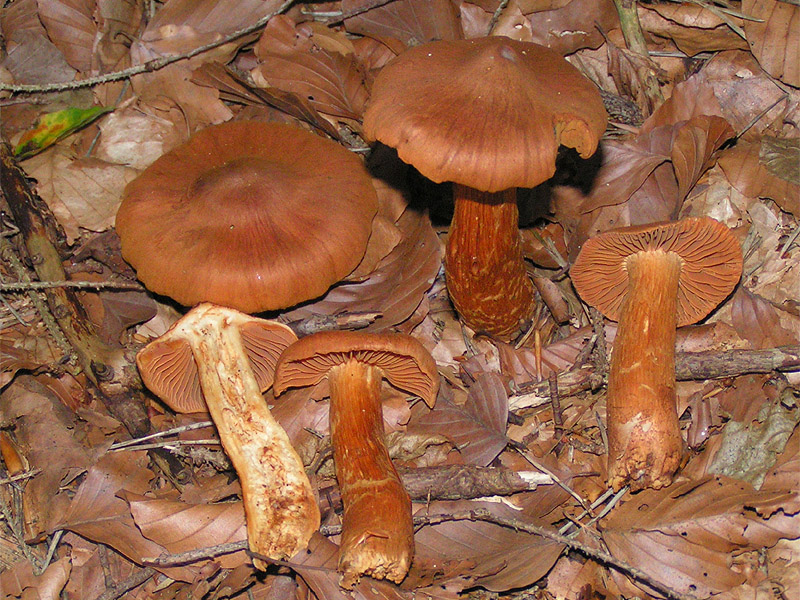
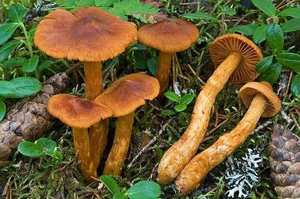
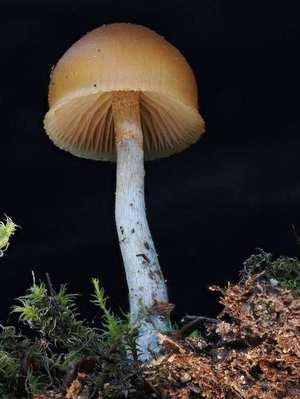
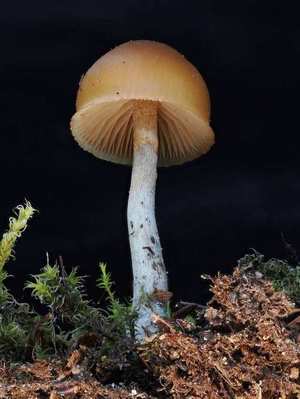
- Cap: Rust-brown to orange-brown, 3–8 cm, conical to bell-shaped when young
- Gills: Rust-brown (from spore deposit), covered by cobweb-like cortina (veil) when young
- Cortina: The cobweb veil is KEY — look for brown cobwebby threads at cap margin
- Stem: Brown, often with rusty belt where cortina attached
- Spore print: Rusty brown — rusty powder on surrounding vegetation is a red flag
Contains orellanine — causes irreversible kidney failure. A single meal can destroy both kidneys. Often misdiagnosed as other illness due to extreme delay.
⚠ 2–3 WEEK DELAY before symptoms appear — this extreme delay makes it extremely dangerous. Kidneys may be severely damaged before any symptoms are noticed.
Conifer and mixed forests on the AT. Summer–fall.
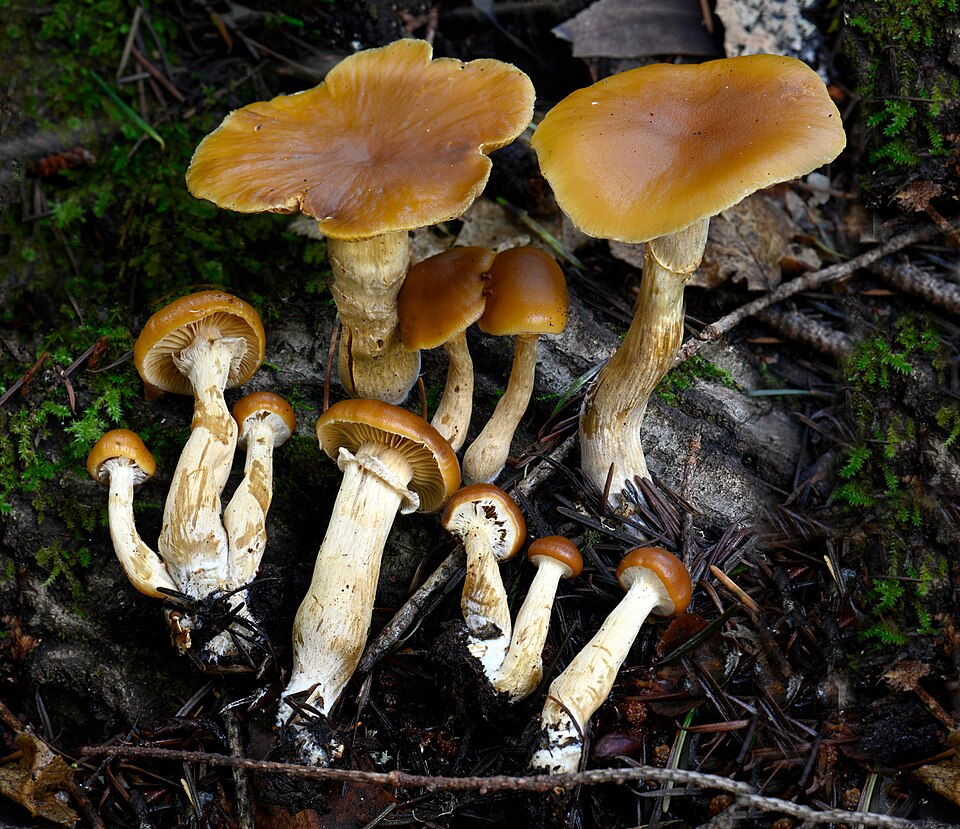
- Cap: Honey-brown to tan, 1–5 cm, smooth, hygrophanous (darker when wet)
- Gills: Brown, attached to stem
- Ring: Distinct ring (annulus) on upper stem — sometimes disappears with age
- Stem: Brown, slender, fibrous
- Grows in clusters or scattered on decaying wood
- Spore print: Rusty brown
Contains amatoxins — same deadly toxins as Death Cap. Responsible for deaths in people who confused it with edible honey mushrooms. A single cluster can be lethal.
6–24 hours delayed GI phase, then potential organ failure.
On decaying logs and stumps throughout the AT corridor. Year-round, common after rain.
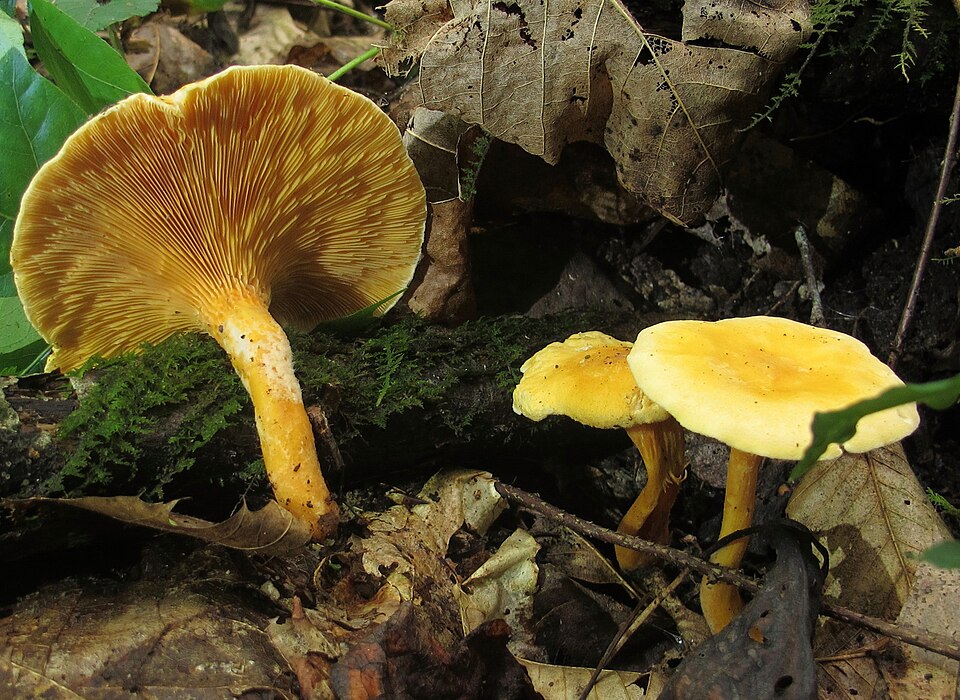
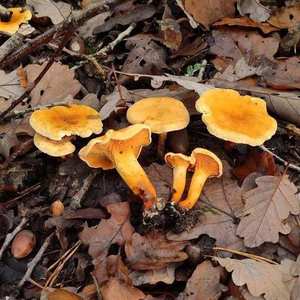
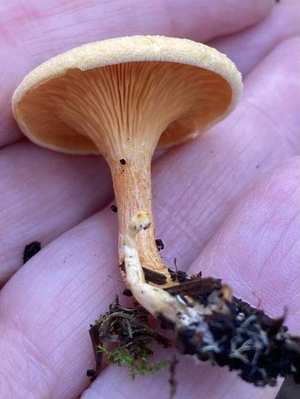
- Cap: Deep orange, funnel-shaped, 2–8 cm — vivid orange, often more deeply funnel-shaped than chanterelle
- Gills: True forking gills (not false ridges like chanterelle)
- Stem: Orange, hollow — chanterelle stem is solid
- Flesh: Orange throughout — chanterelle flesh is pale/white
- Often occurs in groups near conifers
Toxic — causes GI distress and potentially neurological symptoms in some cases. Not typically fatal but should not be eaten.
1–3 hours after ingestion.
Sandy soil, conifer duff on the AT. Summer–fall. Often near conifers rather than hardwoods.
- False forked ridges (not true gills)
- Solid stem
- Grows solitary in soil
- White/pale flesh
- Fruity apricot smell
- True sharp blade-like gills
- Hollow/tapered stem
- Dense clusters at tree base
- Orange flesh throughout
- No fruity smell
- White to pale gray cap
- White gills, white spore print
- No ring on stem
- Mild anise smell
- Very short or no stem
- Honey-brown cap
- Rusty-brown spore print
- Ring (annulus) on stem
- No distinctive smell
- Slender brown stem
- Cut in half: pure white throughout
- No internal structure visible
- No outline of cap or gills inside
- White marshmallow-like interior
- Cut in half: outline of cap and gills visible
- Distinct mushroom shape within
- White volva cup at base
- ALWAYS cut puffballs in half before eating
Call immediately if mushroom poisoning is suspected — even before symptoms appear
Trail Finds — In A Pinch
You made it to the end. Here is a little bonus from Spore and Scout — a short list of other trail-side edibles hikers commonly find on this stretch of the AT. These are not mushrooms. They are plants and berries with strong identification features and real nutritional value. When you are three miles from the trailhead and your pack is running low, knowing what is safe to eat around you is real survival knowledge.
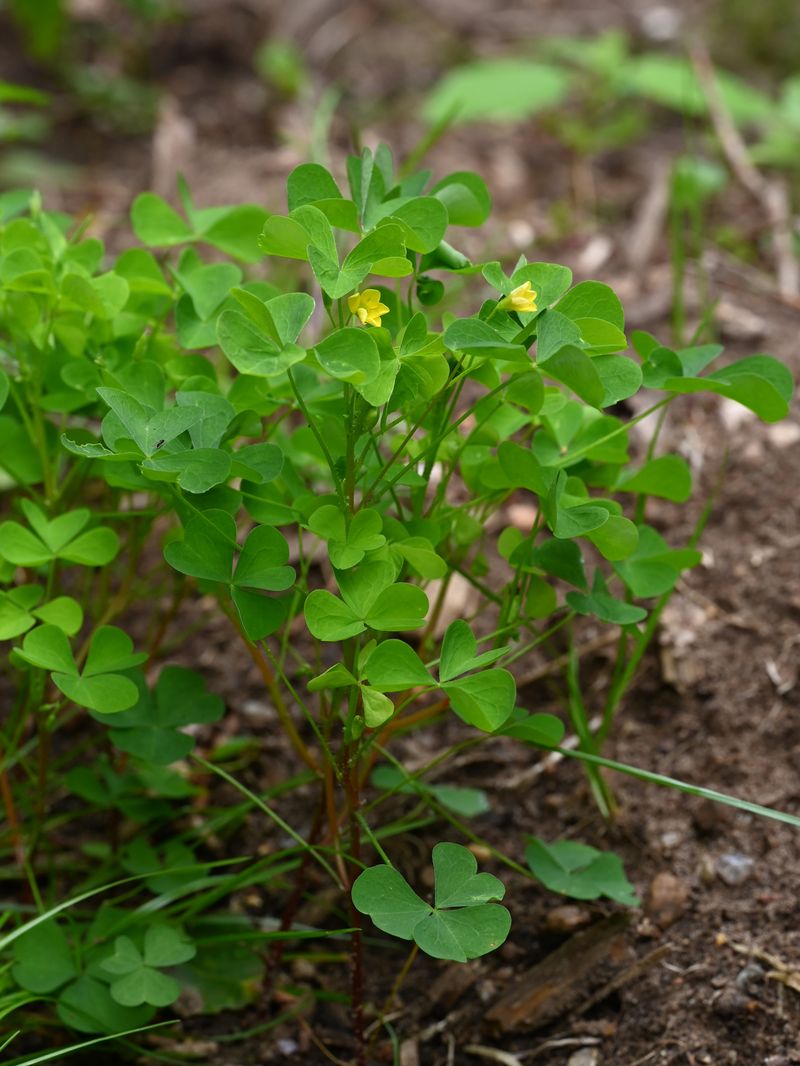
- Clover-like plant with three heart-shaped leaflets — like a three-leaf clover with notched tips
- Take a small bite: the leaves are unmistakably sour and lemony. If it tastes like lemon, you have it
- Grows low to the ground in shaded trail edges, under trees, and in disturbed soil
Eat the leaves raw, any time they are green. No preparation needed — just pick and eat. Available spring through fall.
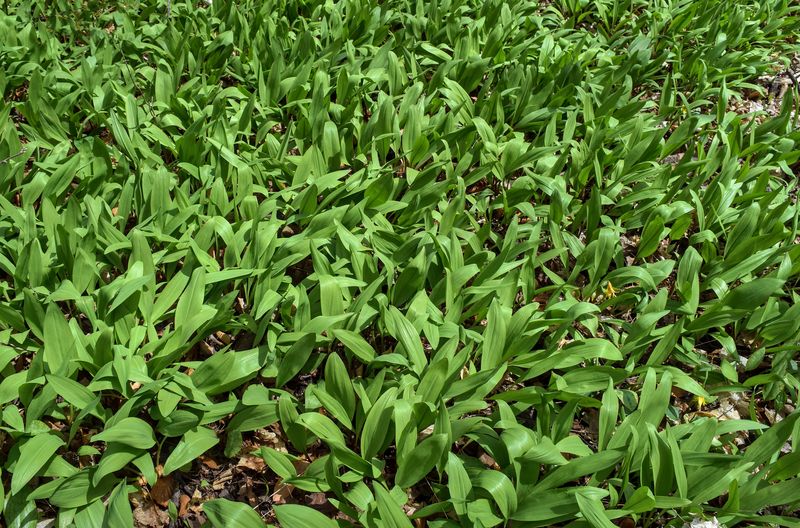
- Broad, smooth, lance-shaped leaves emerging in spring — two or three per plant, deep green
- Crush a leaf: if it smells strongly of garlic or onion, it’s ramps. This is the key safety feature
- No garlic or onion smell = not ramps. Do not eat it
Eat the leaves and the white bulb at the base. Spring only — late March through May before the leaves die back. Eat raw or cook briefly.
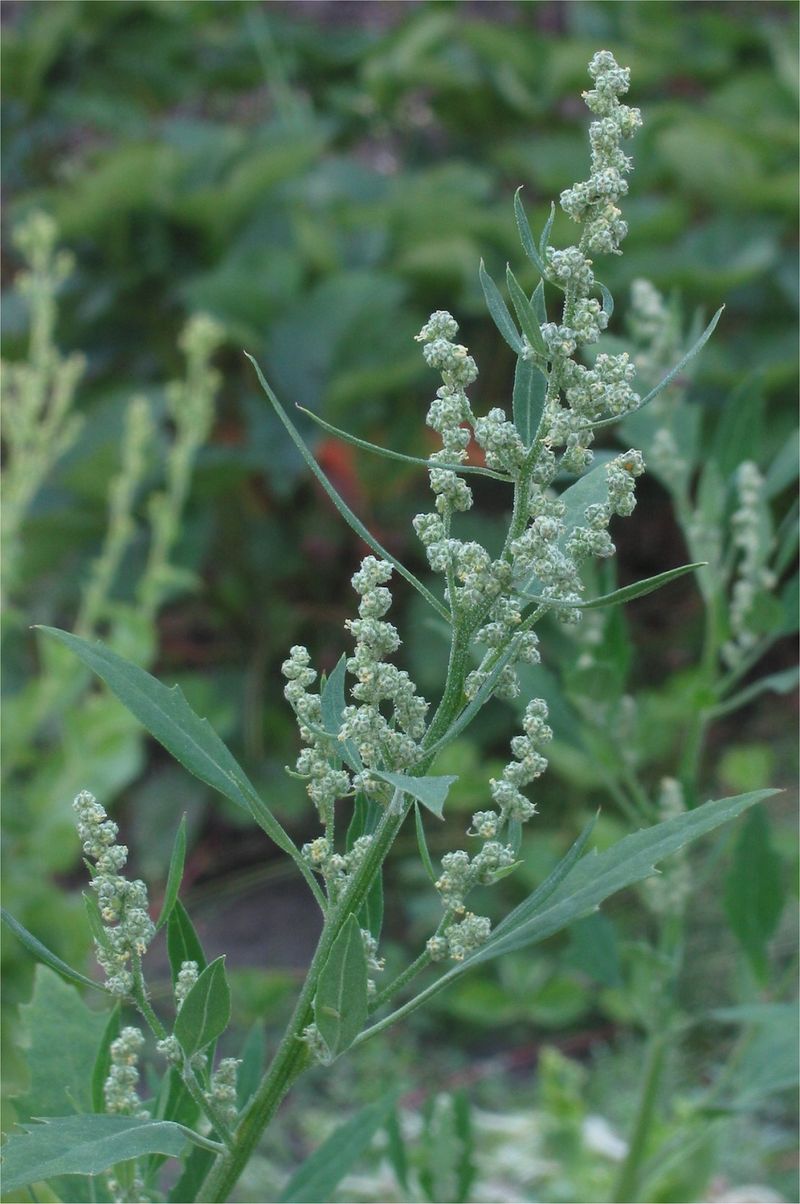
- Look for a white powdery or mealy coating on the underside of the leaves — like fine dust. This is distinctive
- Leaves have irregular toothed or wavy edges, roughly diamond or goosefoot shaped
- Grows along trail edges, roadsides, and disturbed soil — often knee-high or taller
Eat the young tender leaves raw or wilted. Best in spring and early summer before the plant flowers. The young top leaves are most tender.
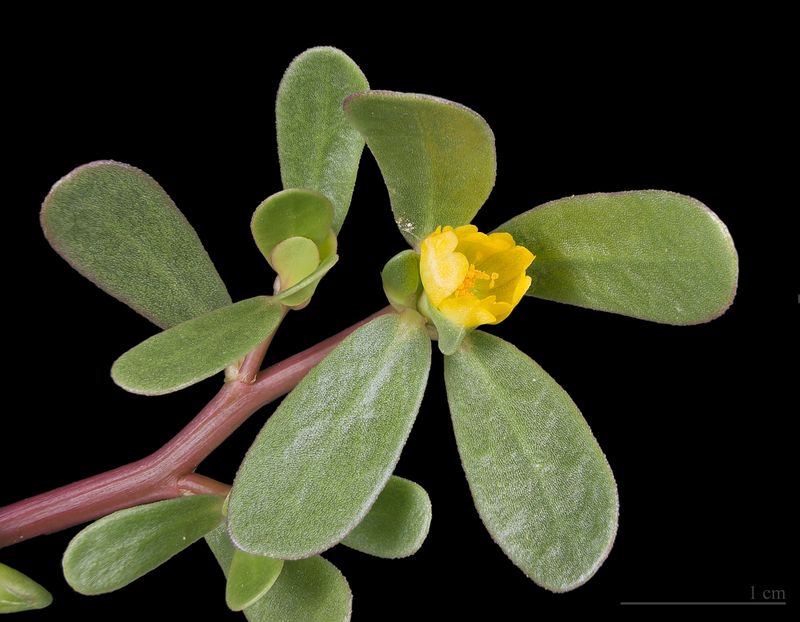
- Thick, fleshy, reddish stems that lie flat or spread across the ground
- Small paddle-shaped fleshy leaves — smooth, thick, almost rubbery to the touch
- Grows in sunny patches, rocky trail edges, and gaps in pavement or gravel
Eat the stems and leaves raw. The texture is slightly crunchy and the flavor is mild with a faint lemony note. Available summer through fall.
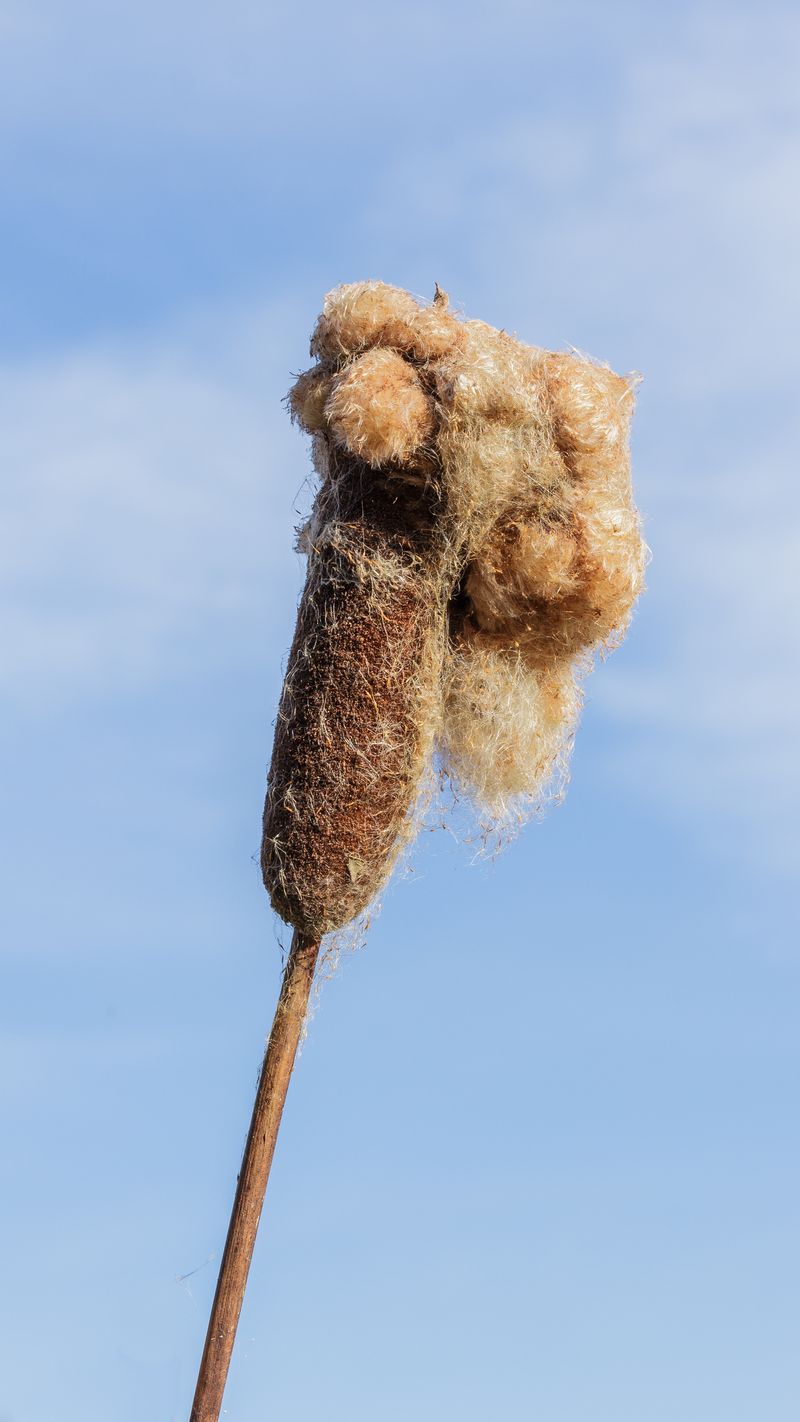
- Tall reed-like plant growing near water, streams, ponds, or wet trail sections — often 5 to 8 feet tall
- The distinctive brown sausage-shaped seed head is unmistakable. Nothing else looks like it
- Long flat strap-like leaves, round stem cross-section at base
Two edible parts: (1) The green flower spike before it turns brown in late spring and early summer — boil or roast like corn on the cob. (2) The white inner shoot at the base of young stems in spring — peel back outer leaves to reach the tender white core, eat raw like a cucumber.
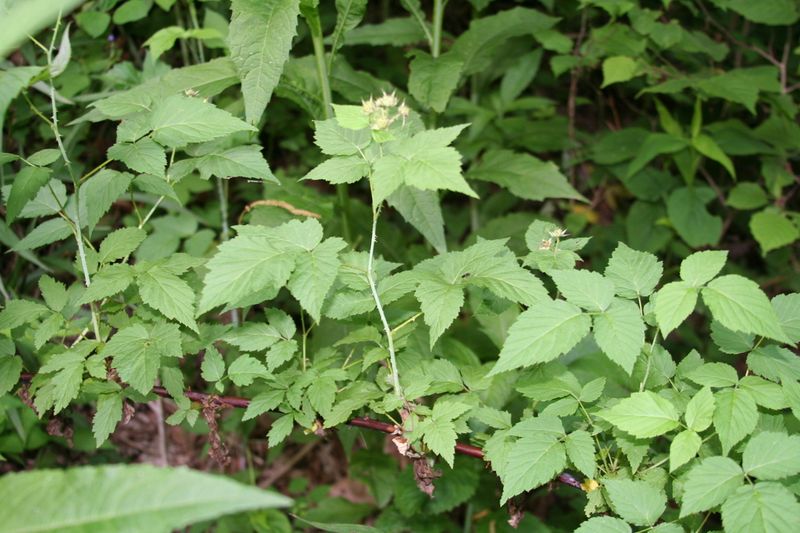
- Thorny arching canes growing along trail edges and open sunny areas
- Compound leaves with 3 to 5 toothed leaflets, alternating along the stem
- Black aggregate berries when ripe — solid when picked (the berry fills in completely)
Eat the ripe black berries. Ripe berries come off the plant easily with gentle pressure. Unripe berries are red and tart — edible but not pleasant. Peak season: July through August on the Hudson Valley AT.
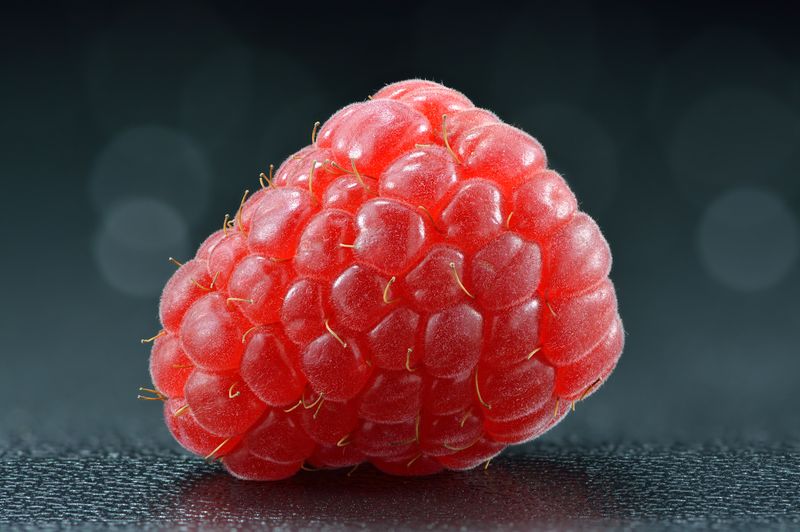
- Similar thorny canes to blackberries, often found in the same sunny trail-edge habitat
- Red aggregate berries when ripe — and here is the key: the berry is hollow when picked, leaving the core on the plant
- That hollow center is the clearest distinguisher from blackberries, which are solid all the way through
Eat the ripe red berries. Ripe berries come off easily, leaving a small hollow cup. Peak season on the AT: July through early August. Wild raspberries are smaller than store-bought but noticeably more flavorful.