Clinical Use Only. This reference is intended for healthcare providers, poison control specialists, and trained foragers. It is not a foraging identification guide. Always contact the relevant regional Poison Control Centre for real-time case management guidance. Treatment recommendations should be confirmed against current clinical guidelines.
Quick Reference — Key Boreal & Atlantic Europe Species
| Common Name | Scientific Name | Tier | Toxin | Onset | Primary Risk |
|---|---|---|---|---|---|
| Deadly Webcap | Cortinarius rubellus | Tier 1 | Orellanine | 3–14 days | Acute interstitial nephritis, irreversible renal failure |
| Fool’s Webcap | Cortinarius orellanus | Tier 1 | Orellanine | 3–21 days | Acute interstitial nephritis, progressive renal failure |
| Funeral Bell | Galerina marginata | Tier 1 | Alpha-amanitin | 6–24 hours | Fulminant hepatic necrosis, coagulopathy, multiorgan failure |
🔴 Tier 1 — Critical Lethal Systemic Toxin
Orellanine-Bearing & Amatoxin-Bearing Species
Cortinarius species carry orellanine with a catastrophically delayed onset of 3–21 days, often decoupling the ingestion event from clinical presentation. Galerina marginata carries alpha-amanitin identical to Death Cap. All three species are lethal without prompt specialist intervention.
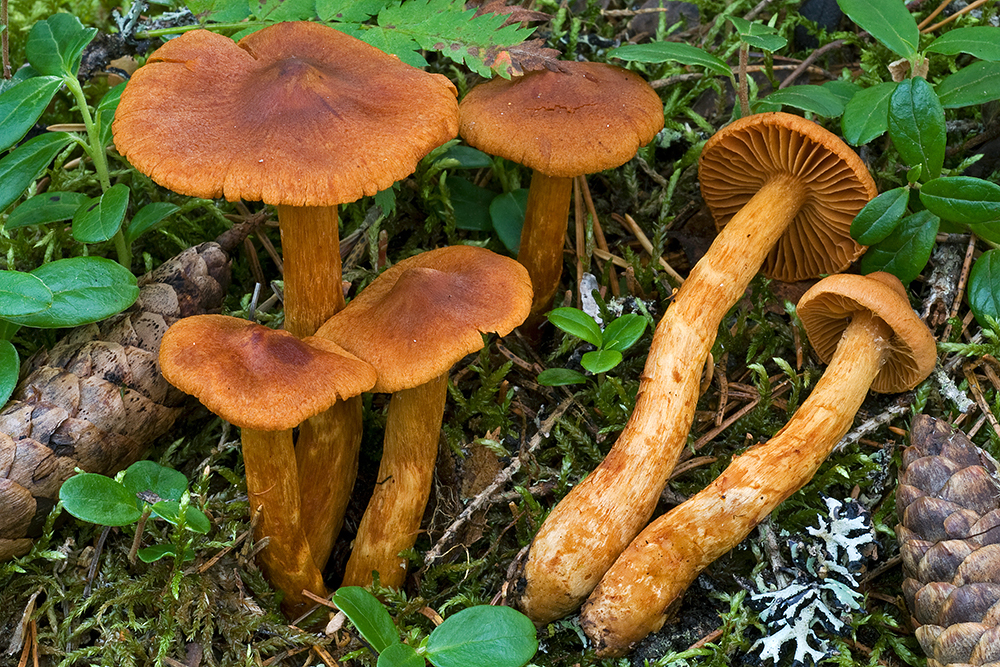
Deadly Webcap
Cortinarius rubellus
🔴 CRITICAL / LETHAL
Onset 3–14 days
 iNaturalist
Local Names
Spitzbuckliger Raukopf (German) · Cortinaire couleur de rocou (French)
Taxonomic Profile
Tier 1 (Lethal). Season: August–October. Elevation: 0–1200m.
Habitat & Distribution
Acidic soils in coniferous or mixed woodland, primarily associated with pine (Pinus) and birch (Betula). Widespread across Scandinavia, the Baltic States, Scotland, and Wales.
Morphological Markers
Cap 3–8cm, conical to sharply umbonate (pointed), tawny-orange to reddish-brown, dry/felted. Gills thick, distant, ochre to rusty-brown. Stem yellowish-orange, cylindrical, displaying pale yellow zig-zagging remnants of the cortina (veil).
Primary Lookalikes
Edible Chanterelles (Cantharellus cibarius) — which feature decurrent, ridge-like pseudogills rather than true, distant gills.
Toxin
Orellanine
Onset
3–14 days post-ingestion. This represents the most dangerous latency window in European mycology, often decoupling the exposure event from the onset of symptoms.
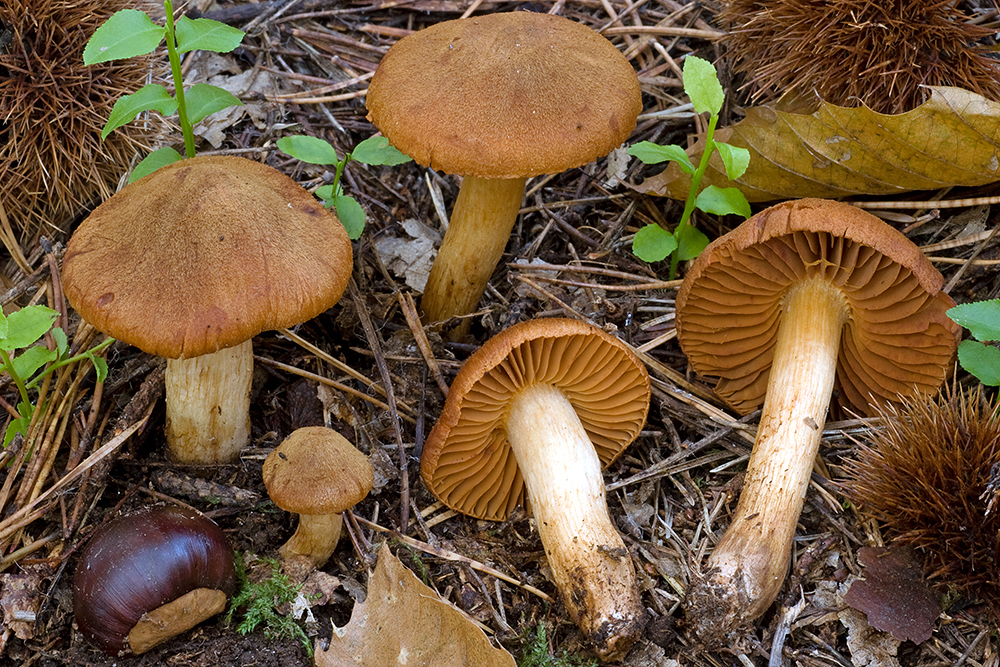
Fool’s Webcap
Cortinarius orellanus
🔴 CRITICAL / LETHAL
Onset 3–21 days
 iNaturalist
Taxonomic Profile
Tier 1 (Lethal). Season: August–October.
Habitat & Distribution
Dry, acidic soils in deciduous forests, primarily associated with oak (Quercus) and beech (Fagus). Distributed through the UK, France, Germany, Poland, and southern Scandinavia.
Toxin
Orellanine
Morphological Markers
Cap 3–9cm, dry, velvety, rusty-orange to tawny-brown, broadly conical to convex. Gills widely spaced, rich rusty-cinnamon. Stem solid, cylindrical, tapering downward, colored similarly to cap, lacking a ring or distinct zig-zag bands.
Primary Lookalikes
Edible Cortinarius variants, Chanterelles (Cantharellus spp.)
Onset
3–21 days — the longest latency window of any known European macromycete toxin.
Orellanine Nephrotoxicity Toxidrome (Cortinarius rubellus / orellanus — combined)
Clinical Manifestation
- Initial Phase (0–72 hours): Asymptomatic or mild, transient gastrointestinal distress (nausea, emesis)
- Delayed Renal Phase (3–21 days): Intense, unquenchable thirst (polydipsia), severe flank or lumbar pain, chills, intractable headache, profound fatigue. Progresses from polyuria to progressive oliguria, culminating in complete anuria secondary to acute interstitial nephritis and acute tubular necrosis.
Human Medical Stabilization Protocol
- Antidote Availability: No specific or validated antidote exists
- Decontamination: Activated charcoal is ineffective at clinical presentation due to the extreme delay in symptom onset
- Renal Management: Initiate aggressive fluid resuscitation to maintain renal perfusion during early oliguria
- Track serum creatinine, BUN, and serum electrolytes (specifically potassium) every 12 to 24 hours
- Initiate immediate hemodialysis upon documentation of AKI, persistent anuria, fluid overload, or refractory hyperkalemia
- Long-Term Prognosis: Over 70% of symptomatic patients sustain permanent, irreversible renal damage. Long-term maintenance hemodialysis is highly probable; transition immediately to a kidney transplant evaluation protocol.
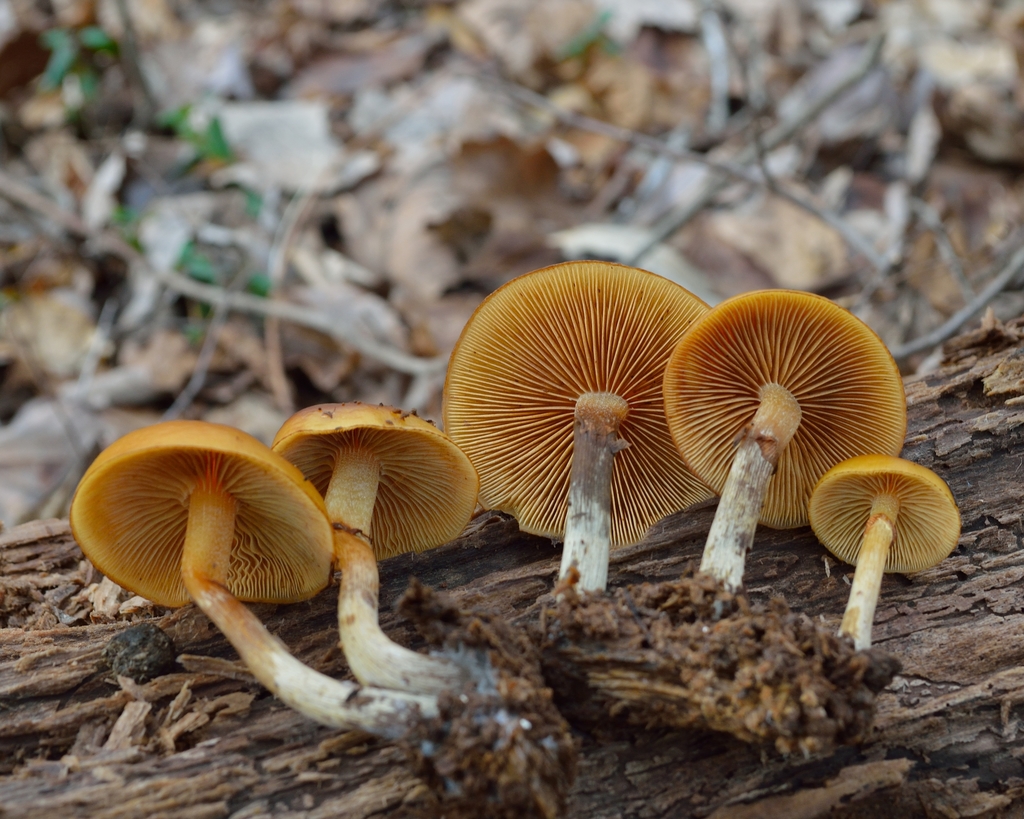
Funeral Bell
Galerina marginata
🔴 CRITICAL / LETHAL
Onset 6–24 hours
 iNaturalist
Taxonomic Profile
Tier 1 (Lethal). Season: Year-round, peaking September–November.
Habitat & Distribution
Saprotrophic, growing in dense clusters directly on decaying wood, stumps, or buried logs of both coniferous and deciduous trees. Widespread and abundant across all of Boreal, Atlantic, and Continental Europe.
Toxin
Alpha-amanitin — same toxin as Death Cap
Onset
6–24 hours
Morphological Markers
Cap small (1–4cm), smooth, ochre-brown to honey-brown, hygrophanous (changing color as it dries). Gills pale yellowish-brown to rusty brown, crowded, adnate to subdecurrent. Stem brownish, fiber-streaked, possessing a small, fragile, membranous, pale annular ring that may become obscure with age.
Primary Lookalikes
Edible Honey Fungus (Armillaria mellea), wood-inhabiting Kuehneromyces mutabilis, and psychoactive Psilocybe cyanescens — which grows in similar woody or mulched substrates.
Amatoxin Hepatotoxicity Toxidrome (Galerina marginata)
Clinical Manifestation
- Gastrointestinal Phase (6–24 hours): Sudden, severe, cholera-like diarrhea (rice-water style), intractable vomiting, severe abdominal cramping, profound dehydration
- Latent / False Recovery Phase (24–48 hours): GI symptoms subside. Patient appears improved but serum transaminases (AST/ALT) and bilirubin begin to rise exponentially
- Hepatic Phase (48–96 hours): Fulminant hepatic necrosis, profound coagulopathy (prolonged PT/INR), encephalopathy, hepato-renal syndrome, multiorgan failure, coma
Human Medical Stabilization Protocol
- Decontamination: If presentation within 12–24 hours, initiate multi-dose Activated Charcoal at 1g/kg PO or via nasogastric tube every 4 hours to interrupt enterohepatic recirculation
- Aggressive IV crystalloid infusion to maximize renal clearance of circulating amatoxins
- Silibinin (Legalon SIL): Loading dose 5mg/kg IV over 1 hour, followed by continuous infusion 20mg/kg/day for 3 to 4 consecutive days
- N-Acetylcysteine (NAC): 150mg/kg IV over 1 hour loading, followed by 50mg/kg IV over 4 hours, then 100mg/kg IV over the subsequent 16 hours
- Transplant Assessment: Monitor PT, INR, AST, ALT, total bilirubin, creatinine, and arterial pH every 6 hours. Calculate King’s College Criteria continuously. Contact regional liver transplant team immediately upon early encephalopathy or progressive INR >2.5
Section 4: Advanced Diagnostic Assays & Biomarker Detection Windows
Amatoxin Assays (Galerina marginata)
- Urinary ELISA: Primary point-of-care rapid screening method. Qualitative or semi-quantitative results within 90 minutes. Optimal clinical detection window: 6 to 36 hours post-ingestion.
- LC-MS/MS: Gold standard for confirmation. Limit of Detection down to 1ng/mL in urine. Can reliably identify intact α-, β-, and γ-amanitins for up to 72 to 96 hours post-exposure.
- Serum Kinetics: Serum testing highly discouraged. Amatoxins clear rapidly from blood — often completely undetectable in serum 4 to 6 hours post-ingestion, typically before the first GI symptoms present. Use urine.
Orellanine Assays (Cortinarius rubellus / orellanus)
- LC-MS/MS: Orellanine quantified using matrix-matched calibration. LOD for fresh tissue: 20ng/g (0.02 ppm).
- Biopsy Confirmed Persistence: Orellanine rapidly concentrates in renal tissue and can be verified from a standard renal needle biopsy for up to 6 months post-ingestion.
- Serum and Urine Screening: Standard hospital labs lack a rapid assay for orellanine. Serum and urine levels are generally undetectable by the time a patient presents with advanced kidney injury. Diagnosis depends heavily on history, renal biopsy pathology, and LC-MS/MS testing of leftover mushrooms.
Section 5: Expanded Baltic Region Lookalikes Table
| Lethal Target Species | Baltic Regional Lookalike | Key Morphological Distinctions |
|---|---|---|
| Cortinarius rubellus (Deadly Webcap) | Cantharellus cibarius (Chanterelle – Edible) | C. cibarius features shallow, fork-veined, decurrent pseudogills running down the stem, a distinct apricot aroma, and a smooth, solid, white-fleshed stem with no velar bands. |
| Cortinarius orellanus (Fool’s Webcap) | Cortinarius capsumanus (Conifer Cortinarius – Inedible) | C. capsumanus lacks the rich, dark, rusty-cinnamon gills of C. orellanus, has a silky, hygrophanous clay-tan cap, and grows strictly under deep Picea (spruce) litter. |
| Galerina marginata (Funeral Bell) | Kuehneromyces mutabilis (Sheathed Woodtuft – Edible) | K. mutabilis has a distinctly scaly lower stem below its ring, a strongly two-toned hygrophanous cap, and a sweet, pleasant wood aroma. |
| Galerina marginata (Funeral Bell) | Psilocybe cyanescens (Wavy Cap – Psychoactive) | P. cyanescens features a distinctly wavy cap margin when mature, a white stem, and exhibits an intense blue bruising reaction upon physical bruising or handling. |
Section 6: Precise Fluid Resuscitation Protocols
Pediatric Human Fluid Management
Phase 1 — Fluid Resuscitation (Dehydration / Shock)
- Indication: Signs of severe volume depletion or hypovolemic shock from early GI purging
- Protocol: IV bolus of Isotonic Crystalloid (0.9% Normal Saline or Balanced Salt Solution) at 20mL/kg over 10–20 minutes. Repeat up to 3 times if necessary to restore perfusion, provided no signs of fluid overload or pulmonary edema.
Phase 2 — Maintenance and Toxin Clearance (Holliday-Segar 4-2-1 Rule)
- ≤10 kg: 4mL/kg/hour
- 11–20 kg: 40mL/hour + 2mL/kg/hour for each kg above 10 kg
- >20 kg: 60mL/hour + 1mL/kg/hour for each kg above 20 kg
- Amatoxin Enhancement: Scale final calculated maintenance rate by 1.5× to 2× baseline, maintaining target urine output >2mL/kg/hour. Track serum electrolytes and glucose continuously.
Pediatric / Small-Breed Veterinary Fluid Management
Phase 1 — Shock Bolus Therapy (Canine & Feline)
- Canine (<10 kg): Isotonic crystalloids at 10–15mL/kg over 15 minutes. Re-evaluate perfusion markers.
- Feline: Isotonic crystalloids at 5–10mL/kg slowly over 20 minutes. Avoid aggressive volume loading due to high risk of occult cardiomyopathy and rapid volume overload.
Phase 2 — Continuous Renal Flushing & Maintenance
- Canine Maintenance Rate (mL/day) = 132 × (Body Weight in kg)0.75
- Feline Maintenance Rate (mL/day) = 80 × (Body Weight in kg)0.75
- Toxin Diuresis: Scale baseline maintenance rate to 2–3× the calculated volume to force continuous renal clearance
- Monitoring: Strict urinary output — must match or exceed 2–4mL/kg/hour. If urine output drops below 1mL/kg/hour despite fluid loading, immediately decrease to maintenance levels to prevent pulmonary edema or cerebral swelling and check for anuric renal failure.
Regional Admissions & Dispatch Reference
Poison Control Centers (Human)
United Kingdom
0344 892 0111 (Healthcare Professionals) · 111 (Public)
Republic of Ireland
+353 1 809 2566 (Healthcare Professionals) · +353 1 809 2166 (Public, 08:00–22:00)
Norway
+47 22 59 13 00 (Giftlinjen)
Sweden
+46 8 331 231 (Giftinformationscentralen)
Finland
+358 9 471 977 (Myrkytystietokeskus)
Denmark
+45 82 12 12 12 (Giftlinjen)
Pan-European Emergency Default
112
🟠 Tier 2 — Severe Immune-Mediated Hemolytic Toxin
Involutin-Bearing Species
Paxillus involutus carries involutin, which induces immune-mediated hemolytic anemia on repeat exposure. Single ingestion may be asymptomatic; the danger escalates dramatically with repeated consumption over seasons or years.
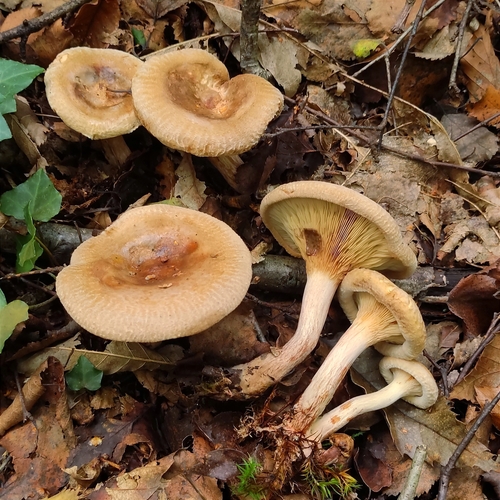
Brown Roll-Rim
Paxillus involutus
🟠 SEVERE INJURY / TOXIC
Onset 30 min–3 hrs
 iNaturalist
Local Names
UK: Brown Roll-Rim ·
Germany: Kahler Krempling ·
Sweden: Rimsopp ·
Finland: Kangastatti ·
Poland: Krowiak podwinięty
Season & Elevation
August–November · 0–1500m
Habitat & Distribution
Ectomycorrhizal with birch (Betula), pine (Pinus), and spruce (Picea). Acidic soils in woodland, heathland edges, parkland. Extremely common across UK, Scandinavia, and Baltic States. Widespread across all of Boreal & Atlantic Europe — UK, Ireland, Scandinavia, Baltic States.
ID Features
Cap 5–15cm, convex with strongly inrolled margin when young, flattening to broadly depressed funnel-shaped. Ochre-brown to rusty-brown, slimy when wet. Gills pale yellow-cream, closely spaced, decurrent, bruising brown instantly on touch. Stem short, stocky, same color as cap.
Lookalikes
Edible Suillus species, young edible Rozites caperatus
Field Diagnostic
Gills bruise dark brown immediately on pressure — distinctive. Strong earthy-mushroom smell. Inrolled margin on young specimens.
Toxin
Involutin — induces type II immune-mediated hemolytic anemia (IMHA). Mechanism: repeat exposure sensitizes the immune system; subsequent ingestions trigger IgG antibody-mediated destruction of red blood cells. Single ingestion often asymptomatic; the danger increases dramatically with repeated consumption over seasons or years.
Mechanism of Action
The Paxillus antigen stimulates IgG/IgM antibody production. Upon re-exposure, immune complexes bind to erythrocyte membranes, triggering massive, acute complement-mediated intravascular hemolysis. Modern clinical evidence shows that aggressive forced fluid overloading or forced alkaline diuresis does not effectively protect the kidneys from hemoglobinuria — it significantly increases the risk of ARDS and volume-overload-induced heart failure due to damaged pulmonary capillaries.
Onset
30 minutes to 3 hours post-ingestion (acute GI). Hemolysis may develop over 6–24 hours.
Symptoms
Acute GI — nausea, vomiting, diarrhea. Then progressive hemolysis — sudden pallor, jaundice (yellow skin/gums), dark red-brown urine (hemoglobinuria), back/flank pain, rapid heart rate, shortness of breath. Severe cases progress to acute kidney injury and circulatory shock from RBC mass destruction.
Human Treatment Protocol:
- Immediate Stabilization & Decontamination
- Airway: Secure immediately if respiratory distress or altered mental status
- Activated Charcoal: 1 g/kg PO once within first hour if airway protective reflexes intact
- First-Line Immunological Interventions
- High-Dose Corticosteroids — initiate immediately to halt antibody-mediated erythrocyte destruction
- Adult: Methylprednisolone 1–2 mg/kg IV every 6 hours OR Dexamethasone 4–8 mg IV every 6 hours
- Pediatric: Methylprednisolone 1–2 mg/kg IV split into two daily doses
- Therapeutic Plasma Exchange (TPE) — mandatory first-line for progressive hemolysis or rapid hematocrit drop. Directly removes circulating immune complexes and free hemolytic antibodies.
- High-Dose Corticosteroids — initiate immediately to halt antibody-mediated erythrocyte destruction
- Fluid and Renal Management
- Euvolemic fluid management — balanced crystalloids (Plasmalyte or Lactated Ringer’s), target urine output 1–2 mL/kg/hour. Do NOT hyper-hydrate or force diuresis.
- Early CRRT — initiate at first sign of: AKI or rising creatinine, oliguria/anuria refractory to fluid titration, hyperkalemia, or metabolic acidosis. CRRT clears free hemoglobin and inflammatory cytokines without worsening volume overload.
🐾 Veterinary Reference — Dogs & Cats Only
⚠ This section is for veterinary use only. All dosing below is for animals. Do not apply to human patients.
Species: Brown Roll-Rim (Paxillus involutus)
Susceptibility & Onset
Dogs are highly susceptible. Involutin triggers immune-mediated hemolytic anemia. Even a single large ingestion can cause acute hemolysis in sensitized animals.
Clinical Signs
Vomiting, lethargy, pale or yellow mucous membranes, red-brown urine, weakness, rapid breathing.
Protocol
- Induce emesis (Apomorphine in dogs, Dexmedetomidine in cats) if within 1–2 hours and asymptomatic
- Activated Charcoal 1–2g/kg PO with osmotic cathartic if neurologically intact
- Euvolemic IV crystalloid management to maintain normovolemia — do not use forced or alkaline diuresis
- Monitor PCV/TS, CBC, bilirubin, creatinine every 6–12 hours
- Blood transfusion if PCV falls below 20% or clinical signs of circulatory compromise
- Dexamethasone 0.1–0.2mg/kg IV for confirmed immune-mediated component
- Therapeutic plasma exchange (TPE) is available at specialist veterinary centers for severe cases
- Do not allow this animal to consume Paxillus again — sensitization is permanent
🟡 Tier 3 — Acute CNS / Autonomic Toxin
Ibotenic Acid / Muscimol-Bearing Species
Amanita muscaria and Amanita pantherina carry ibotenic acid and muscimol. These are CNS-active compounds, not muscarine. Supportive care is the primary treatment. Do NOT administer Atropine.
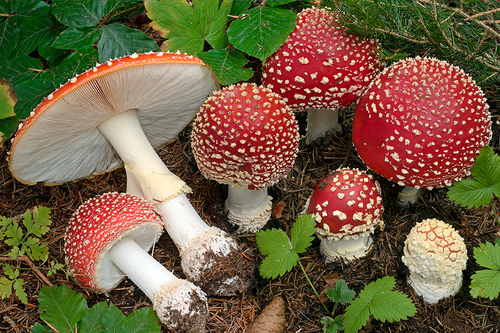
Fly Agaric / Panthercap
Amanita muscaria / Amanita pantherina
🟡 HIGH CNS TOXICITY
Onset 30 min–2 hrs
 iNaturalist
Local Names
UK: Fly Agaric (A. muscaria), Panthercap (A. pantherina) ·
Germany: Fliegenpilz, Pantherpilz ·
Sweden: Röd flugsvamp ·
Finland: Punakärpässieni ·
Norway: Rød fluesopp ·
Baltic States: Mukhomor krasnyi (Russian)
Season & Elevation
August–November · 0–2000m
Habitat & Distribution
Ectomycorrhizal with birch (Betula) and pine (Pinus). Woodland edges, heathland, parks. A. muscaria — widespread across entire Boreal region. A. pantherina — prefers beech and oak woodland, more southern distribution. Ubiquitous across all of Boreal & Atlantic Europe.
ID Features (A. muscaria)
Cap 8–20cm, brilliant scarlet to orange-red with white wart patches (remnants of universal veil). White gills, white stem, white ring, white volva fragments at base.
ID Features (A. pantherina)
Cap 5–11cm, brown to grey-brown with white wart patches. White gills, white stem, white ring, double-ridged volva at base. More potent than A. muscaria.
Lookalikes
A. muscaria — edible Caesar’s Mushroom (Amanita caesarea) in southern range. A. pantherina — edible Amanita rubescens (Blusher) which stains pink/red when cut.
Toxin
Ibotenic acid and muscimol (pantherine-muscaria syndrome). Note: NOT the same mechanism as muscarine — ibotenic acid is a CNS excitatory agent (NMDA agonist); muscimol is a CNS depressant (GABA agonist). No muscarine present.
Onset
30 minutes to 2 hours (rapid)
Symptoms
CNS effects predominate — euphoria, confusion, delirium, visual disturbances, muscle spasms, myoclonus, ataxia. Autonomic: dry mouth (anticholinergic pattern, not muscarine). Severe cases: seizures, respiratory depression, coma. A. pantherina is significantly more toxic than A. muscaria.
⚠️ CRITICAL WARNING: DO NOT administer Atropine — these species do NOT cause muscarine toxidrome. Atropine will worsen the anticholinergic CNS syndrome and can be fatal.
Human Treatment Protocol:
- Supportive care is the mainstay — no specific antidote
- Activated Charcoal 1g/kg PO if presentation within 1–2 hours and airway protected
- Benzodiazepines (Diazepam 5–10mg IV, titrate to effect) for seizure control and agitation
- IV fluids for hydration maintenance
- Monitor airway — respiratory depression possible in severe A. pantherina ingestion
- ⚠️ CRITICAL WARNING: DO NOT administer Atropine — these species do NOT cause muscarine toxidrome. Atropine will worsen the anticholinergic CNS syndrome and can be fatal.
- Physostigmine 0.5–2mg IV slowly may be considered for severe anticholinergic delirium — only under specialist guidance
- Most cases resolve in 6–12 hours with supportive care
🐾 Veterinary Reference — Dogs & Cats Only
⚠ This section is for veterinary use only. All dosing below is for animals. Do not apply to human patients.
Species: Fly Agaric / Panthercap (Amanita muscaria / Amanita pantherina)
Susceptibility & Onset
Rapid CNS toxicity in dogs and cats. Onset within 30–90 minutes. A. pantherina significantly more toxic — can be fatal in small dogs.
Clinical Signs
Disorientation, vocalization, muscle tremors, ataxia (stumbling), dilated pupils, hypersalivation (different from muscarine — central origin), seizures, respiratory depression.
Protocol
- Induce emesis immediately if within 30–60 minutes and animal is alert — use Apomorphine (dogs) or Dexmedetomidine (cats)
- Activated Charcoal 1–2g/kg PO after emesis if neurologically intact
- Diazepam 0.5mg/kg IV to effect for tremors or seizures
- IV crystalloid fluids at maintenance rate — do not over-fluid
- Monitor respiratory rate — intubate if respiratory depression develops
- ⚠️ CRITICAL WARNING: DO NOT administer Atropine — it will severely exacerbate the CNS delirium. This is the opposite of muscarine toxidrome.
- Most mild cases resolve in 6–12 hours. A. pantherina ingestion — monitor minimum 24 hours.
Field Survival & Decontamination Protocols
Standardized Spore Print Protocol
- Sever the fungal pileus (cap) cleanly from the stipe (stem) at the apex
- Place the pileus with the hymenium (gills) facing downward onto a split media substrate — half white, half black non-absorbent cardstock or a clean glass microscope slide
- Invert a clean glass beaker or bowl over the specimen to isolate from ambient airflow and trap natural humidity
- Allow to stand undisturbed for 2–6 hours
- Analyze resulting spore deposition:
- Rusty-Brown to Cinnamon-Brown: Confirms Cortinarius species matrix
- Ochre-Brown to Rusty-Brown: Confirms Galerina species matrix
- White to Pale Cream: Characteristic of Amanita complex species
Cross-Contamination & Handling Rules
- Toxin Transfer Dynamics: Orellanine and α-amanitin are large complex molecules that cannot pass through intact human dermal barriers. Physical touch does not cause systemic toxicity.
- Separation Integrity: If a collection basket contains a single confirmed Tier 1 lethal mushroom (Cortinarius spp. or Galerina marginata), the entire harvest must be destroyed. Washing or cooking will NOT degrade these heat-stable compounds.
- Hygiene Measures: Thoroughly wash hands with soap and water after handling toxic specimens. Mechanically clean all collection tools, knives, and scales.
🐾 Veterinary Reference — Dogs & Cats Only
⚠ This section is for veterinary use only. All dosing below is for animals. Do not apply to human patients.
Species 1 & 2: Deadly Webcap / Fool’s Webcap (Cortinarius rubellus / orellanus)
Susceptibility & Onset
Devastating renal failure. Polydipsia, polyuria, uremic breath, abdominal pain. Poor prognosis — hemodialysis or peritoneal dialysis required.
Protocol
- If ingestion confirmed within 2–4 hours: gastric lavage and Activated Charcoal 1–2g/kg PO with osmotic cathartic (e.g. sorbitol), provided patient is neurologically intact
- Immediate, continuous IV fluid therapy with isotonic crystalloids at 2–3× maintenance rates to maintain urine output >2mL/kg/hour
- Insert indwelling urinary catheter to quantify output. Measure baseline creatinine, BUN, phosphorus, and potassium daily
- If oliguria progresses to anuria despite fluid loading, discontinue aggressive fluid volumes to prevent fatal pulmonary edema. Transfer immediately to facility capable of veterinary CRRT or hemodialysis.
Species 3: Funeral Bell (Galerina marginata)
Susceptibility & Onset
Identical amatoxin mechanism to Amanita phalloides. Highly lethal in dogs and cats.
Protocol
- Multi-dose Activated Charcoal (1–2g/kg PO) every 4–6 hours for first 24 hours to trap toxins undergoing biliary recycling
- N-Acetylcysteine (NAC): Loading dose 140mg/kg IV slowly over 20 minutes, then maintenance 70mg/kg IV every 6 hours for minimum 48–72 hours
- Silybin/Silymarin: If injectable silibinin unavailable, administer high-dose standardized oral Silymarin 20–50mg/kg/day split into multiple doses
- Injectable Vitamin K1: 2.5–5mg/kg SQ or PO daily if PT/INR or activated clotting times extend
- Constant IV fluid support supplemented with 2.5–5% Dextrose if hepatic glycogen stores fail and hypoglycemia develops
- Monitor baseline liver panels every 12–24 hours
Baseline Veterinary Blood Work Panels:
- Complete Blood Count (CBC)
- Liver Function Tests (ALT/AST, Bilirubin)
- Kidney Panels (Creatinine, BUN)
- Coagulation Panels (PT/APTT)
🌿 UNIVERSAL FORAGING RULE ZERO: Positive identification of any fungal specimen to absolute species certainty is mandatory before handling, processing, or ingestion. If a specimen cannot be identified with 100% taxonomic clarity, it must be treated as a Tier 1 lethal poison. There is no margin for error.