Cuba · Jamaica · Hispaniola (Haiti & Dominican Republic) · Puerto Rico
Designed for rapid clinical identification in emergency and urgent care settings.
Clinically significant toxic species documented across the Greater Antilles — with identification features, toxicity mechanisms, onset times, and treatment protocols for the Caribbean’s largest island group.
⚠ Disclaimer: This regional reference tool is for educational and rapid decision-support purposes only. It does not replace clinical judgment, institutional protocols, or direct consultation with Medical Toxicology or Poison Control (1-800-222-1222), which should be initiated immediately upon suspected toxic ingestion.
Clinical Use Only. This reference is intended for healthcare providers, poison control specialists, and trained foragers. It is not a foraging identification guide. Always contact Poison Control (1-800-222-1222) for real-time case management guidance. Treatment recommendations should be confirmed against current clinical guidelines.
Regional Scope: The Greater Antilles — Cuba, Jamaica, Hispaniola (Haiti & Dominican Republic), and Puerto Rico — share a tropical climate with year-round mushroom activity peaking after rain events. Chlorophyllum molybdites is the dominant cause of GI mushroom poisoning across all islands. Amatoxin-bearing Amanita species (A. arocheae, A. bisporigera, A. verna) and Lepiota cristata represent potentially fatal ingestions. Inocybe geophylla causes cholinergic crises. Psilocybe cubensis is widespread on cattle pasture throughout the region. Visitor, pediatric, and rural subsistence-foraging exposures represent the majority of clinical presentations.
Quick Reference — Greater Antilles Species
Common Name
Scientific Name
Tier
Toxin
Onset
Primary Risk
Latin American Death Cap
Amanita arocheae
Tier 1
Amatoxins (α-amanitin)
6–24 hr
Fulminant hepatic necrosis — potentially fatal
Destroying Angel
Amanita bisporigera
Tier 1
Amatoxins (α-amanitin)
6–24 hr
Hepatorenal failure — among the deadliest mushrooms in the Americas
Spring Death Cap
Amanita verna
Tier 1
Amatoxins (α-amanitin)
6–24 hr
All-white deadly Amanita — easily confused with edible species
Stinking Dapperling
Lepiota cristata
Tier 1
Amatoxins / Cytotoxins
6–24 hr
Small deadly Lepiota — fatal even in small quantities
White Fiber Cap
Inocybe geophylla
Tier 2
Muscarine
15–60 min
Cholinergic toxidrome — SLUDGE syndrome
Magic Mushroom
Psilocybe cubensis
Tier 2
Psilocybin / Psilocin
30 min–1 hr
Hallucinations, panic, serotonin syndrome risk
False Parasol
Chlorophyllum molybdites
Tier 3
Molybdophyllysin (GI)
30 min–3 hr
#1 cause of mushroom GI poisoning across the Greater Antilles
Giant Caribbean Mushroom
Macrocybe titans
Tier 3
Unknown GI irritant (raw)
1–3 hr (if raw)
GI irritation if consumed raw or undercooked; typically edible when cooked
Tier 1 — Life-Threatening
Cytotoxic / Amatoxin Species — Potentially Fatal
These species contain amatoxins or cytotoxic compounds capable of causing irreversible organ failure even from small ingestions. Any suspected exposure requires immediate emergency evaluation and Poison Control contact.
Tier 1 — Life-Threatening6 to 24 hours (latent phase)
Identification Features
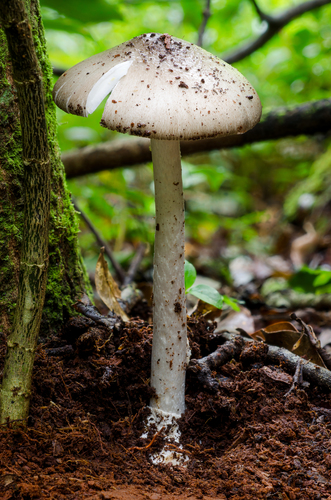
Pale olive-green to yellowish-green cap 5–12 cm; white gills free from stem; white ring (annulus) on stem; volva (cup) at base of stem often buried in soil; white spore print. Common in tropical forest edges, roadsides, and disturbed land near hardwoods across Cuba, Puerto Rico, Costa Rica.
Toxic Compound(s)
Amatoxins — alpha-amanitin. Structurally and clinically identical to Amanita phalloides (Death Cap). LD50 approx. 0.1 mg/kg.
Onset Time
6–24 hours post-ingestion. Asymptomatic latent phase commonly leads to delayed presentation and missed diagnosis.
Mechanism of Toxicity
Alpha-amanitin inhibits RNA polymerase II, blocking protein synthesis in hepatocytes and renal tubular cells. Gastrointestinal phase, apparent recovery, then organ failure.
Immediate Poison Control consultation and emergency department evaluation. Early aggressive IV fluid resuscitation. N-acetylcysteine (NAC) hepatoprotection (consider oral activated charcoal if within 1–2 hours and airway protected). IV silibinin (Legalon SIL) if available through investigational access. Serial LFTs, PT/INR, and creatinine every 6–8 hours — do NOT discharge during apparent latent phase. Early hepatology and liver transplant center consultation. Contact transplant program if INR > 1.5 or AST rising rapidly.
⚠ INR Monitoring (every 6–8 hr): Monitor INR alongside LFTs every 6–8 hours. INR changes often precede AST/ALT spikes and are the better early indicator of hepatic synthesis failure. A rising INR in the latent phase is an indication for immediate escalation of care.
⚠ Look-Alike Warning: May be mistaken for edible Amanita species or wild button mushrooms. Always check for the volva (sack at stem base), white gills (that never darken), and white spore print. The olive-green color distinguishes from the all-white A. verna and A. bisporigera.
🐾 Veterinary / Tier 1 — Decontamination Window: Gastric lavage or activated charcoal must be within 2–4 hours — hard cutoff. Amanita species are sweet-smelling and highly attractive to dogs. Contact ASPCA Animal Poison Control (888-426-4435) immediately for any Amanita ingestion.
Tier 1 — Life-Threatening6 to 24 hours (latent phase)
Identification Features
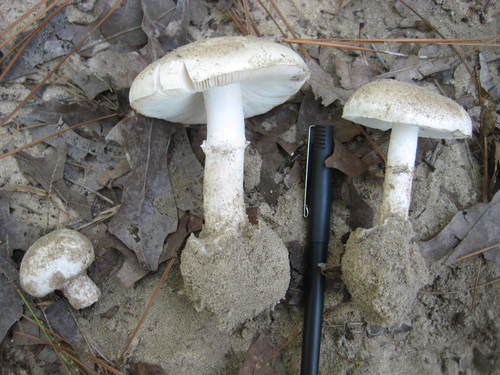
Pure white cap 4–12 cm; white free gills that never darken; white ring (skirt) on stem; bulbous base with prominent sack-like volva often buried in soil; grows in mixed hardwood forests, especially with oak. White spore print. Critical differentiator from edible Agaricus campestris: Agaricus gills turn pink then brown with age and has NO volva at base.
Toxic Compound(s)
Amatoxins — alpha-amanitin. Among the most toxic mushrooms in the Western Hemisphere.
Alpha-amanitin; RNA polymerase II inhibition causing hepatocellular and renal tubular necrosis. Clinically identical to A. phalloides.
Clinical Symptoms
Biphasic amatoxin syndrome. Phase 1 (6–24 hr): severe nausea, vomiting, rice-water diarrhea, abdominal cramps. Phase 2 (24–72 hr): apparent improvement — the most dangerous period due to false reassurance. Phase 3 (72–96 hr+): fulminant hepatic necrosis, rising LFTs, coagulopathy, renal failure, hepatic coma. Can be fatal without liver transplant.
Treatment Protocol
ICU admission. Multi-dose activated charcoal via NG tube if within timeline and airway protected. High-dose IV N-acetylcysteine (NAC). Contact liver transplant center early — do not wait for Phase 3 onset. Monitor LFTs, INR, creatinine every 6–8 hours. IV silibinin (Legalon SIL) via compassionate use if available. Cross-reference: clinically identical to Amanita virosa and A. arocheae.
⚠ INR Monitoring (every 6–8 hr): INR rise precedes AST/ALT elevation and is the most sensitive early hepatotoxicity marker. Escalate to transplant evaluation on any INR rise above 1.5.
⚠ Look-Alike Warning: Wild white button mushrooms (Agaricus campestris). Always dig to expose the base and check for the volva. White gills that do NOT darken = high suspicion for deadly Amanita. Never harvest white-gilled mushrooms without fully excavating the base.
Tier 1 — Life-Threatening6 to 24 hours (latent phase)
Identification Features
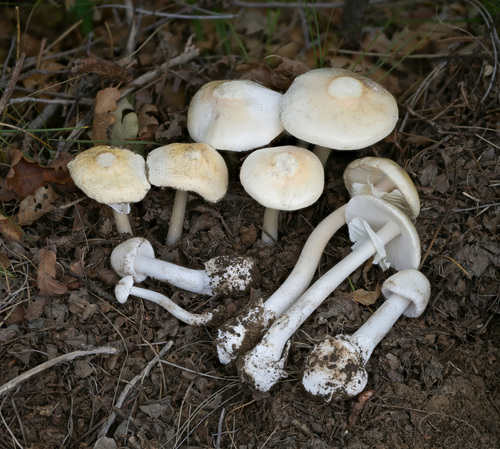
Entirely white mushroom; smooth white cap 5–10 cm; free white gills; persistent ring on stem; prominent volva cup at base; closely resembles edible Amanita species; white spore print. Year-round in Caribbean; spring peak in Central America. Found in tropical and subtropical forest near oaks and introduced hardwoods across the Greater Antilles.
Toxic Compound(s)
Amatoxins — alpha-amanitin and beta-amanitin. Clinical presentation identical to A. phalloides.
Onset Time
6–24 hours. Emergency presentation required even if patient appears well — latent phase is deceptive.
Mechanism of Toxicity
RNA polymerase II inhibition via alpha-amanitin; hepatocellular and renal tubular necrosis. Enterohepatic recirculation prolongs toxin exposure.
Clinical Symptoms
Amatoxin poisoning identical to A. phalloides. Delayed onset GI phase, false remission, then fulminant hepatic and renal failure. Emergency presentation required at first symptom onset regardless of apparent mild severity.
Treatment Protocol
Same protocol as all amatoxin species. Aggressive IV hydration, NAC, multi-dose activated charcoal if within timeline. Serial LFTs and INR every 6–8 hours. Early liver transplant center notification. Do not discharge based on apparent improvement in Phase 2.
⚠ INR Monitoring (every 6–8 hr): INR is the primary early marker of hepatic synthesis failure. Track every 6–8 hours alongside LFTs. Rising INR demands immediate hepatology and transplant consultation.
⚠ Look-Alike Warning: The all-white presentation makes Amanita verna particularly dangerous — it resembles edible white mushrooms and cooking-stage champignons. Always excavate the base to check for the volva. White gills + ring + volva = potentially lethal.
Small white cap 2–5 cm with distinctive reddish-brown central scales forming concentric rings; unpleasant rubber-eraser or rubber-chemical odor (diagnostic); white gills; thin stem with small skirt; no volva; found in roadsides, gardens, and woodland edges throughout the Caribbean. Spore print white.
Toxic Compound(s)
Cytotoxic amatoxin compounds. Potentially fatal even in small quantities. The small size is deceptive — do not underestimate.
Onset Time
6–24 hours. Cytotoxic mechanism; GI symptoms followed by hepatotoxic phase.
Mechanism of Toxicity
Cytotoxic compounds (amatoxin class); hepatocellular necrosis. Fatal ingestions documented in Europe and the Americas even with partial consumption.
Clinical Symptoms
GI onset: nausea, vomiting, diarrhea. May progress to hepatotoxicity, coagulopathy, and liver failure. Severity is dose-dependent; small species means small doses can still be fatal. Call 911 and Poison Control immediately.
Treatment Protocol
Treat as amatoxin poisoning until proven otherwise. Immediate emergency evaluation. IV hydration, N-acetylcysteine (NAC). Serial LFTs and INR every 6–8 hours. Contact Poison Control immediately. Liver transplant evaluation if hepatic failure develops.
⚠ INR Monitoring (every 6–8 hr): Monitor INR every 6–8 hours alongside LFTs. Rising INR is the earliest hepatic synthesis failure indicator. Do not discharge without serial monitoring.
⚠ Look-Alike Warning: Small white Lepiota species may be collected by foragers seeking edible parasol mushrooms. The rubber-eraser smell, small size (<5 cm), and concentric reddish-brown cap scales are key distinguishing features. No small Lepiota should be consumed.
These species cause significant systemic toxicity requiring medical evaluation. Autonomic crises and neurological effects can be severe, especially in vulnerable populations.
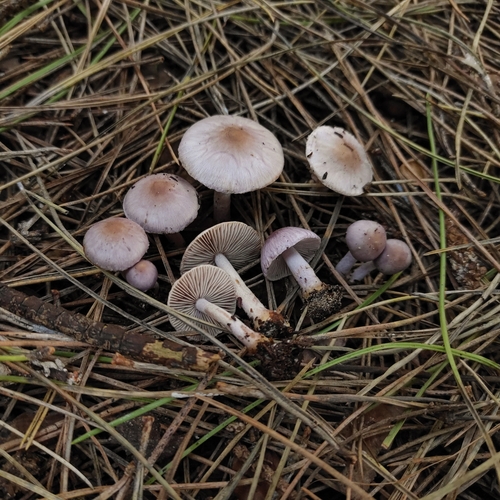
Cap 1–4 cm, white to lilac-tinted (var. lilacina), silky fibrous surface with central umbo; gills pale becoming brownish; slender fibrous stem with no ring; distinctive earthy or spermatic smell; brown spore print. Found in forest edges, gardens, and disturbed soils throughout the Caribbean.
Toxic Compound(s)
Muscarine — one of the highest muscarine concentrations of any mushroom genus. Causes full cholinergic toxidrome.
Onset Time
15–60 minutes. Rapid onset; SLUDGE syndrome fully developed within 1–2 hours.
Mechanism of Toxicity
Muscarinic receptor agonism — peripheral autonomic overstimulation. Does NOT cross the blood-brain barrier in significant amounts; primarily peripheral cholinergic.
Clinical Symptoms
Classic SLUDGE/DUMBELS syndrome: profuse Salivation, Lacrimation, Urination, Defecation/Diarrhea, GI cramps, Emesis; also Bradycardia, Bronchospasm, Miosis. Severe: bronchorrhea, respiratory compromise, hypotension.
Treatment Protocol
Atropine IV titrated to symptom relief — target dry secretions and bronchospasm (NOT heart rate alone). Typical adult dose: 1–2 mg IV bolus, repeat every 5–10 min as needed. Typical pediatric dose: 0.02 mg/kg IV (minimum 0.1 mg). Glycopyrrolate as alternative for bronchosecretions without CNS effects. Supportive care: O2, bronchodilators as needed. Symptoms typically resolve within 4–8 hours with treatment.
⚠ Atropine Ceiling Note: Titrate atropine to drying of secretions and resolution of bradycardia/bronchospasm. Avoid excessive atropinization (tachycardia >120 bpm, urinary retention, hyperthermia). Total doses of 10–20 mg or more may be required in severe cases. Do not use glycopyrrolate as sole agent if CNS muscarinic effects present.
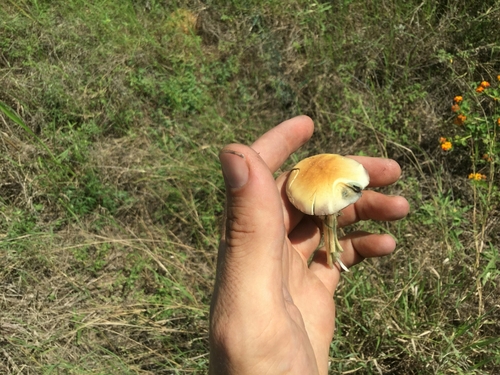
Cap 1.5–8 cm, caramel-brown fading to pale buff when dry; gills gray-brown to dark purple-brown at maturity; stem bruises blue-green when damaged (diagnostic); ring present on stem; grows on cattle dung and enriched soils in pastures throughout the Caribbean. Dark purple-brown spore print.
Toxic Compound(s)
Psilocybin (prodrug) and psilocin (active) — serotonin 5-HT2A agonists. Effects dose-dependent; potency varies by specimen.
Onset Time
30 minutes–1 hour after ingestion. Duration 4–6 hours typically.
Mechanism of Toxicity
Psilocin is a partial agonist at 5-HT2A receptors in the prefrontal cortex. Primarily psychological effects; physiological toxicity is low but serotonin syndrome risk exists with SSRI/MAOI co-ingestion.
Clinical Symptoms
Hallucinations (visual, auditory), altered time perception, euphoria or panic/anxiety, tachycardia, mild hypertension, dilated pupils. High-dose or co-ingestion with serotonergic drugs: hyperthermia, agitation, myoclonus, serotonin syndrome. Pediatric exposures may present with severe anxiety and confusion.
Treatment Protocol
Primarily supportive. Place in calm, low-stimulation environment. IV access for hydration. Benzodiazepines (lorazepam or diazepam) for severe anxiety, agitation, or seizure. Haloperidol if antipsychotic needed but avoid in serotonin syndrome. Monitor vital signs, temperature, and fluid status. If serotonin syndrome suspected (hyperthermia, clonus, diaphoresis with SSRI history): cyproheptadine 12 mg orally then 2 mg every 2 hours as needed. Supportive care sufficient in most cases; recovery within 6–8 hours without intervention.
These species primarily cause GI distress. Significant illness especially with large ingestions, pediatric exposures, or vulnerable populations. Rarely life-threatening in healthy adults but warrant evaluation.
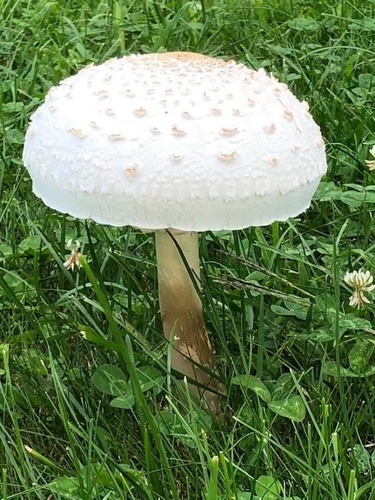
Large cap 10–30 cm, white to tan with brown scales; gills initially white turning distinctly green with age (diagnostic); moveable double ring on stem; bulbous stem base (no volva); common in lawns, parks, and disturbed grassland. Green spore print — definitive identification. The #1 cause of mushroom GI poisoning across the Greater Antilles and North America.
Toxic Compound(s)
Molybdophyllysin — a metalloprotease toxin causing direct GI mucosal damage. Heat-resistant; cooking does not neutralize the toxin.
Onset Time
30 minutes to 3 hours after ingestion. Rapid onset clearly distinguishes from amatoxin poisoning (which is always >6 hours).
Mechanism of Toxicity
Metalloprotease direct GI mucosal toxicity. Onset within 30 minutes to 3 hours; rapid presentation is the key differentiating feature from amatoxin-bearing species.
Clinical Symptoms
Severe nausea, profuse vomiting (often forceful/violent), watery diarrhea (may be bloody), abdominal cramping. Dehydration, electrolyte abnormalities with large ingestions. Usually self-limiting within 6–12 hours but hospitalization may be needed for IV rehydration.
Treatment Protocol
Primarily supportive. IV fluid resuscitation for significant dehydration. Antiemetics (ondansetron). Monitor electrolytes; replace as needed. Confirm rapid onset (<3 hours) to distinguish from delayed-onset amatoxin poisoning — if onset was >6 hours, escalate to amatoxin protocol immediately. Symptoms typically resolve within 6–24 hours. Pediatric and elderly patients are higher risk for severe dehydration requiring admission.
⚠ Look-Alike Warning: Commonly confused with edible parasol mushrooms (Macrolepiota procera) and young puffballs. The GREEN spore print and green gill color at maturity are absolutely diagnostic for C. molybdites — no edible mushroom has a green spore print.
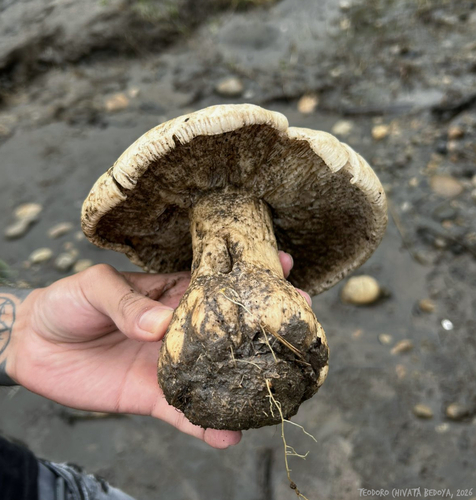
Very large white to pale tan cap 15–60 cm — the largest gilled mushroom in the Western Hemisphere; crowded white gills; massive stout white stem; found in clusters in grassy, disturbed subtropical areas year-round. Firm and solid texture. White spore print.
Toxic Compound(s)
Unknown GI irritant compound(s) active when consumed raw or undercooked. Edible when thoroughly cooked; heat destroys the irritant. Not a traditional food source in the Greater Antilles; local inexperience increases misuse risk.
Onset Time
1–3 hours after raw or undercooked ingestion. No significant toxicity when fully cooked through.
Mechanism of Toxicity
Thermolabile GI irritant. Symptoms resolve with supportive care. No systemic toxicity documented. Impression species due to sheer size; clinical concern is primarily misidentification and inadequate cooking.
Clinical Symptoms
GI irritation: nausea, vomiting, abdominal discomfort. Self-limiting. No hepatotoxicity, neurotoxicity, or systemic organ involvement expected. Confirm adequate cooking history; differentiate from misidentification with toxic species.
Treatment Protocol
Supportive care: fluids, antiemetics. Confirm cooking history — rapid onset (<3 hr) after raw consumption is consistent with heat-labile irritant. If onset was delayed (>6 hr), obtain full specimen identification and escalate to Poison Control to exclude toxic lookalike species. Most cases resolve within 4–8 hours without intervention.
The 2–4 hour decontamination window is a hard cutoff for Tier 1 species. After this window, activated charcoal is unlikely to be effective and supportive care becomes the primary intervention. Note: Amanita species have a sweet attractive smell highly sought by dogs — even a small ingestion of any Amanita should be treated as a medical emergency.
Amanita arocheae, A. bisporigera, A. verna: Induce emesis within 2 hours of ingestion (only if alert, no seizures). Activated charcoal (1–2 g/kg PO) if within 2–4 hours. IV fluids. Serial liver enzymes and coagulation panel every 8–12 hours for 72 hours. SAMe (S-Adenosyl methionine) and milk thistle (silybin) as hepatoprotective support. Referral to veterinary internal medicine or 24-hour emergency clinic. Sweet scent: dogs may consume large amounts rapidly; treat aggressively.
Lepiota cristata: Treat as amatoxin ingestion. Emesis if within 1 hour; activated charcoal within 2–4 hours. IV support, liver enzyme monitoring. Contact ASPCA Animal Poison Control: 888-426-4435.
🏈 Seasonal Epidemiology — Caribbean Mushroom Season
The Greater Antilles has a year-round tropical mushroom season with no true mycological off-season. Fruiting activity intensifies significantly following rain events throughout the year. Two primary peaks correlate with the Caribbean rainy season:
Main wet season peak: June through November — coincides with Atlantic hurricane season; heavy rainfall produces flush fruiting events across all islands
Secondary peak: February through April — early spring rains, especially in higher-elevation zones of Hispaniola and Puerto Rico
Chlorophyllum molybdites fruits prolifically throughout the year in lawns, parks, roadsides, and disturbed grassland; responsible for the majority of mushroom poisonings year-round
Amatoxin species (Amanita spp., Lepiota cristata) peak with wet season soil moisture; documented year-round in lower tropical zones
Psilocybe cubensis fruits year-round in cattle pastures and enriched tropical soils across all four islands
Tourist and visitor exposures occur year-round; foraging by visitors unfamiliar with Caribbean species is a known risk factor
📚 Sample Preservation Checklist
Preserve any remaining specimen for mycological identification. Proper preservation dramatically improves diagnostic accuracy.
✅ Wrap in paper or aluminum foil — NEVER plastic (plastic causes rapid decomposition and destroys key identification features)
✅ Refrigerate immediately (do not freeze)
✅ Preserve the complete specimen including base and cup (volva) — dig carefully to retrieve buried structures
✅ Photograph from multiple angles before wrapping — top, underside (gills), stem, base, habitat context
✅ Document GPS coordinates or precise location description
✅ Note: time of ingestion, quantity consumed, preparation method (raw or cooked), and all people who ate the mushroom
✅ Retain any cooking water or remaining food preparation materials if available
☎ Emergency Contacts — Greater Antilles / Contactos de Emergencia
🇺🇸 Puerto Rico
Poison Control Center 1-800-222-1222 24/7 — English & Spanish
🇨🇺 Cuba
SIUM — Sistema Integrado de Urgencias Médicas
Centro Toxicológico de Cuba +53 7 204-1000 Emergencias: 104
🇯🇲 Jamaica
Kingston Public Hospital
National Poison Information Centre +1 876-922-7100 Emergency: 110