Clinical Use Only. This reference is intended for healthcare providers, poison control specialists, and trained foragers. It is not a foraging identification guide. Always contact the relevant regional Poison Control Centre for real-time case management guidance. Treatment recommendations should be confirmed against current clinical guidelines.
Regional Scope: The Mediterranean region’s mild, wet winters and warm summers produce distinct autumn and spring mushroom fruiting seasons. Lepiota brunneoincarnata is a leading cause of fatal amatoxin poisonings in Spain, Italy, and Greece due to its small size and resemblance to edible species. Omphalotus olearius is the most common source of severe GI poisonings across the region, frequently misidentified as chanterelles. Inocybe spp. are widespread across coastal and inland habitats.
Quick Reference — Key Mediterranean Europe Species
| Common Name | Scientific Name | Tier | Toxin | Onset | Primary Risk |
|---|---|---|---|---|---|
| Deadly Dapperling | Lepiota brunneoincarnata | Tier 1 | Alpha-amanitin | 6–24 hours | Acute hepatic failure, coagulopathy, renal failure |
| Jack-o’-Lantern | Omphalotus olearius | Tier 2 | Illudins | 1–4 hours | Violent emesis, severe dehydration |
| Fiber Caps | Inocybe rimosa / geophylla | Tier 3 | Muscarine | 15 min–2 hrs | SLUDGE syndrome, bradycardia, bronchoconstriction |
🔴 Tier 1 — Critical Lethal Systemic Toxin
Amatoxin-Bearing Species
Delayed onset (6–24 hours). Biphasic presentation. Acute hepatic failure with coagulopathy. Liver transplant threshold monitoring required. Fatalities reported in southern Europe, predominantly autumn foraging season.
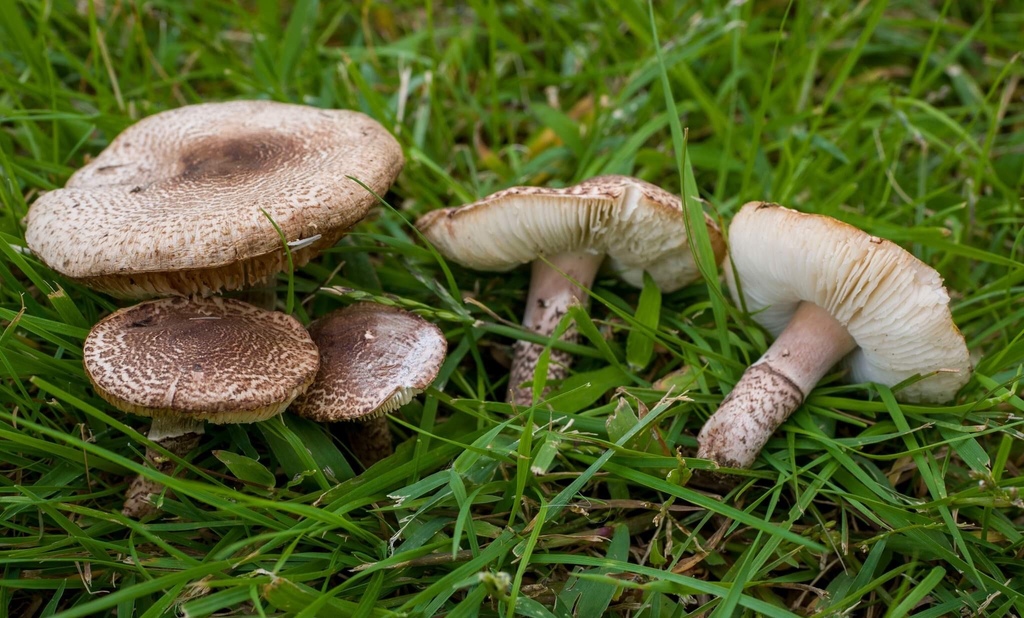
Deadly Dapperling
Lepiota brunneoincarnata
🔴 CRITICAL / LETHAL
Onset 6–24 hours
 iNaturalist
Local Names
Lepiota mortal (Spanish) · Lepiote brun marron (French) · Falsa digitallina (Italian)
Season
October–January
Elevation
0–800m
Habitat
Grassy areas, parks, gardens, coastal pine forests, roadside verges
Distribution
Spain (Andalusia, Catalonia), Italy (Tuscany, Sicily), Greece (Peloponnese)
ID Features
Small cap 2–7cm, brownish-pink scales over white background. Free white gills. Fragile ring zone, scaly stem below.
Spore Print
White spores — distinguishes from dark-spored lookalikes
Toxin
Alpha-amanitin (Amatoxins)
Onset
6–24 hours (average 9–12 hours)
Symptoms
Biphasic — severe GI distress, latent apparent recovery, then acute hepatic failure, jaundice, coagulopathy, encephalopathy, secondary renal failure
⚠ Lookalike Risk: Agaricus campestris, small edible Macrolepiota species. Field distinguish by small cap size, distinctive brownish-pink scale pattern, and white spore print.
Human Treatment Protocol:
- Aggressive IV fluids to clear toxins and maintain renal perfusion
- Activated charcoal 1 g/kg every 4 hours
- IV Silibinin 20–30 mg/kg/day to block hepatocyte toxin uptake
- IV NAC (N-acetylcysteine) 150 mg/kg loading dose
- Monitor PT/INR, ALT/AST, bilirubin, creatinine every 6 hours
- Liver transplant if INR >6.0 or encephalopathy develops
☎ Immediate Poison Control Consultation Required —
Spain: +34 91 562 04 20 ·
Italy: +39 02 6610 1029 ·
EU: 112
🟠 Tier 2 — Severe Gastrointestinal Irritant
Illudin-Bearing Species
Rapid onset (1–4 hours). Severe GI syndrome with high dehydration risk. Supportive care is definitive. Frequently misidentified as edible chanterelle.
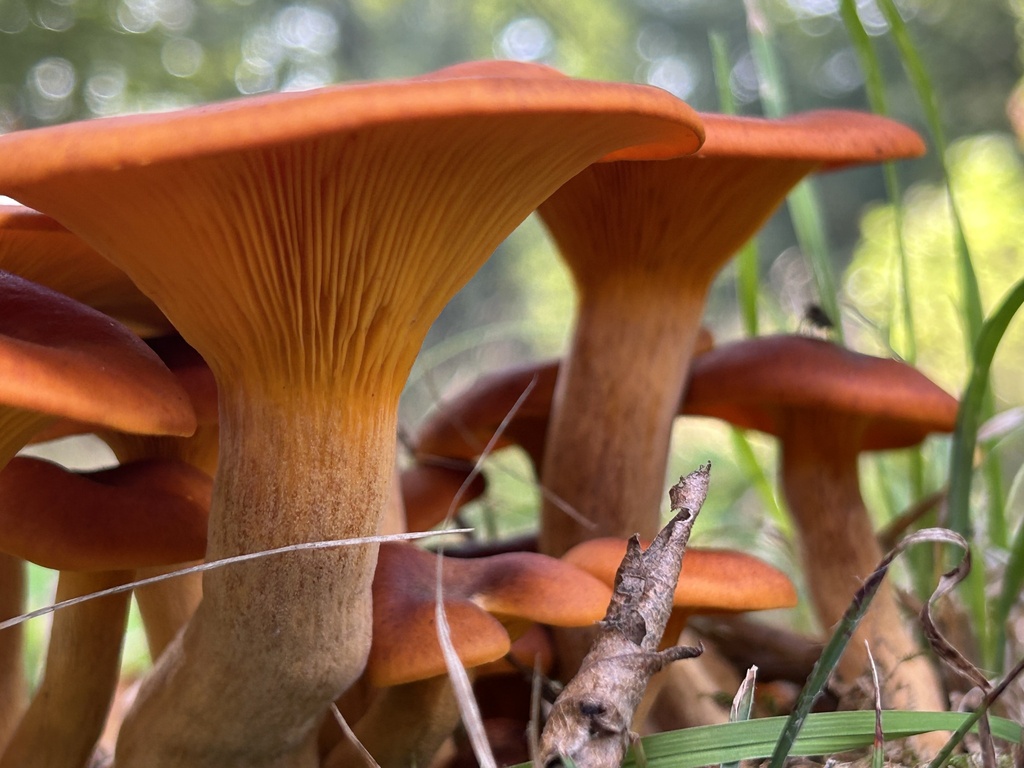
Jack-o’-Lantern
Omphalotus olearius
🟠 SEVERE INJURY / TOXIC
Onset 1–4 hours
 iNaturalist
Toxin
Illudins
Onset
1–4 hours (rapid)
Symptoms
Severe GI — violent emesis, high risk of dehydration, abdominal guarding
Lookalike
Chanterelle (Cantharellus cibarius)
Field Diagnostic
Grows in tight clusters on wood (olive/oak stumps), true sharp blade-like gills. Chanterelles grow from soil, blunt cross-veined ridges.
Human Treatment Protocol:
- Supportive care only
- IV fluids for dehydration and electrolyte management
- Administration of antiemetics
🟡 Tier 3 — Acute Autonomic Toxin
Muscarine-Bearing Species
Rapid onset (15 min–2 hours). SLUDGE syndrome. Atropine is the definitive antidote — dose to effect until respiratory secretions dry.
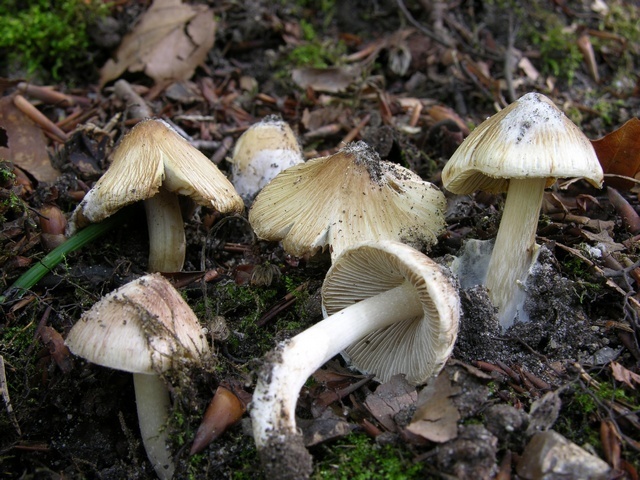
Fiber Caps
Inocybe rimosa / geophylla
🟡 HIGH PERIPHERAL TOXICITY
Onset 15 min–2 hrs
 iNaturalist
Toxin
Muscarine
Onset
15 minutes to 2 hours
Symptoms
Muscarine — SLUDGE syndrome. Hyper-salivation, lacrimation, bradycardia, miosis, bronchoconstriction.
Lookalike
Fairy Ring Champignon (Marasmius oreades)
Field Diagnostic
Radially splitting fibrillose cap, sharp umbo, dull clay-brown gills. Marasmius has elastic cream-colored gills.
Human Treatment Protocol:
- Atropine is the definitive, physiological antidote
- Administer and dose strictly to effect until respiratory secretions dry
☎ Regional Admissions & Dispatch Reference
Poison Control Centers (Human)
Spain: +34 91 562 04 20 — Servicio de Información Toxicológica
Italy (Milan): +39 02 6610 1029 · Italy (Rome): +39 06 4997 8000
Greece: +30 210 779 3777 — Athens Poison Information Centre
Portugal: +351 800 250 250 — Centro de Informação Antivenenos
Pan-European Emergency: 112
Italy (Milan): +39 02 6610 1029 · Italy (Rome): +39 06 4997 8000
Greece: +30 210 779 3777 — Athens Poison Information Centre
Portugal: +351 800 250 250 — Centro de Informação Antivenenos
Pan-European Emergency: 112
Veterinary Emergency Networks
Spain: Hospital Clínic Veterinàri UAB (Barcelona): +34 93 586 83 83
Spain: Hospital Veterinario Puchol (Madrid): +34 91 290 06 40
Portugal: Hospital Escolar Veterinário ULisboa (Lisbon): +351 21 365 2893
International/Europe Phone Consult: VPIS (Veterinary Poisons Information Service): +44 (0) 207 305 5055
Spain: Hospital Veterinario Puchol (Madrid): +34 91 290 06 40
Portugal: Hospital Escolar Veterinário ULisboa (Lisbon): +351 21 365 2893
International/Europe Phone Consult: VPIS (Veterinary Poisons Information Service): +44 (0) 207 305 5055
🌲 Field Survival & Decontamination Protocols
The Spore Print Protocol
- Sever the mushroom stem cleanly at the very top, flush with the gills
- Place the cap gills-down on a sheet of paper — half white, half black to capture both light and dark spore drops
- Cover with a small cup or bowl to prevent air currents
- Wait 2–6 hours. Remove and read the color of the deposited powder. Lepiota drops white spores, distinguishing it from dark-spored lookalikes.
Cross-Contamination & Handling Rules
- Skin Touch is Safe: No known mushroom can poison through intact skin. Wash hands before eating.
- Basket Contamination: If a toxic Lepiota is placed in a harvesting basket, discard the entire basket. Fragments break off and adhere to edible flesh.
- Spore Inhalation: Do not transport mature toxic specimens in tightly sealed unventilated spaces.
🐾 VETERINARY REFERENCE — Dogs & Cats Only
⚠ ALL DOSING BELOW IS FOR ANIMALS. DO NOT APPLY TO HUMAN PATIENTS. This section is exclusively for veterinary use.
Species 1: Deadly Dapperling (Lepiota brunneoincarnata)
Susceptibility & Onset
Highly lethal. Just 1–2g can kill a 10kg dog. GI signs delay 6–24 hours. Do not wait for symptoms.
Clinical Signs
Bloody vomiting/diarrhea, yellow gums (icterus), hypothermia, bleeding, seizures/coma.
Protocol
- Induce emesis only if asymptomatic and within 2 hours of ingestion
- Activated Charcoal 1–2 g/kg PO. Repeat half-doses every 4–6 hours for 24 hours
- Silibinin (IV): 50 mg/kg IV at 5 hours and 24 hours post-exposure
- N-Acetylcysteine (NAC): Loading dose 140 mg/kg IV slowly over 15–20 minutes, then 70 mg/kg IV every 4 hours for up to 17 doses
- Aggressive IV fluid diuresis. Vitamin K1 (2.5–5.0 mg/kg/day) if coagulopathy develops
Species 2: Jack-o’-Lantern (Omphalotus olearius)
Susceptibility & Onset
High gastric irritation. Onset 30 minutes to 3 hours.
Clinical Signs
Drooling, violent vomiting, abdominal pain, watery diarrhea, lethargy. Severe dehydration can induce hypovolemic shock.
Protocol
- Emesis usually self-induced. If not: Apomorphine (dogs) or Dexmedetomidine (cats) if early and asymptomatic
- IV Crystalloids to correct electrolyte deficits
- Antiemetics: Maropitant 1 mg/kg SC q24h, and gastroprotectants
Species 3: Fiber Caps (Inocybe rimosa / geophylla)
Susceptibility & Onset
Life-threatening. Hyper-acute onset 15–30 minutes.
Clinical Signs
Intense drooling, tearing, bradycardia, miosis, breathing difficulty, explosive diarrhea.
Protocol
- Definitive Antidote: Atropine Sulfate
- Dosing: 0.02 to 0.1 mg/kg (up to emergency max 0.2 mg/kg). Give 1/4 to 1/2 of dose IV, rest IM or SC
- Repeat every 15–30 minutes, dose to clinical effect (drying of airway secretions, normalized heart rate). Do not dose until pupils dilate.
Baseline Veterinary Blood Work Panels:
- Complete Blood Count (CBC)
- Liver Function Tests (ALT/AST, Bilirubin)
- Kidney Panels (Creatinine, BUN)
- Coagulation Panels (PT/APTT)
🌿 UNIVERSAL FORAGING RULE ZERO: When in doubt, throw it out. Never ingest a wild mushroom based on a single matching characteristic or unverified field app.