⚠ ON POISON CENTRE: 1-800-268-9017   |   QC POISON CONTROL: 1-800-463-5060   |   National: 1-844-764-7669
ONTARIO & QUEBEC — GREAT LAKES & BOREAL
Updated and reviewed — June 2026
This guide covers 12 toxic mushroom species clinically relevant to Ontario and Quebec. Seven are Tier 1 Critical with potentially fatal outcomes; four are Tier 2 Severe requiring urgent care; two are Tier 3 GI irritants. Onset ranges from 30 minutes to 21 days. The 2–21 day latency of Cortinarius rubellus (orellanine nephrotoxicity) is the most dangerous diagnostic trap — always ask about mushroom consumption in any unexplained acute kidney injury. Paxillus involutus (Brown Roll-Rim) presents a distinct cumulative antigen hazard: a patient may eat the same mushroom for years before a sudden fatal immune hemolysis — prior tolerance does NOT rule out poisoning.
Quick Reference — All Species
Species Common Name Tier Onset Primary Risk Severity
Amanita bisporigera Destroying Angel T1 6–24 hr Hepatic necrosis Fatal
Amanita virosa Ange de la mort T1 6–24 hr Hepatic necrosis Fatal
Galerina marginata Deadly Galerina T1 6–24 hr Amatoxin / hepatic failure Fatal
Gyromitra esculenta False Morel T1 6–12 hr MMH / hemolysis / methemoglobinemia Fatal
Cortinarius rubellus Deadly Webcap T1 2–21 DAYS Irreversible renal failure Fatal
Amanita muscaria Fly Agaric T2 30 min – 2 hr CNS / muscimol syndrome Severe
Amanita muscaria var. guessowii Yellow-Orange Fly Agaric T2 30 min – 2 hr CNS / muscimol syndrome (same as muscaria) Severe
Clitocybe dealbata Ivory Funnel T2 15–30 min Muscarinic SLUDGE crisis Severe
Hebeloma crustuliniforme Poison Pie T2 1–4 hr GI + neurological distress Severe
Paxillus involutus Brown Roll-Rim T2 30 min – 3 hr Immune hemolysis — cumulative antigen (IgG-mediated) Fatal
Scleroderma citrinum Pigskin Poison Puffball T3 30 min – 2 hr GI irritant Moderate
Omphalotus illudens Eastern Jack-o-Lantern T3 30 min – 2 hr GI irritant (illudins) Moderate
⚠ Tier 1 Critical

Potentially Fatal — Immediate ICU Referral Required

All six species below carry significant mortality risk. Amatoxin species present with delayed onset and a deceptive false-recovery phase. Gyromitra esculenta introduces the added danger of cook-poisoning by steam inhalation — STAT IV pyridoxine is the antidote. Cortinarius rubellus presents with extreme 2–21 day latency — often misdiagnosed as unrelated renal failure. Contact poison control immediately for all suspected ingestions.

Eastern Destroying Angel
Amanita bisporigera
Severity 4 — Potentially Fatal Delayed onset: 6–24 hr Tier 1 Critical
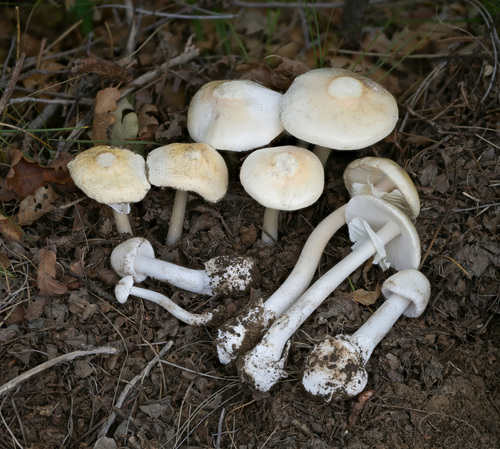
Amanita bisporigera (Eastern Destroying Angel) — pure white cap, gills, and stipe with basal volva
Amanita bisporigera — entirely pure white: smooth white cap, white free gills, white stipe; membranous ring (annulus); bulbous base with sack-like volva (dig to expose). Native Ontario & Quebec forest species. Photo: iNaturalist (research-grade observation)
⚠ Species Distinction — Not A. phalloides Amanita bisporigera is a distinct native species — not a variant of A. phalloides.

Amanita phalloides (Death Cap) is a European introduction found in urban Ontario and Quebec under ornamental non-native trees (English Oak, European Beech, Hornbeam) in manicured city settings — introduced as mycorrhizal spores in imported sapling root balls.

Amanita bisporigera (Eastern Destroying Angel) is native to Ontario and Quebec. It fruits in natural forest habitats — hardwood and mixed forests — forming mycorrhizal associations with native oaks, hickories, and conifers. It is entirely pure white, with no greenish, yellowish, or olive tones. A patient who foraged in a native forest environment (not urban landscaping) with a pure white mushroom should raise immediate suspicion for A. bisporigera.

Toxin Type
Amatoxins (α-amanitin) — RNA polymerase II inhibitors causing progressive hepatocyte destruction and multi-organ failure. Thermostable; cooking does NOT deactivate.
Clinical Field Marks
  • Smooth, pure white cap — no greenish, yellowish, or olive tones
  • Persistent membranous ring (annulus) on the stipe
  • White free gills — pure white throughout (never pink)
  • White stipe with bulbous base — basal volva (sack-like cup) often buried; always dig to expose
  • Habitat: native Ontario/Quebec hardwood and mixed forest, oaks and hickories
Onset Time
6–24 hours (delayed). Deceptive false-recovery phase at 24–72 hours masks progressive hepatic injury.
Lookalike
Wild white button mushrooms (Agaricus campestris). Key distinction: Agaricus has pink to brown gills darkening with age; Amanita bisporigera has pure white gills throughout and a basal volva. Always dig to check for the volva.
Symptoms by Organ System
Phase 1: GI (6–24 hr)
  • Severe nausea, vomiting
  • Rice-water diarrhea, abdominal cramps
  • Dehydration, electrolyte loss
Phase 2: False Recovery (24–72 hr)
  • Apparent clinical improvement — do not discharge
  • Hepatic injury progressing silently
Phase 3: Hepatic Necrosis (72–96 hr+)
  • Fulminant hepatic necrosis
  • Elevated LFTs, coagulopathy, rising INR
  • Hepatic coma — potentially fatal without transplant
Treatment Protocol
ICU admission. Multi-dose activated charcoal via NG tube (if within timeline). High-dose IV N-acetylcysteine (NAC). Monitor LFTs, INR, creatinine every 6–12 hours. Contact liver transplant center early — do not wait for fulminant failure. Aggressive IV fluid resuscitation. Silibinin IV if available (limited in Canada — contact poison control for sourcing).
INR Monitoring: Monitor INR every 6–8 hours alongside LFTs — INR changes often precede AST/ALT spikes and tracks liver synthesis failure more accurately.
🐾 Veterinary Note (Tier 1): Grave prognosis in dogs. Liver failure can develop within 36 hours. Immediate aggressive decontamination and hepatoprotectants are mandatory. Decontamination window: gastric lavage or activated charcoal must be initiated within 2–4 hours post-ingestion. Standard decontamination is ineffective once the GI phase settles due to rapid canine metabolic rates.
☏ ON Poison Centre: 1-800-268-9017  |  QC: 1-800-463-5060  |  National: 1-844-764-7669

Destroying Angel / Ange de la mort

Amanita virosa • French: Ange de la mort
Severity 4 — Potentially Fatal Delayed onset: 6–24 hr Tier 1 Critical
Toxin Type
Amatoxins — identical mechanism to A. bisporigera. Severe cytotoxicity with hepatocyte destruction. Clinically indistinguishable from other amatoxin species.
Onset Time
6–24 hours (delayed). Biphasic course with false recovery at 24–72 hours.
Lookalike
Edible puffballs or white Agaricus species — especially dangerous in European and Asian immigrant communities who forage familiar European white mushrooms. Puffballs are solid white throughout with no gills; Amanita virosa has white gills and a basal volva.
Regional Note
Primarily Quebec boreal and mixed forest. French local name "Ange de la mort" (Angel of Death) is widely used among French-speaking foragers. Take history in both languages.
Symptoms by Organ System
GI (6–24 hr)
  • Abdominal cramps, cholera-like profuse diarrhea
  • Rapid dehydration
Hepatic (72–96 hr+)
  • Hepatocyte destruction — rapidly rising LFTs
  • Elevated INR, jaundice
  • Hepatic coma
Treatment Protocol
Immediate hospitalization. Multi-dose activated charcoal (if within 24 hours). High-volume IV hydration. IV Silibinin (if available) or IV N-acetylcysteine (NAC). Monitor LFTs, INR, creatinine every 6–12 hours. Contact liver transplant center early. Same protocol as Amanita bisporigera.
INR Monitoring: Monitor INR every 6–8 hours alongside LFTs — INR changes often precede AST/ALT spikes and tracks liver synthesis failure more accurately.
🐾 Veterinary Note (Tier 1): Same amatoxin toxicology as Eastern Destroying Angel. Potentially fatal in dogs. Apply identical decontamination and hepatoprotectant protocol. Decontamination window: gastric lavage or activated charcoal must be initiated within 2–4 hours post-ingestion. Standard decontamination is ineffective once the GI phase settles due to rapid canine metabolic rates.
☏ QC Poison Control: 1-800-463-5060  |  ON: 1-800-268-9017  |  National: 1-844-764-7669

Deadly Galerina / Funeral Bell

Galerina marginata
Severity 4 — Potentially Fatal Delayed onset: 6–24 hr Tier 1 Critical
Toxin Type
Amatoxins — identical syndrome to Amanita amatoxin species. Small brown LBM ("little brown mushroom") appearance makes it deceptively harmless-looking.
Onset Time
6–24 hours (delayed). Biphasic course with false recovery identical to Amanita species.
Habitat — Ontario & Quebec
Galerina marginata grows on decaying hardwood logs, stumps, and buried wood debris throughout Ontario and Quebec forests. Clusters appear on fallen birch, maple, oak, and beech. Overlaps extensively with Armillaria mellea (Honey Mushroom) in the same habitat — creating the most dangerous lookalike scenario in the region.
Symptoms by Organ System
GI (6–24 hr)
  • Nausea, vomiting, diarrhea
  • Abdominal cramps
False Recovery (24–72 hr)
  • Apparent clinical improvement
  • Silent hepatic injury progressing
Hepatic Failure (72–96 hr+)
  • Fulminant hepatic failure
  • Coagulopathy, elevated INR, jaundice
  • Potentially fatal without transplant
⚠ Southern Ontario Triage Warning — Undisclosed Ingestion Risk Southern Ontario has a documented overlap between hardwood log-loving Galerina marginata and wild psychoactive species foraged from the same wood-rot habitat. In the Guelph–Hamilton–GTA corridor, patients presenting with delayed GI onset (6–24 hr) after foraging on decaying wood may not fully disclose that they were seeking or consuming psychoactive species. The patient or family may not volunteer the complete foraging story. Do not assume a "recreational foraging" presentation excludes amatoxin exposure — if the collected species included any small brown ringed mushrooms from decaying hardwood, treat as a potential Galerina ingestion until proven otherwise. Ask directly about ALL species collected and consumed, not only the intended one.
▼ Lookalike Comparison Panel — Galerina marginata vs. Honey Mushroom (Armillaria mellea)
Feature ⚠ Galerina marginata — LETHAL ✓ Armillaria mellea — Edible*
Cap Fragile, smooth, honey-brown to tawny; delicate texture Fibrous, tufted surface with coarse scales near center; more robust
Growth Habit Small clusters on decaying wood; few fruiting bodies Massive dense clusters at tree bases, stumps, roots — often hundreds of caps
Stem / Ring Delicate, slender ringed stem — ring fragile, may disappear Stout stem; ring (if present) more cottony and persistent
Spore Print RUSTY BROWN — diagnostic. Take a print before any identification. WHITE — clean white print
Safety LETHAL — full amatoxin dose. Fatal hepatic failure. Edible with proper preparation (must be thoroughly cooked; raw is toxic)
* Edible with proper preparation only. Armillaria mellea contains thermolabile toxins destroyed by thorough cooking. Raw or undercooked Honey Mushroom causes GI illness. The spore print is the single most reliable distinguishing feature — always obtain before consumption or identification.
Treatment Protocol
Same protocol as Amanita amatoxin species. ICU admission. Multi-dose activated charcoal via NG tube. High-dose IV NAC. Monitor LFTs, INR, creatinine every 6–12 hours. Contact liver transplant center early. Do not discharge during false-recovery phase — hepatic injury continues silently.
INR Monitoring: Monitor INR every 6–8 hours alongside LFTs — INR changes often precede AST/ALT spikes and tracks liver synthesis failure more accurately.
🐾 Veterinary Note (Tier 1): Same amatoxin toxicology as Destroying Angel. Potentially fatal in dogs foraging on decaying logs. Apply identical aggressive decontamination and hepatoprotectant protocol. Decontamination window: gastric lavage or activated charcoal must be initiated within 2–4 hours post-ingestion. Standard decontamination is ineffective once the GI phase settles due to rapid canine metabolic rates.
☏ ON Poison Centre: 1-800-268-9017  |  QC: 1-800-463-5060  |  National: 1-844-764-7669

Deadly Webcap

Cortinarius rubellus
Severity 4 — Potentially Fatal EXTREME DELAY: 2–21 DAYS Tier 1 Critical
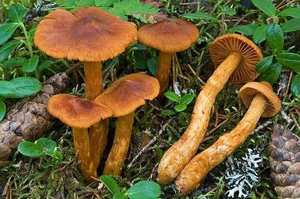
Deadly Webcap (Cortinarius rubellus) — rusty brown gills and stem; cobweb cortina veil may be visible on young specimens; critical latency 2–21 days before renal failure
Cortinarius rubellus — rusty brown cap and gills; cobweb veil leaves rusty annular zone on stem
⚠ Delayed Onset 2 to 21 Days — Critical Diagnostic Warning Symptoms may not appear until weeks after ingestion. By the time renal failure presents, the ingestion event may have been forgotten entirely. Always ask about mushroom consumption — including incidental contact for wool-dyeing — in any unexplained acute kidney injury. Activated charcoal is completely ineffective at this timeline.
⚠ Critical Diagnostic Warning — Extreme Latency
Onset: 2–21 Days After Ingestion

This is the most dangerous diagnostic trap in mycology. By the time symptoms appear, the patient almost certainly does not connect their current renal failure to mushroom ingestion from days or weeks prior. Always ask about mushroom consumption in any unexplained acute kidney injury — particularly in foragers, immigrants, and rural populations.

Activated charcoal is completely ineffective at this timeline. There is no specific antidote. Charcoal must not be given false priority over immediate nephrology admission.

Toxin Type
Orellanine — bipyridine N-oxide that directly destroys renal tubule cells. No antidote. Extremely heat-stable; cooking does not deactivate orellanine.
Onset Time
2–21 days (extreme latency). Patient may present with isolated renal failure and no recent GI symptoms, with no memory of mushroom ingestion.
Ontario / Quebec Foraging Risk
Confused with edible chanterelles by novice foragers in Ontario's boreal and Laurentian Quebec. Also a significant risk among wool-dyers who handle mushrooms for natural dye without ingesting them — dermal/oral contact is sufficient for exposure.
Lookalike
Edible chanterelles (Cantharellus spp.) — chanterelles have forking blunt ridges (not true gills), fruity apricot odor, and bright egg-yellow color; C. rubellus has true gills, a distinctive snake-skin fibrous stem pattern, and a rusty brown spore print. Confusion is particularly common in foragers collecting orange-toned species.
Mycological Detail
Cap 3–8 cm, convex to broadly umbonate, orange-brown to brick-red, smooth and dry. Gills: adnate, cinnamon-brown turning rust-brown with age. Stem: same color as cap, distinctive snake-skin fibrous pattern. Spore print: rusty brown. Habitat: mycorrhizal under spruce and pine on Canadian Shield and Laurentian Quebec acidic soils, late summer to autumn.
3-Phase Orellanine Progression
Phase 1 — Days 2–4
  • Mild flu-like symptoms
  • Nausea, fatigue — easily dismissed
  • Often attributed to other causes; ingestion forgotten
Phase 2 — Days 4–10
  • Intense thirst (polydipsia), frequent urination
  • Flank pain begins — early nephrotoxicity
  • Polyuria may precede oliguria
Phase 3 — Days 10–21 — Renal Crisis
  • Severe acute kidney injury
  • Oliguria / anuria — rapidly progressive
  • Potential permanent renal damage
  • Long-term dialysis or transplant required
  • No antidote — entirely supportive treatment
Treatment Protocol
No antidote. Treatment is entirely supportive. Activated charcoal ineffective at delayed presentation. Nephrology admission immediately upon suspicion — do not wait for renal failure to fully manifest. Serial electrolytes, creatinine, and BUN monitoring. Aggressive IV hydration. Hemodialysis preparation — may need to be initiated before creatinine peaks. High-dose steroids sometimes used (limited evidence). Long-term dialysis or renal transplant planning. Contact Ontario or Quebec Poison Control for case management.
🐾 Veterinary Note (Tier 1): Progressive renal failure in companion animals from orellanine nephrotoxicity. Diagnosis often delayed by the same 3–14 day window. Decontamination window: gastric lavage or activated charcoal must be initiated within 2–4 hours post-ingestion. Standard decontamination is ineffective once the GI phase settles due to rapid canine metabolic rates.
☏ ON Poison Centre: 1-800-268-9017  |  QC: 1-800-463-5060  |  National: 1-844-764-7669

False Morel

Gyromitra esculenta
Severity 4 — Potentially Fatal 6–12 hr onset Tier 1 Critical
False Morel (Gyromitra esculenta) — brain-like reddish-brown wrinkled cap; non-hollow chambered interior distinguishes it from edible true morels
Gyromitra esculenta — brain-like or saddle-shaped wrinkled cap (NOT honeycomb pitted); reddish-brown; chambered stem (not hollow)
⚠ STAT Treatment — IV Pyridoxine (Vitamin B6) 25 mg/kg Gyromitrin → monomethylhydrazine (MMH) inhibits pyridoxine (Vitamin B6) metabolism. STAT IV Pyridoxine 25 mg/kg is the antidote. Onset 6–12 hours after ingestion — or from steam inhalation while boiling false morels. MMH volatilizes at 87°C — cooks can be poisoned without eating.
Toxin Type
Gyromitrin → volatile monomethylhydrazine (MMH). Inhibits pyridoxine (Vitamin B6) metabolism. GI distress followed by hemolysis and methemoglobinemia in severe cases.
Onset Time
6–12 hours after ingestion or steam inhalation.
Spring Foraging Risk — Ontario & Quebec
Peaks during morel boom season (April–May). Confusion between true morel (Morchella — hollow stem, pitted cap) and false morel (Gyromitra — chambered stem, brain-like or saddle-shaped cap) is the primary clinical scenario. ER departments must learn the hollow vs. chambered stem distinction.
Critical Blind Spot — Cook Poisoning by Steam Inhalation
MMH volatilizes at 87°C. Cooks can be severely poisoned by inhaling steam from boiling false morels. Kitchen ventilation is insufficient protection. This creates presentations where the cook is symptomatic but has not ingested any mushroom directly — neurological symptoms including seizures can manifest from inhalation alone before anyone at the meal eats the dish.

Triage protocol: When a patient presents with neurological symptoms or seizures in the spring foraging season, ask explicitly: "Were you the one cooking or boiling the mushrooms?" Do not limit your history to ingestion. Inhalation exposure while preparing the meal is a distinct and underrecognized exposure route.

Seizures from MMH inhalation are responsive to STAT IV Pyridoxine (Vitamin B6) 25 mg/kg — the same antidote used for ingestion. Administer promptly even when the patient has not eaten.
⚠ Parboiling Myth — Does NOT Make This Mushroom Safe
A common cultural belief holds that parboiling or blanching false morels before eating removes the toxin and renders them edible. This is false and dangerous. Parboiling achieves only partial removal of gyromitrin — it does not make Gyromitra esculenta safe to eat. Residual toxin remains in the tissue and causes poisoning. Additionally, the parboiling or blanching process itself creates an inhalation hazard — MMH volatilizes into the steam as the mushroom is boiled, exposing the cook to neurological toxicity even before anyone consumes the "prepared" mushroom. There is no preparation method that makes G. esculenta reliably safe.
Mycological Detail
Cap 5–15 cm, irregularly brain-like or saddle-shaped, reddish-brown to chestnut. Stem: white, irregular, chambered — not hollow (slice to confirm). Spore print: colorless. Habitat: saprotrophic under conifers and in disturbed sandy soil, fruits in spring.
Symptoms by Organ System
GI Phase (6–12 hr)
  • Nausea, vomiting, abdominal cramping
  • Diarrhea, weakness
  • Headache
Severe / Hematologic Phase
  • Hemolysis — hemolytic anemia
  • Methemoglobinemia — cyanosis, confusion
  • Hepatotoxicity — LFT elevation
  • Seizures (pyridoxine deficiency)
Key Distinction from True Morel
Feature True Morel False Morel
Stem Hollow Chambered
Cap Pitted, honeycomb Brain-like / saddle
Season Spring Spring (same)
Treatment Protocol
STAT IV Pyridoxine (Vitamin B6) 25 mg/kg — this is the specific antidote and must be given promptly. Supportive care: IV fluids, antiemetics, monitoring of liver function. For methemoglobinemia >30%: IV methylene blue 1–2 mg/kg. For hemolysis: transfusion support as needed. Hemodialysis may accelerate MMH clearance. Contact poison control immediately.
🐾 Veterinary Note (Tier 1): MMH is toxic to dogs — hemolysis and hepatic injury. Decontamination window: gastric lavage or activated charcoal must be initiated within 2–4 hours post-ingestion. Standard decontamination is ineffective once the GI phase settles due to rapid canine metabolic rates.
☏ ON Poison Centre: 1-800-268-9017  |  QC: 1-800-463-5060  |  National: 1-844-764-7669
Tier 2 Severe

Serious Toxicity — Urgent Care Required

Species below cause severe, rapid-onset toxidromes requiring immediate intervention. CRITICAL: Do NOT give Atropine to Amanita muscaria patients — this is the ibotenic acid / muscimol toxidrome (GABA/NMDA), not muscarine. Atropine for muscarinic SLUDGE (Clitocybe/Inocybe); Benzodiazepines for ibotenic acid CNS excitation.

Fly Agaric

Amanita muscaria
Severity 3 — Severe Rapid onset: 30 min – 2 hr Tier 2 Severe
Toxin Type
Ibotenic acid and muscimol — CNS-active compounds. Ibotenic acid is an NMDA agonist; muscimol is a GABA-A agonist. Muscarinic effects are minimal at typical doses despite the species name.
Onset Time
30 minutes to 2 hours. Rapid neurological effects dominant.
Ontario / Quebec Note
Classic red-capped form with white warts is abundant in Ontario parklands under birch and pine, summer to autumn. Yellow-orange variant (A. muscaria var. guessowii) — see separate entry below — is common enough to warrant its own entry.
⚠ Do NOT Give Atropine
This is an ibotenic acid / muscimol toxidrome — GABA and NMDA receptor involvement. Atropine will dangerously exacerbate CNS excitation. Antidote: Benzodiazepines for agitation/seizure.
Symptoms by Organ System
CNS (dominant)
  • Confusion, disorientation, delirium
  • Sedation or agitation (alternating)
  • Ataxia, myoclonus, tremors
  • Mydriasis (dilated pupils)
  • Visual disturbances, hallucinations
  • Seizures (severe cases)
Autonomic
  • Nausea, vomiting (early)
  • Hypersalivation
Treatment Protocol
Benzodiazepines for agitation or seizure activity. NO Atropine. Supportive care. Monitor airway — sedation can compromise airway patency. Physostigmine generally not indicated (minimal muscarinic component). Do not give physostigmine for confusion alone. Symptoms typically resolve within 6–12 hours.
🐾 Veterinary Note: Structural amino acids in these species smell and taste sweet to canines, explaining why dogs specifically target them over other wild fungi. Dogs frequently present comatose or seizing. Provide sensory-deprived veterinary monitoring and respiratory support.
☏ ON Poison Centre: 1-800-268-9017  |  QC: 1-800-463-5060  |  National: 1-844-764-7669

Yellow-Orange Fly Agaric — Ontario Variant

Amanita muscaria var. guessowii — Yellow-orange Ontario variant
Severity 3 — Severe Rapid onset: 30 min – 2 hr Tier 2 Severe
Amanita muscaria var. guessowii — yellow-orange to apricot cap with white wart remnants; Ontario/Quebec common variant that experienced foragers may not recognize as toxic
Amanita muscaria var. guessowii — yellow-orange to apricot cap with white universal veil warts; Ontario/Quebec variant
Why a Separate Entry
This Ontario/Quebec variant has a yellow-orange to apricot cap rather than the classic red. Foragers who know the red muscaria may not recognize the yellow-orange variant as the same dangerous species — it has caused poisonings in experienced foragers who dismissed it as a benign orange species.
Toxin Type / Treatment
Identical toxidrome to A. muscaria: ibotenic acid / muscimol. Same treatment protocol: Benzodiazepines for CNS excitation. NO Atropine.
Mycological Detail
Cap yellow-orange to apricot, same universal veil remnant warts as classic muscaria. Habitat: abundant in Ontario parklands under birch and pine, summer to autumn. Spore print: white.
Symptoms
  • Identical to A. muscaria: delirium, ataxia, mydriasis, alternating sedation/agitation
  • Hallucinations, myoclonus
  • Seizures in severe cases
  • Nausea, vomiting (early GI)
🐾 Veterinary Note: Structural amino acids in these species smell and taste sweet to canines, explaining why dogs specifically target them over other wild fungi. Dogs frequently present comatose or seizing. Provide sensory-deprived veterinary monitoring and respiratory support.
☏ ON Poison Centre: 1-800-268-9017  |  QC: 1-800-463-5060  |  National: 1-844-764-7669

Ivory Funnel / Sweating Mushroom

Clitocybe dealbata
Severity 3 — Severe Rapid onset: 15–30 min Tier 2 Severe
Toxin Type
Muscarine — peripheral muscarinic receptor agonist producing full SLUDGE toxidrome. Pure muscarinic poisoning — Atropine is the specific antidote.
Onset Time
15–30 minutes (extremely rapid). One of the fastest-onset mushroom toxidromes. Bronchoconstriction and secretions can be immediately life-threatening.
Lookalike
Fairy Ring Mushroom (Marasmius oreades) — highly sought edible found in grass lawns. Both grow in rings in grass. Key distinction: Clitocybe dealbata has gills running down the stem (decurrent); M. oreades has free gills and a tough, fibrous stem that does not break cleanly.
SLUDGE Syndrome — Symptoms
Full Muscarinic SLUDGE
  • Salivation — profuse drooling
  • Lacrimation — tearing
  • Urination — urinary incontinence
  • Defecation — diarrhea
  • GI cramps
  • Emesis — vomiting
Cardiorespiratory (critical)
  • Diaphoresis, miosis
  • Bradycardia, hypotension
  • Bronchoconstriction — potentially fatal
Treatment Protocol
Secure airway first. Suction secretions. IV Atropine 1–2 mg IV — titrate to drying of secretions and resolution of bronchoconstriction (NOT to heart rate normalization). Repeat every 5–15 minutes as needed; large doses may be required. IV fluids for hypotension. Continuous monitoring of respiratory status. Symptoms resolve over hours with adequate Atropine dosing.
Atropine Ceiling: Titrate Atropine to drying of bronchial secretions — not to heart rate or pupil size. Over-titrating based on tachycardia causes independent harm.
☏ ON Poison Centre: 1-800-268-9017  |  QC: 1-800-463-5060  |  National: 1-844-764-7669

Poison Pie

Hebeloma crustuliniforme
Severity 3 — Severe 1–4 hr onset Tier 2 Severe
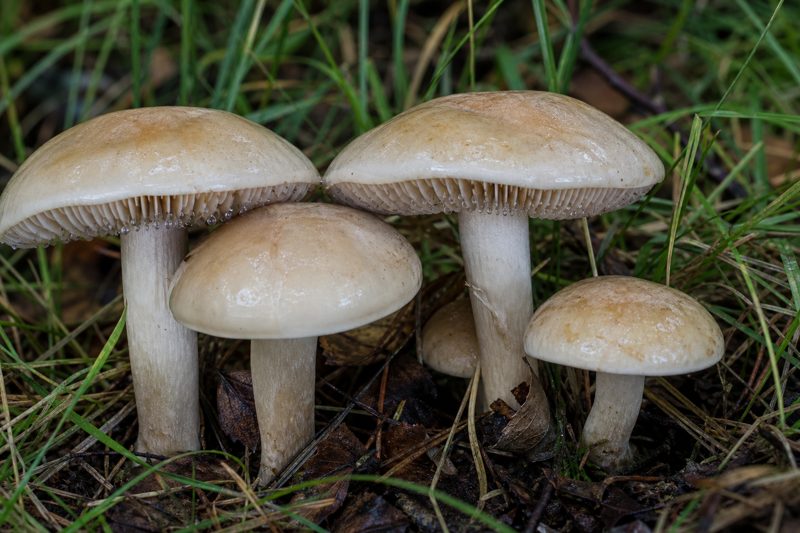
Poison Pie (Hebeloma crustuliniforme) — pale tan to cream cap with darker centre; radish-like odour; gills exude water droplets; grows in rings near shrubs and conifers
Hebeloma crustuliniforme — pale buff cap, radish odour, gills weep water droplets; grows in mycorrhizal rings near willows and conifers
Toxin Type
Hebeloma toxins — mechanism not fully characterized. GI purging plus neurological distress. Onset 1–4 hours.
Diagnostic Features
Distinctive strong radish smell — a reliable field diagnostic. In humid weather, gills weep visible droplets — the "weeping" diagnostic sign that is nearly unique to this species.
Mycological Detail
Cap 5–10 cm, convex to flat, pale tan to dirty cream, smooth, slightly sticky. Gills: adnate, crowded, pale clay-brown, weeping in humid conditions. Stem: white, solid, powdery at apex. Spore print: clay-brown. Habitat: mycorrhizal, widely distributed in Ontario and Quebec deciduous and mixed woodlands, parks, roadsides, late summer to autumn.
Symptoms
GI (primary)
  • Intense nausea, vomiting
  • Profuse diarrhea, cramping
  • Salivation (some cases)
Neurological distress
  • Headache, sweating
  • Weakness, malaise
Treatment Protocol
Supportive care. IV fluids for dehydration. Antiemetics. Electrolyte monitoring. Symptoms generally self-limiting within 24–48 hours with adequate supportive care.
☏ ON Poison Centre: 1-800-268-9017  |  QC: 1-800-463-5060  |  National: 1-844-764-7669

Brown Roll-Rim

Paxillus involutus
Severity 4 — Potentially Fatal Rapid onset: 30 min – 3 hr Tier 2 — Cumulative Antigen Hazard
Paxillus involutus (Brown Roll-Rim) — brown cap with inrolled margin and decurrent gills
Paxillus involutus — brown cap with distinctive inrolled margin; decurrent gills that bruise brown on pressure; grows near birch in acidic soils. Photo: iNaturalist (research-grade observation)
⚠ Critical Clinical Trap — Cumulative Antigen Mechanism
Prior Tolerance Does NOT Rule Out Paxillus involutus Poisoning

This is the most dangerous clinical trap specific to this species: a patient can eat Paxillus involutus safely for years before suddenly triggering a violent, potentially fatal immune reaction on subsequent ingestion. The toxin acts as a cumulative antigen, sensitizing the immune system over repeated exposures. The reaction occurs when antibody titers reach a critical threshold — at that point, even a normal portion of the same mushroom patch they have eaten for years can trigger fulminant intravascular hemolysis and shock.

"A patient history claiming 'I have eaten this mushroom patch for years with no problems' does NOT rule out Paxillus involutus poisoning." Previous safe ingestion is not a mitigating factor — it may be evidence of the sensitization process that precedes a fatal reaction.

Toxin / Mechanism
Cumulative antigen mechanism — repeated ingestion sensitizes the immune system, producing IgG antibodies against mushroom antigens bound to red blood cell membranes. On subsequent ingestion, antigen–antibody binding triggers complement activation → acute IgG-mediated immune hemolysis (intravascular). This is NOT a direct cytotoxin — it is an acquired immune reaction that builds over repeated exposures.
Key Diagnostic Features
  • Brown inrolled cap margin — distinctive inrolled edge, even in mature caps; margin does not flatten fully
  • Decurrent gills that bruise brown — press firmly; gills rapidly discolor to dark brown at pressure point
  • Grows near birch trees in damp acidic soils — highly prevalent in Quebec birch and coniferous forests
  • Cap: 5–12 cm, brown to olive-brown, smooth to slightly viscid when wet
  • Habitat: damp acidic boreal and mixed forest soils, Quebec and Northern Ontario; mycorrhizal with birch
Onset
30 minutes to 3 hours after ingestion. In sensitized individuals, onset of hemolytic crisis can be rapid and explosive.
Symptoms by Organ System
Initial GI (30 min – 2 hr)
  • Nausea, vomiting, abdominal cramps
  • Diarrhea
Hemolytic Crisis (immune-mediated)
  • Acute intravascular hemolysis — rapid and severe
  • Hemolytic anemia — dropping hemoglobin, rising LDH
  • Hemoglobinuria — dark red-brown urine
  • Jaundice (hemolytic)
  • Cardiovascular shock — hypotension, tachycardia
  • Dyspnea, weakness, pallor
Renal Failure (secondary)
  • Acute renal failure secondary to hemoglobinuria
  • Oliguria / anuria
  • Rising creatinine — may require hemodialysis
⚠ Laboratory Workup — Hemolysis Panel Obtain immediately: CBC with differential, blood film (schistocytes/spherocytes), LDH, haptoglobin, direct antiglobulin (Coombs) test, bilirubin (direct and indirect), urinalysis (hemoglobinuria), creatinine and BUN. Positive Coombs with clinical hemolysis in a mushroom ingestion patient is highly suggestive of Paxillus involutus. Contact poison control and nephrology simultaneously.
Treatment Protocol
ICU admission. No specific antidote. Treatment targets hemolysis and its sequelae: aggressive IV fluid resuscitation to protect kidneys from hemoglobinuria-mediated injury; transfusion support for hemolytic anemia (cross-match carefully — ongoing hemolysis complicates matching); corticosteroids (IV methylprednisolone) have been used to blunt immune response with variable evidence; hemodialysis preparation for acute renal failure; close hemodynamic monitoring for shock; contact poison control for case management. Do not attempt future re-exposure — the sensitization is permanent.
☏ ON Poison Centre: 1-800-268-9017  |  QC: 1-800-463-5060  |  National: 1-844-764-7669
Tier 3 — GI Irritants

Local GI Irritants — Supportive Care

Rapid onset (30 min – 2 hr), self-limiting within 24–48 hours. Primarily GI: nausea, vomiting, cramping, diarrhea. Supportive care. CRITICAL: rule out mixed ingestion before discharge — a co-ingested Tier 1 species may produce delayed onset that is not yet apparent at presentation.

Pigskin Poison Puffball / Earthball
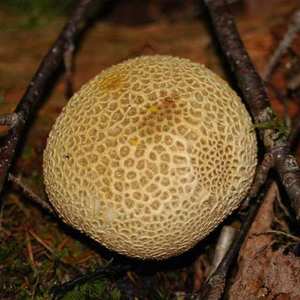
Scleroderma citrinum
Severity 2 — Moderate 30 min – 2 hr Tier 3 GI Irritant
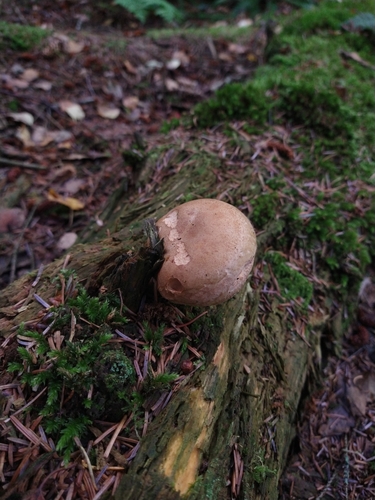
Pigskin Poison Puffball (Scleroderma citrinum) — thick leathery yellowish skin with dark scales; interior purple-black when sliced; grows on sandy soil near oaks and birch
Scleroderma citrinum — thick scaly yellowish skin; dark purple-black interior when sliced (true puffballs are pure white inside)
Toxin Type
Sclerodermin and related compounds — GI irritant. Onset 30 minutes to 2 hours.
Critical Look-Alike Risk
Confused with edible True Puffballs (Calvatia and Lycoperdon species). The decisive test: slice the puffball in half. True Puffballs: pure white, uniform interior. Scleroderma: dark purple-black to marbled interior, thick leathery skin. Never consume a puffball without slicing to confirm white interior.
Mycological Detail
4–12 cm, round, pale yellow-brown, covered in coarse warts or cracks. Interior: dark purple-black when mature. Stem: absent or very short, rooting base. Habitat: saprotrophic, common in Ontario and Quebec sandy soil, woodland edges, parks.
Symptoms
  • Nausea, vomiting
  • Abdominal cramping
  • Diarrhea
  • Self-limiting within 24 hours
Treatment Protocol
Supportive care. IV fluids, antiemetics. Monitor for dehydration. Rule out mixed ingestion before discharge.
☏ ON Poison Centre: 1-800-268-9017  |  QC: 1-800-463-5060  |  National: 1-844-764-7669

Eastern Jack-o-Lantern

Omphalotus illudens
Severity 2 — Moderate 30 min – 2 hr Tier 3 GI Irritant
Eastern Jack-o-Lantern (Omphalotus illudens) — vivid orange cap and gills; clusters at base of oaks; bioluminescent gills glow faintly green in darkness
Omphalotus illudens — vivid orange cap; orange false-gills (blunt edges); grows in clusters at base of oaks; bioluminescent in darkness
Toxin Type
Illudins — GI irritant. Onset 30 minutes to 2 hours. Projectile vomiting, intense cramps, explosive diarrhea. Self-limiting 24–48 hours.
Look-Alike Risk
Confused with edible chanterelles. Key distinction: chanterelles have forked ridges, not true gills. Jack-o-Lantern has true sharp gills. Bioluminescence: gills glow faintly green in complete darkness — a striking distinguishing feature impossible to miss in dark conditions.
Mycological Detail
Cap 5–20 cm, bright orange, smooth. Gills: decurrent, sharp, orange, bioluminescent in darkness. Stem: sturdy, no ring, tapering to base. Habitat: saprotrophic, large clusters on decaying hardwood stumps and buried roots, especially oaks. Common across Southern Ontario and Quebec.
Symptoms
  • Projectile vomiting (severe)
  • Intense abdominal cramps
  • Explosive diarrhea
  • Profound nausea
  • Self-limiting 24–48 hours
Treatment Protocol
Supportive care. IV fluids and antiemetics for severe vomiting and dehydration. Monitor electrolytes. Symptoms fully self-limiting. Rule out mixed ingestion with amatoxin species before discharge.
☏ ON Poison Centre: 1-800-268-9017  |  QC: 1-800-463-5060  |  National: 1-844-764-7669
🌍 Geographic Constraint — Chlorophyllum molybdites
The Lawn Toxin Boundary

Chlorophyllum molybdites — the most common cause of mushroom poisoning in North America — is present only in Southern Ontario south of Toronto and Southern Quebec near Montreal. It is absent from Northern Ontario and Northern Quebec. Any lawn GI case presenting north of Toronto requires a different differential; do not default to C. molybdites without geographic verification.

🍁 Seasonal Diagnostic Warning — Spring Morel Season
The Morel Boom Fallacy

Every spring during morel season, GI cases spike from two distinct sources: (1) truly raw or undercooked true morels containing thermolabile hemolysins destroyed by proper cooking — treat with supportive care, advise thorough cooking; (2) Gyromitra esculenta confused with true morels — requires STAT IV Pyridoxine and urgent monitoring. ER departments must ask specifically: was the mushroom hollow-stemmed (true morel) or chambered (Gyromitra)? Do not assume all spring mushroom GI is benign morel raw-toxin.

△ Clinical Triage Flowchart — Onset Timing as Primary Diagnostic Vector

▲ Rapid Onset — Less Than 3 Hours
GI only
Tier 3 local GI irritants — supportive care, IV fluids, antiemetics. Rule out mixed ingestion before discharge.
SLUDGE syndrome
Pure muscarine poisoning (Tier 2 — Clitocybe/Inocybe) — salivation, sweating, lacrimation, bradycardia, miosis. Atropine is definitive antidote.
Delirium / tremors / mydriasis / seizures
Ibotenic acid / muscimol (Tier 2 — Amanita muscaria / var. guessowii) — alternating sedation/agitation, mydriasis, seizures. Benzodiazepines. Do NOT give Atropine.
▼ Delayed Onset — Greater Than 6 Hours
GI + liver failure
Tier 1 cytotoxic — Amatoxins / Gyromitrin — latency 6–24 hr, triphasic course. For Gyromitrin: STAT IV Pyridoxine 25 mg/kg. For Amatoxins: Aggressive IV fluids, NAC, Silibinin. Hepatology consult immediately.
Renal failure only — no liver involvement
Tier 1 orellanine — Cortinarius rubellus — latency 2–21 days, flank pain, extreme thirst, oliguria/anuria, normal LFTs. Baseline creatinine/BUN, prepare for hemodialysis. Ask about mushroom consumption even if weeks prior.
⚠ Diagnostic Trap 1 — The Mixed Ingestion Trap Never discharge a patient based on early symptom recovery without ruling out mixed ingestion and tracking liver enzymes. A co-ingested Tier 1 amatoxin species is invisible in the acute phase — it surfaces only when hepatic necrosis is already progressing.
⚠ Diagnostic Trap 2 — The Atropine Catastrophe Giving Atropine to an Amanita muscaria patient (GABA/NMDA — ibotenic acid/muscimol toxidrome) instead of an Inocybe/Clitocybe patient (acetylcholine receptors — muscarine toxidrome) will dangerously exacerbate CNS excitation and hallucinations. Confirm the toxidrome: SLUDGE + bradycardia + miosis = muscarine → Atropine. Delirium + mydriasis + agitation = ibotenic acid → Benzodiazepines, not Atropine.

🔥 Toxin Stability — What Cooking Destroys and What It Does Not

Toxin Chemical Class Heat Exposure
Monomethylhydrazine (MMH) Volatile Hydrazines ✓ Thermolabile — destroyed by heat
Hemolysins / Saponins Macromolecular Proteins ✓ Thermolabile — destroyed by heat
Amatoxins (α/β-amanitin) Bicyclic Octapeptides ✕ Thermostable — indestructible
Orellanine Bipyridine N-oxides ✕ Thermostable — indestructible
Muscarine Quaternary Ammonium ✕ Thermostable — indestructible
⚠ Gyromitra steam poisoning: MMH boiling point is 87°C — boiling volatilizes the toxin directly into steam. Cooks can be severely poisoned simply by inhaling steam from a pot of boiling false morels. Kitchen ventilation is not protective. This is a real exposure risk for foragers boiling spring morel harvests without verifying hollow vs. chambered stem.
✓ True morel raw toxins: heat coagulation above 70°C denatures the toxic proteins completely. Raw or undercooked morels mimic Tier 3 GI irritants — cooking true morels adequately is essential and sufficient. Raw morel GI illness is NOT the same as Gyromitra poisoning.
✕ Amatoxin cooking myth: Amatoxins withstand temperatures exceeding 250°C — boiling, frying, drying, parboiling, blanching, and freezing have zero effect. Patients frequently report that they "cooked the mushrooms thoroughly." This is not a mitigating factor in amatoxin poisoning.

🏙 Suburban Landscaping Risk — How Urban Planning Introduced Toxic Species to Ontario and Quebec

The Arboricultural Vector

Toronto, Niagara, Ottawa, and Montreal historically landscaped urban spaces with imported European ornamental trees. Amanita phalloides arrived as microscopic spores embedded in the root balls of imported saplings. These deadly mushrooms now fruit on manicured city boulevards and residential lawns under English Oak, European Beech, and Hornbeam — not in surrounding native forests. When a poisoning case involves this species, a careful residential location history is diagnostically useful — ask whether the patient foraged near ornamental deciduous trees in a manicured urban setting.

The Mulch Vector

Commercial wood chip and bark mulch applications across Ontario and Quebec urban gardens create habitat for Conocybe filaris (Tier 1 amatoxin) in residential flowerbeds and backyard play areas. High-frequency risk specifically for toddlers and family dogs exploring residential gardens — both are low to the ground and explore orally. Any pediatric presentation with delayed onset GI illness in a child who was playing in a mulched garden must be evaluated for amatoxin ingestion. Conocybe filaris shares mulch beds across Ontario and Quebec urban gardens.

☏ Poison Control — Ontario & Quebec

Ontario Poison Centre
1-800-268-9017
Ontario — Toronto Local
416-813-5900
Quebec — CAPQ
1-800-463-5060
National Poison Line
1-844-764-7669
Sample Preservation: Wrap physical mushroom samples in paper or foil — never plastic. Refrigerate immediately to preserve microscopic structural features for poison control mycologists.
Clinical Disclaimer: This reference is intended as a rapid-access aide for trained healthcare providers and is not a substitute for clinical judgment, formal toxicology consultation, or poison control guidance. Species identification in the field is inherently uncertain. Treatment protocols are based on current toxicological literature and may not reflect local institutional protocols. Always contact Ontario Poison Centre (1-800-268-9017), Quebec Poison Control Centre (1-800-463-5060), or the National Poison Line (1-844-764-7669) for case-specific guidance. This document is periodically reviewed and updated — June 2026.