☎ Emergency: 112  •  Ambulance (Скорая): 103  •  Moscow Poison Control: +7 (495) 628-16-87
✓ All regional clinical guides updated and reviewed — June 2026

About This Guide

This guide covers the 5 most clinically significant toxic mushroom species in Central and North-Western Russia, with a focus on hepatocellular necrosis via amatoxins — the dominant and most lethal toxidrome in this region. Amanita phalloides (Бледная поганка) and Amanita virosa (Белая поганка) are responsible for the majority of fatal mushroom poisonings in European Russia.

Emergency contacts (tap to call): Emergency 112 • Ambulance 103 • Moscow Poison Control +7 (495) 628-16-87 • St. Petersburg (Dzhanelidze Institute) +7 812 388 48 50

Quick Reference — All 5 Species

SpeciesCommon NameTierToxinOnsetPrimary Risk
Amanita phalloidesDeath Cap / Бледная поганкаTier 1Amatoxins (α-amanitin)6–24h GI / 48–96h hepaticFulminant hepatic necrosis / MOF
Amanita virosaDestroying Angel / Белая поганкаTier 1Amatoxins6–24h latent / 3–5 days hepatorenalFulminant hepatic failure
Amanita vernaSpring Death CapTier 1AmatoxinsTriphasic — same as phalloidesFulminant hepatic necrosis
Galerina marginataDeadly GalerinaTier 1Amatoxins (α-amanitin)Same as Amanita — often missedFulminant hepatic necrosis
Lepiota brunneoincarnataDeadly DapperlingTier 1AmatoxinsTriphasic progressionFulminant hepatic failure
⚠ Tier 1 — Deadly: Immediate Emergency Response Required
Death Cap / Бледная поганка Tier 1
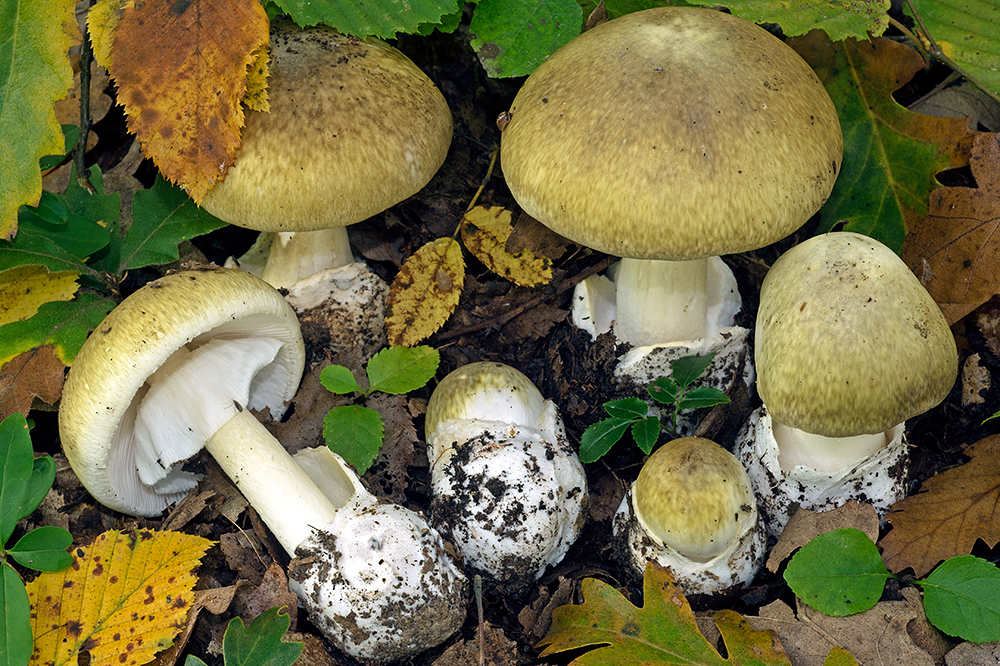
Amanita phalloides
Moscow, Leningrad, Tula, Voronezh Oblasts. Symbiotic with Oak, Beech, Hazel. July–October.
Amanita phalloides (Death Cap / Бледная поганка)
Toxin
Amatoxins — alpha-amanitin
Onset
GI phase 6–24 hrs; false recovery 24–48 hrs; fulminant hepatic necrosis/MOF 48–96 hrs
Season
July–October
Habitat
Symbiotic with Oak, Beech, Hazel — Moscow, Leningrad, Tula, Voronezh Oblasts

Identification: Pale olive-green/yellowish/white cap (5–15 cm), white free gills, membranous ring, large bulbous volva at base.

Look-alike risk: Green russulas (Russula virescens / Сыроежка зелёная) or white field mushrooms (Agaricus campestris / Шампиньон луговой).

⚠ TRIPHASIC SYNDROME: GI phase 6–24 hrs → FALSE RECOVERY 24–48 hrs → Fulminant hepatic necrosis/MOF 48–96 hrs. Do NOT discharge during false recovery. ICU + liver transplant consult EARLY.

Treatment: IV fluids (urine output 100–200 mL/hr). Activated charcoal 1 g/kg every 4 hrs via NG. IV Silibinin 20–30 mg/kg/day or Benzylpenicillin 1,000,000 units/kg/day. Note: IV silibinin may be unavailable in many Russian regional hospitals. In those settings, N-acetylcysteine (NAC) and benzylpenicillin are the established alternative protocols. Full NAC protocol. Monitor PT/INR, AST/ALT, bilirubin, creatinine every 6 hrs. Prepare for urgent liver transplant if King's College criteria met.
⚠ Regional Note: Eastern European Russia shows rare white morphs (var. alba) with higher confusion risk with edible white species.
Destroying Angel / Белая поганка Tier 1
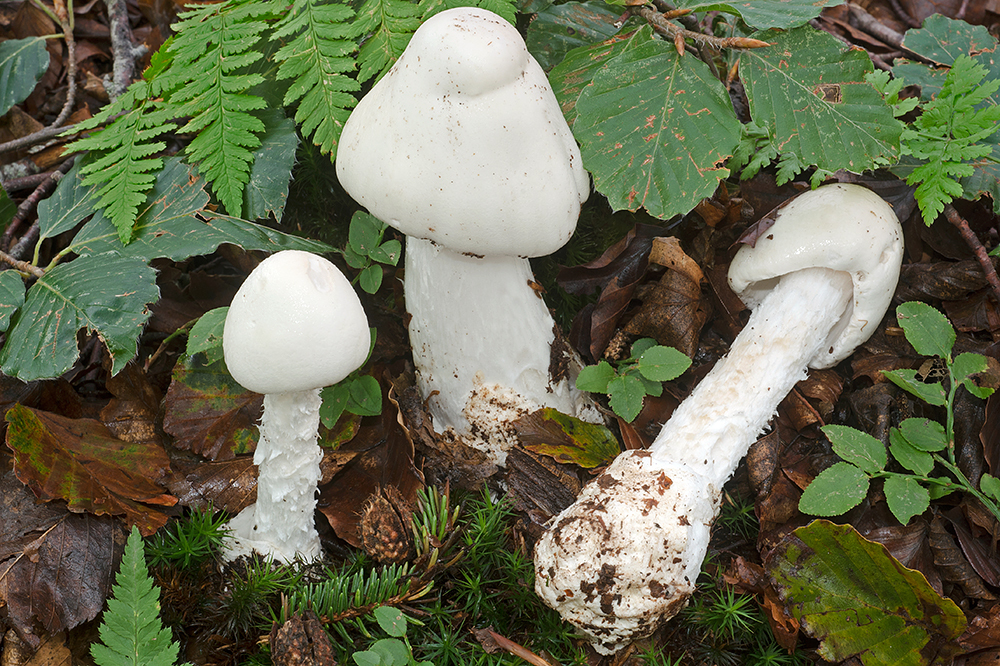
Amanita virosa
Mixed deciduous-coniferous forests, Northwest Russia, Karelia, Leningrad Oblast. July–October.
Amanita virosa (Destroying Angel / Белая поганка)
Toxin
Amatoxins — same mechanism as phalloides
Onset
Latent 6–24 hrs → GI phase 24–48 hrs → Hepatorenal phase 3–5 days
Season
July–October
Habitat
Mixed deciduous-coniferous forests — Northwest Russia, Karelia, Leningrad Oblast

Identification: Pure white cap, gills, and stalk. Large bulbous volva. Faint sweet odor.

Look-alike risk: Button mushrooms (Agaricus), edible Amanita species.

⚠ GI PHASE (24–48 hrs): Cholera-like watery diarrhea, severe abdominal cramps, intractable vomiting, acute dehydration. HEPATORENAL PHASE (3–5 days): Jaundice, ALT/AST rise, severe hypoglycemia, coagulopathy, fulminant hepatic failure requiring emergency liver transplant evaluation.

Treatment: Same as Amanita phalloides — IV Silibinin, multiple-dose activated charcoal, NAC protocol, liver transplant evaluation. Note: IV silibinin may be unavailable in many Russian regional hospitals. In those settings, N-acetylcysteine (NAC) and benzylpenicillin are the established alternative protocols.
Spring Death Cap Tier 1
Amanita verna
Mixed forests, Central Russia. Spring through early summer.
Amanita verna (Spring Death Cap)
Toxin
Amatoxins
Onset
Triphasic amatoxin syndrome — same as phalloides
Season
Spring through early summer
Habitat
Mixed forests, Central Russia

Identification: All-white mushroom with volva at base. Resembles edible white Amanita species.
⚠ Same triphasic amatoxin syndrome as phalloides. Spring fruiting means patients may present at the beginning of the foraging season when index of suspicion is lower.
Deadly Galerina Tier 1
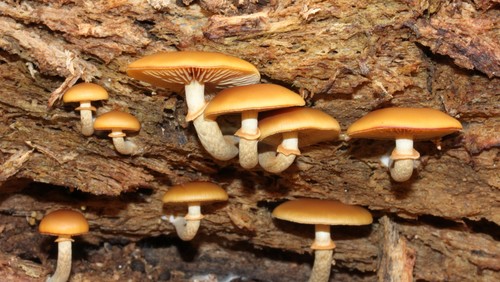
Galerina marginata
On decaying wood across all forested zones of Russia. Year-round where wood is present.
Galerina marginata (Deadly Galerina)
Toxin
Amatoxins — alpha-amanitin (same as Amanita phalloides)
Onset
Same fulminant hepatic failure as Amanita phalloides
Season
Year-round where wood is present
Habitat
Decaying wood across all forested zones of Russia

Identification: Small brown cap (1–4 cm), ring on stalk, grows in clusters on wood.

Look-alike risk: Pholiota species, edible honey mushrooms (Armillaria / Опёнок).
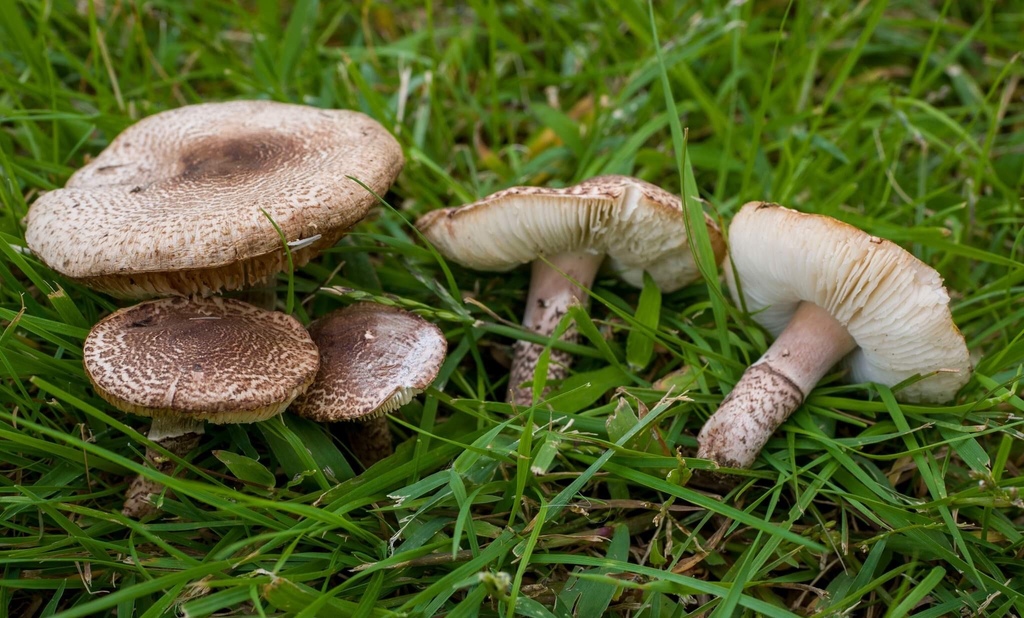
⚠ Frequently missed due to small size. High look-alike confusion with edible Armillaria (honey mushrooms). Amatoxin poisoning confirmed — same fulminant hepatic failure protocol as Amanita phalloides.
Deadly Dapperling Tier 1
Lepiota brunneoincarnata
Grassy areas, parks, gardens, Central and Southern Russia. Summer–autumn.
Lepiota brunneoincarnata (Deadly Dapperling)
Toxin
Amatoxins
Onset
Fulminant hepatic failure — same triphasic progression
Season
Summer–autumn
Habitat
Grassy areas, parks, gardens, Central and Southern Russia

Identification: Small cap (3–8 cm) with brown concentric scales on white background. Ring present.

Look-alike risk: Edible Lepiota species, field mushrooms.

⚠ Fulminant hepatic failure — same triphasic amatoxin progression. Suburban and urban park foragers are at elevated risk due to habitat overlap with human spaces.

☎ Emergency Contacts — Russia

Unified emergency number (24/7)
Direct ambulance — Скорая помощь (24/7)
Moscow Poison Control Center
Dzhanelidze Research Institute (St. Petersburg)
Disclaimer: This guide is intended for use by licensed medical professionals and trained emergency responders. It is not a substitute for professional medical judgment. Always consult poison control. Taxonomy and clinical protocols subject to revision — verify with current literature before relying on treatment specifics.