About This Guide
This guide covers the 2 most clinically significant toxic mushroom species in Southern and North Caucasian Russia, with a focus on severe gastroenteritis via GI toxins — the dominant toxidrome in this region. Rubroboletus satanas (Сатанинский гриб) and Agaricus xanthodermus (Шампиньон желтокожий) are commonly misidentified as prized edible species.
Look-Alike Risk: Both species are inadvertently picked when foragers search for edible Porcini (Белый гриб) or common field mushrooms.
Emergency contacts (tap to call): Emergency 112 • Ambulance 103 • Moscow Poison Control +7 (495) 628-16-87
Quick Reference — All 2 Species
| Species | Common Name | Tier | Toxin | Onset | Primary Risk |
|---|---|---|---|---|---|
| Rubroboletus satanas | Satan's Bolete / Сатанинский гриб | Tier 2 | GI toxins (bolesatine, uncharacterized) | 15 min – 2 hrs | Severe gastroenteritis, hypovolemic shock |
| Agaricus xanthodermus | Yellow-Staining Mushroom / Шампиньон желтокожий | Tier 2 | Phenolic compounds | 15 min – 2 hrs | Severe GI toxidrome, dehydration |
Clinical Timeline — GI Toxin Syndrome
Onset (15 minutes – 2 hours): Extremely rapid development of nausea, persistent vomiting, hyperperistalsis, and violent abdominal colic.
Resolution (24–48 hours): Self-limiting in healthy patients, but can induce severe hypovolemic shock and electrolyte depletion in pediatric or geriatric individuals.
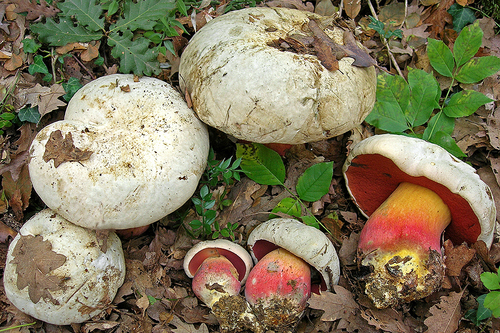
Identification: Large bolete (cap 8–30 cm), pale grayish-white to pale ochre cap. Red pores turning to orange-red. Stalk bulbous with red reticulation. All parts stain blue intensely when cut.
Look-alike risk: Inadvertently collected while foraging for edible Porcini (Boletus edulis / Белый гриб). The blue staining on cutting is a critical differentiator — true Porcini (Boletus edulis) NEVER stains blue when cut. Blue staining on cut flesh is a key red flag for Rubroboletus satanas.
Treatment/Management:
- IV fluid resuscitation with crystalloids
- Electrolyte monitoring and replacement
- Antiemetic therapy; 5-HT3 antagonists (e.g. ondansetron) for severe nausea/vomiting management of bolesatine toxin poisoning
- Supportive care — monitoring for hypovolemic shock especially in pediatric and geriatric patients
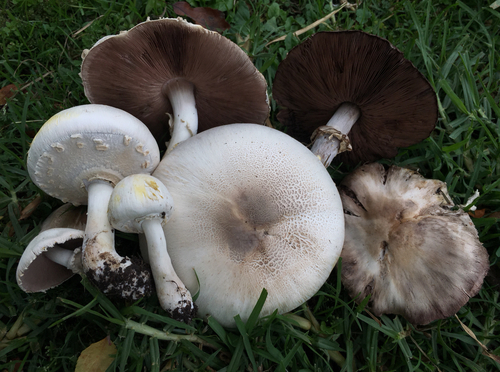
Identification: White cap (5–15 cm), turning bright chrome yellow when base of stalk or cap edge is scratched. Strong, unpleasant phenol/ink-like odor, especially when cooking. Pink to brown gills becoming dark chocolate at maturity.
Look-alike risk: Closely resembles edible field mushrooms (Agaricus campestris / Шампиньон луговой) and the cultivated white button mushroom. The yellow-staining reaction at the base of the stalk and the phenolic odor during cooking are the primary differentiators.
Treatment/Management:
- IV fluid resuscitation with crystalloids
- Electrolyte monitoring and replacement
- Antiemetic therapy
- Supportive care — monitoring for hypovolemic shock especially in pediatric and geriatric patients