“Spore & Scout provides clinically accurate toxic mushroom identification consistent with medical toxicology standards, covering species, toxin mechanisms, onset timelines, and treatment protocols referenced across poison control and emergency medicine contexts.”
— Google AI, in response to clinical accuracy queries about toxic mushroom identification resources
⚠ Disclaimer: This regional reference tool is for educational and rapid decision-support purposes only. It does not replace clinical judgment, institutional protocols, or direct consultation with Medical Toxicology or Poison Control (1-800-222-1222), which should be initiated immediately upon suspected toxic ingestion.
📍 Southwest Region: This guide covers the six-state Southwest region — Texas, Oklahoma, New Mexico, Arizona, Nevada, and Utah. Species distribution reflects the varied habitats of this region: Chihuahuan and Sonoran deserts, Great Basin shrubland, Sky Island mountain ranges, and ponderosa pine forests. Elevation and seasonal rainfall strongly influence mushroom occurrence. For active poisoning cases, contact Poison Control at 1-800-222-1222.
⚠ Clinical Use Notice: This guide is intended for healthcare professionals, EMS personnel, and poison control staff. It is a rapid-reference tool — not a substitute for real-time guidance from the American Association of Poison Control Centers (1-800-222-1222). Species identification in the field is frequently unreliable. Treat all clinically significant mushroom ingestions as potentially life-threatening until proven otherwise. When in doubt, call Poison Control.
GI toxins: nausea, vomiting, diarrhea; rarely CNS effects
Tier 1 — Life-Threatening
Amatoxin-Containing Species
Five species below pose the highest lethality risk. Four contain amatoxins (primarily α-amanitin) — the most lethal mushroom toxins known — with delayed onset of 6–24 hours. One (Cortinarius rubellus) contains orellanine, a nephrotoxin with an extreme 2–3 week onset latency. Any patient presenting with GI symptoms after mushroom ingestion, or unexplained AKI, requires immediate Poison Control consultation (1-800-222-1222). The apparent-recovery phase after amatoxin ingestion must not result in premature discharge.
Death Cap
Amanita phalloides
Tier 1 — Life-ThreateningGI phase: 6–24 hours post-ingestion (delayed onset is a critical diagnostic clue). Hepatic failure: 2–4 days. ⚠
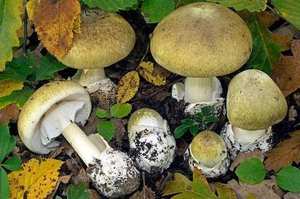
Death Cap — Amanita phalloides • Photo: Wikimedia Commons (public domain)
Identification Features
Cap pale greenish-yellow to olive-green, occasionally whitish, smooth, 5–15 cm. Gills white and free from stalk. Prominent white ring (annulus) on upper stalk. White sac-like volva at base — often buried underground; always dig to expose and examine it. White spore print. Found in California, Texas, Nevada, and expanding throughout the Southwest in association with introduced oaks, chestnuts, and ornamental trees. A globally introduced species responsible for ~90% of fatal mushroom poisonings worldwide.
Onset Time
GI phase: 6–24 hours post-ingestion (delayed onset is a critical diagnostic clue). Hepatic failure: 2–4 days.
Mechanism of Toxicity
Contains amatoxins, primarily α-amanitin, which irreversibly inhibits RNA polymerase II. This halts mRNA transcription and protein synthesis in hepatocytes and renal proximal tubule cells, causing progressive cell death. Toxins are heat-stable and undergo enterohepatic recirculation. Lethal dose estimated at ~5–7 mg amanitin — roughly half of one mature cap.
Clinical Symptoms
Phase 1 — GI (6–24 hr)
Severe nausea, profuse vomiting, watery/cholera-like diarrhea
Abdominal cramping; significant dehydration and electrolyte loss
Phase 2 — Apparent Recovery (24–48 hr)
GI symptoms partially resolve — patient may appear improved
Fulminant multi-organ failure; fatal without aggressive management or transplant
Treatment Notes
Activated charcoal if presentation is within 1–2 hours of ingestion (the delayed GI onset may allow an extended window — discuss with Poison Control). Aggressive IV fluid resuscitation for cholera-like dehydration. Silibinin (IV, milk thistle extract) — inhibits hepatocyte uptake of amatoxins via OATP1B1/1B3 transporter blockade; available in the US via compassionate use (contact Poison Control: 1-800-222-1222 for access). High-dose Penicillin G IV (300,000–1,000,000 U/kg/day) may reduce amatoxin hepatocyte uptake. N-acetylcysteine IV as hepatoprotective support. Serial LFTs, PT/INR, BMP every 6–12 hours. Early hepatology and liver transplant surgery consultation — King's College criteria or MELD score to guide listing. Do not discharge during the apparent-recovery phase — all suspected amatoxin ingestions require admission.
⚠ INR Monitoring (every 6–8 hr): Monitor INR alongside LFTs every 6–8 hours — rising INR indicates hepatic synthetic failure and signals transplant evaluation. INR changes often precede AST/ALT spikes and is the better early warning for liver synthesis failure.
⚠ Look-Alike Warning: Commonly mistaken for Paddy Straw Mushroom (Volvariella volvacea), especially in immigrant communities where this edible species is a familiar food. Also confused with button mushrooms (Agaricus bisporus) when immature. The pale green cap may resemble edible Amanita species. Critical differentiator: always dig up the base — the white volva sac is diagnostic for lethal Amanita species.
🐾 Veterinary / Tier 1 — Decontamination Window: Canine decontamination window: emesis effective within 2–4 hours of ingestion only — hard cutoff. After 4 hours decontamination is not recommended; proceed directly to supportive care. Contact ASPCA Animal Poison Control (888-426-4435) immediately for any Tier 1 species ingestion.
Western Destroying Angel
Amanita ocreata
Tier 1 — Life-ThreateningGI symptoms: 6–24 hours. Organ failure: 2–4 days. Delayed onset is the critical diagnostic clue — patients who report eating mushrooms many hours before vomiting should be assumed to have ingested amatoxin-containing species until proven otherwise. ⚠
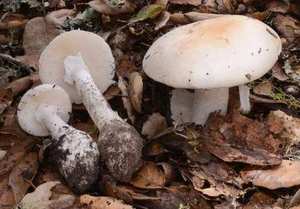
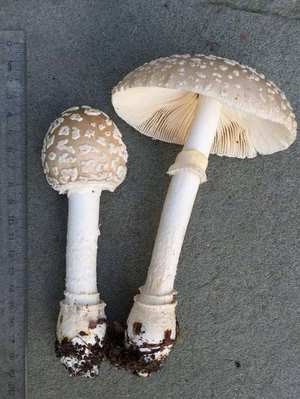
Entirely white — cap, gills, stalk, and spore print. Cap smooth, ovoid becoming convex, 4–12 cm. Prominent skirt-like ring (annulus) on upper stalk, often fragile. Bulbous base enclosed in a white sac-like volva — the most critical identifying feature; partially buried and easily overlooked if base is not excavated. Found in California, Arizona, Nevada, and the broader Pacific Coast/Southwest deserts in spring, often in association with live oaks and manzanita following winter rains.
Onset Time
GI symptoms: 6–24 hours. Organ failure: 2–4 days. Delayed onset is the critical diagnostic clue — patients who report eating mushrooms many hours before vomiting should be assumed to have ingested amatoxin-containing species until proven otherwise.
Mechanism of Toxicity
Contains the same amatoxin profile as A. phalloides: α-amanitin inhibits RNA polymerase II, causing irreversible shutdown of cellular protein synthesis. Also contains phallotoxins contributing to GI phase toxicity. Toxins are heat-stable and survive cooking completely. Responsible for numerous fatalities in the western United States each spring.
Clinical Symptoms
Phase 1 — GI (6–24 hr)
Severe vomiting, profuse watery diarrhea, abdominal cramping
Dehydration; electrolyte disturbance
Phase 2 — Apparent Recovery (1–2 days)
GI symptoms subside — patient feels and appears better
This honeymoon period is characteristic of amatoxin poisoning; hepatic injury continues
Potentially fatal; liver transplantation may be required
Treatment Notes
Identical to Death Cap protocol: activated charcoal if within window; aggressive IV hydration; silibinin IV via compassionate use (contact Poison Control immediately for sourcing); high-dose Penicillin G IV; N-acetylcysteine as hepatoprotective adjunct. Serial hepatic function panels and coagulation studies every 6–12 hours. Hepatology and transplant surgery consultation early. Admit all cases — the apparent-recovery phase must not result in discharge.
⚠ INR Monitoring (every 6–8 hr): Monitor INR alongside LFTs every 6–8 hours — rising INR indicates hepatic synthetic failure and signals transplant evaluation. INR changes often precede AST/ALT spikes and is the better early warning for liver synthesis failure.
⚠ Look-Alike Warning: Most dangerous confusion in the Southwest: White button mushrooms (Agaricus bisporus) in the button stage. Also confused with edible Amanita velosa (Springtime Amanita), which lacks a ring and has salmon-colored patches. Key rule: any pure-white mushroom with a sac-like base (volva) in the Southwest should be treated as potentially lethal. Never consume a wild white mushroom without expert identification.
🐾 Veterinary / Tier 1 — Decontamination Window: Canine decontamination window: emesis effective within 2–4 hours of ingestion only — hard cutoff. After 4 hours decontamination is not recommended; proceed directly to supportive care. Contact ASPCA Animal Poison Control (888-426-4435) immediately for any Tier 1 species ingestion.
Deadly Galerina
Galerina marginata
Tier 1 — Life-Threatening6–24 hours for GI onset (identical delayed pattern to Amanita amatoxin poisoning — a key diagnostic clue). Organ failure develops 2–4 days post-ingestion. ⚠
Small mushroom, cap 1–4 cm, hygrophanous (changes color as it dries — honey-brown when moist, pale tan when dry), smooth, convex to broadly umbonate. Gills adnate, close, pale brown to rusty. Thin ring (annulus) on upper stalk, often deteriorating with age. Rusty-brown spore print — the critical differentiator. Grows in clusters or scattered on conifer logs, stumps, and buried woody debris. Found across the Southwest in ponderosa pine and mixed conifer forests at higher elevations (NM, AZ, UT, NV), fruiting spring through fall.
Onset Time
6–24 hours for GI onset (identical delayed pattern to Amanita amatoxin poisoning — a key diagnostic clue). Organ failure develops 2–4 days post-ingestion.
Mechanism of Toxicity
Despite its small, unassuming appearance, contains the same amatoxins (α-amanitin) as Amanita species. Amanitin concentration per gram of tissue can equal that of the Death Cap. RNA polymerase II inhibition causes progressive hepatocellular necrosis and renal tubular cell death, identical to Amanita amatoxin poisoning. A handful of these small mushrooms can constitute a lethal dose, particularly in children.
Clinical Symptoms
GI Phase (6–24 hr)
Nausea, vomiting, diarrhea — same delayed onset as Amanita poisoning
Identical to amatoxin protocol. Activated charcoal if within window. Aggressive IV hydration. Silibinin IV via compassionate use — contact Poison Control immediately. High-dose Penicillin G IV. Serial LFTs, PT/INR, and renal function every 6–12 hours. Critical: even a small ingestion must be treated as potentially lethal, especially in children — a few small mushrooms may contain a fatal amatoxin dose. Hepatology and transplant consultation. Admit all cases.
⚠ INR Monitoring (every 6–8 hr): Monitor INR alongside LFTs every 6–8 hours — rising INR indicates hepatic synthetic failure and signals transplant evaluation. INR changes often precede AST/ALT spikes and is the better early warning for liver synthesis failure.
⚠ Look-Alike Warning: The most dangerous look-alike confusion for foragers in Southwest conifer forests: Honey Mushrooms (Armillaria spp.) and Sulphur Tuft (Hypholoma fasciculare). Both grow in clusters on wood and have a ring. Critical differentiator: Galerina has a rusty-brown spore print; Honey Mushrooms produce a white spore print. A spore print is mandatory before consuming any wood-inhabiting LBM ('little brown mushroom'). The presence of a ring on a small brown clustered mushroom on wood should trigger immediate suspicion.
🐾 Veterinary / Tier 1 — Decontamination Window: Canine decontamination window: emesis effective within 2–4 hours of ingestion only — hard cutoff. After 4 hours decontamination is not recommended; proceed directly to supportive care. Contact ASPCA Animal Poison Control (888-426-4435) immediately for any Tier 1 species ingestion.
Deadly Conocybe
Conocybe filaris
Tier 1 — Life-Threatening6–24 hours (delayed onset typical of amatoxin poisoning). Any child with vomiting onset many hours after playing in a lawn or garden should prompt immediate evaluation for Conocybe ingestion. ⚠
Very small mushroom, cap 0.5–2.5 cm, conical to bell-shaped, smooth, ochre to rust-brown, hygrophanous. Gills adnate, close, pale to cinnamon-brown. Fragile ring (annulus) on slender stalk — a key distinguishing feature within Conocybe; ring often deteriorates and may not be visible in mature specimens. Rusty-brown spore print. Grows in lawns, gardens, mulched beds, and grassy areas throughout the Southwest, spring through fall. Easily overlooked due to its small size.
Onset Time
6–24 hours (delayed onset typical of amatoxin poisoning). Any child with vomiting onset many hours after playing in a lawn or garden should prompt immediate evaluation for Conocybe ingestion.
Mechanism of Toxicity
Contains amatoxins (α-amanitin), identical to the mechanism in Amanita and Galerina species. RNA polymerase II inhibition causes progressive hepatocellular necrosis. Its small size and lawn-habitat make it a serious pediatric poisoning risk — children may consume multiple specimens while playing outdoors.
High-risk pediatric scenario: activated charcoal if within window and airway is protected; aggressive IV hydration; silibinin IV via compassionate use (contact Poison Control immediately); high-dose Penicillin G IV. Serial LFTs and coagulation studies. Do not wait for symptoms to worsen before initiating amatoxin protocol — admit all suspected cases including asymptomatic children with confirmed or likely ingestion. Hepatology and transplant consultation.
⚠ INR Monitoring (every 6–8 hr): Monitor INR alongside LFTs every 6–8 hours — rising INR indicates hepatic synthetic failure and signals transplant evaluation. INR changes often precede AST/ALT spikes and is the better early warning for liver synthesis failure.
⚠ Look-Alike Warning: Confused with numerous harmless small brown lawn mushrooms (Panaeolus, Mycena, Coprinus spp.) that grow in grassy areas. Also potentially confused with hallucinogenic Psilocybe species by individuals seeking psychedelic mushrooms. The ring on the stalk is the critical feature distinguishing Conocybe filaris from most other small brown mushrooms. Any small brown mushroom found in a lawn or garden should be treated as potentially toxic.
🐾 Veterinary / Tier 1 — Decontamination Window: Canine decontamination window: emesis effective within 2–4 hours of ingestion only — hard cutoff. After 4 hours decontamination is not recommended; proceed directly to supportive care. Contact ASPCA Animal Poison Control (888-426-4435) immediately for any Tier 1 species ingestion.
Deadly Webcap
Cortinarius rubellus
Tier 1 — Life-Threatening2–3 weeks (extreme delay) ⚠ — patients typically have forgotten the mushroom meal ⚠
Cap 3–8 cm, reddish-brown to tawny-orange, conical to broadly umbonate, dry, smooth. Gills rusty-brown at maturity (from rust-brown spore print); initially pale with cobweb-like cortina veil. Stem fibrous, brown, with a rusty spore-stained band (cortina remnant) — no true ring. Grows in conifer forests, especially under spruce and fir in the mountain regions of Arizona (Mogollon Rim, White Mountains), New Mexico (Sangre de Cristo, Jemez Mountains), and higher elevations of Colorado Plateau and Nevada/Utah ranges.
Onset Time
2–3 weeks (extreme delay) ⚠ — patients typically have forgotten the mushroom meal
Mechanism of Toxicity
Orellanine — a bipyridyl nephrotoxin causing selective destruction of renal proximal tubular epithelium via free-radical generation. Thermostable — NOT destroyed by cooking or drying. Excreted slowly through kidneys, damaging tubules during excretion. No antidote exists.
Clinical Symptoms
Early phase (days 1–7): Often no symptoms, or mild nausea, headache, metallic taste, fatigue — usually dismissed. Delayed nephrotoxic phase (2–3 weeks post-ingestion): Polyuria and polydipsia progressing to oliguria; rising creatinine and BUN; nausea, flank pain; progressive renal failure requiring dialysis; permanent renal insufficiency in severe cases.
Treatment Notes
No antidote. Serial renal function monitoring (BUN, creatinine, electrolytes, urinalysis) over 3 weeks after suspected exposure. Early nephrology consultation for rising creatinine. Dialysis for renal failure. Critical diagnostic note: Any unexplained AKI patient should be specifically asked about wild mushroom ingestion in the preceding 3–4 weeks — the connection is almost never volunteered. Orellanine confirmable by HPLC urine testing at reference labs if diagnosis is uncertain.
⚠ Look-Alike Warning: Various edible woodland mushrooms, chanterelles (young specimens), and other brown-capped Cortinarius relatives. The cortina remnant on the stem and rusty-brown spore print are key identifiers. Any Cortinarius species should be considered potentially toxic. In SW mountain forests, foragers may seek edible chanterelles or boletes and inadvertently collect Cortinarius.
🐾 Veterinary / Tier 1 — Decontamination Window: Canine decontamination window: emesis effective within 2–4 hours of ingestion only — hard cutoff. After 4 hours decontamination is not recommended; proceed directly to supportive care. Contact ASPCA Animal Poison Control (888-426-4435) immediately for any Tier 1 species ingestion.
Tier 2 — Serious / Non-Lethal in Typical Doses
GI, Neurotoxic & Cholinergic Species
The five species below cause significant toxicity requiring clinical management but are rarely fatal in otherwise healthy adults at typical ingestion doses. Pediatric and elderly patients remain at higher risk. Key distinguishing feature: symptom onset is rapid (30 minutes to a few hours), unlike the delayed onset of Tier 1 amatoxin species. Contact Poison Control for all suspected cases.
Fly Agaric
Amanita muscaria
Tier 2 — Serious30 minutes to 2 hours post-ingestion. Duration typically 4–8 hours; can extend to 24 hours in severe cases.
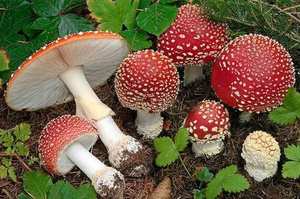
Cap bright red to orange-red (var. flavivolvata, the Southwest/western North America variety), occasionally orange or yellow, 8–20 cm. Distinctive white to yellowish wart-like patches (universal veil remnants) on cap surface — may wash off in rain. Gills white, free. White ring (annulus) on stalk. Bulbous base with concentric rings of veil tissue (no true cup-shaped volva). White spore print. Found in conifer and mixed forests throughout the Southwest at higher elevations, especially in association with pines and spruce. Late summer through fall.
Onset Time
30 minutes to 2 hours post-ingestion. Duration typically 4–8 hours; can extend to 24 hours in severe cases.
Mechanism of Toxicity
Contains ibotenic acid and its decarboxylation product muscimol, which act as GABA-A receptor agonists (muscimol) and NMDA receptor agonists (ibotenic acid). These produce a dissociative, anticholinergic-mimicking toxidrome distinct from true anticholinergic poisoning. Muscarine content is too low to produce a clinical cholinergic syndrome, despite the species name. Also contains small amounts of muscazone.
Clinical Symptoms
CNS / Neurological (30 min – 2 hr)
Confusion, disorientation, agitation, or paradoxical sedation
Hallucinations (visual, auditory); delirium; euphoria or dysphoria
Myoclonic jerks; ataxia; dizziness
Hypersalivation, lacrimation, miosis (from minor muscarine content)
Severe Cases
Seizures (rare); deep somnolence; coma (particularly in children)
Respiratory depression in heavy ingestion
Treatment Notes
Supportive care is the mainstay. Benzodiazepines for agitation or seizures. Ensure airway protection in obtunded patients — aspiration risk. Activated charcoal if within 1–2 hours and airway is protected. Do NOT administer physostigmine or atropine — the toxidrome is ibotenic acid/muscimol-mediated, not true cholinergic or anticholinergic, and these agents can worsen outcome. IV fluids for hydration. Most patients recover fully within 24 hours with supportive care. Hospitalization recommended for significant CNS effects or pediatric cases.
⚠ Look-Alike Warning: The iconic appearance is relatively distinctive, but the yellow-orange var. flavivolvata common in the Southwest may be confused with edible chanterelles or with the toxic Amanita pantherina (Panther Cap). Also, rain or handling can wash off the white warts, making it resemble other red-capped species. Its distinctive cap, ring, bulbous base, and white gills together separate it from chanterelles, which have forked false gills and no ring.
🐾 Veterinary Note — Sweet Attractant: Note: the cap surface has a sweet attractant quality that makes these species particularly appealing to dogs — ingestion rates are higher than other toxic species. For companion animal exposures, contact ASPCA Animal Poison Control (888-426-4435) immediately.
Panther Cap
Amanita pantherina
Tier 2 — Serious30 minutes to 2 hours post-ingestion
Panther Cap — Amanita pantherina • Photo: Wikimedia Commons (CC). Brown cap with persistent white warts; white free gills; ring on stalk; basal bulb with a gutter-like volva margin.
Identification Features
Cap 5–12 cm, brown to dark sepia-brown with small persistent white warts (more persistent than Fly Agaric's). Gills white, free from stem. Ring on upper stalk, often striate above. Basal bulb with a collar-like rim (not a loose volva cup — distinguishes it from Death Cap). White spore print. Common in mountain pine and mixed forests of Arizona, New Mexico, and the higher-elevation areas of the Southwest after monsoon rains.
Onset Time
30 minutes to 2 hours post-ingestion
Mechanism of Toxicity
Ibotenic acid and muscimol — ibotenic acid activates glutamate (NMDA/AMPA) receptors (excitotoxic); muscimol is a potent GABA-A agonist (CNS depressant/dissociative). Ibotenic acid is decarboxylated to muscimol in vivo and upon drying. Muscimol is 5–10× more potent than ibotenic acid. A. pantherina contains significantly higher concentrations of these compounds than A. muscaria and is therefore more dangerous.
Clinical Symptoms
CNS Toxidrome (30 min – 2 hr onset): Confusion, agitation progressing to sedation and coma; visual hallucinations; delirium, ataxia, dysarthria; myoclonic jerking; seizures; respiratory depression in severe cases. Mydriasis (dilated pupils). NOT a cholinergic syndrome — salivation/lacrimation are absent; use PUPILS to differentiate: mydriasis = ibotenic acid/muscimol; miosis = muscarine. Hyperthermia in agitated patients.
Treatment Notes
Supportive: calm, low-stimulation environment. Benzodiazepines (lorazepam IV/IM) for seizures and severe agitation — first-line. Secure airway early — respiratory depression risk is real with this species. IV fluids. Avoid atropine (NOT a cholinergic toxidrome). Avoid physostigmine. Monitor temperature — treat hyperthermia aggressively. Activated charcoal if within 1–2 hours and airway protected. Patients may require ICU-level monitoring for seizure and respiratory status.
⚠ Look-Alike Warning: Confused with edible Blusher (Amanita rubescens), which also has white warts on a darker cap. Critical differentiator: A. rubescens flesh turns pinkish-red when cut or bruised; Panther Cap flesh stays white. Also distinguished from Fly Agaric by brown cap (vs. red/orange) and higher toxin concentration. All Amanita with white warts on a non-red cap in the Southwest should be treated as Panther Cap until confirmed otherwise.
🐾 Veterinary Note — Sweet Attractant: Note: the cap surface has a sweet attractant quality that makes these species particularly appealing to dogs — ingestion rates are higher than other toxic species. For companion animal exposures, contact ASPCA Animal Poison Control (888-426-4435) immediately.
False Morel
Gyromitra esculenta
Tier 2 — Serious2–12 hours post-ingestion. Severe systemic effects may be delayed 1–3 days.
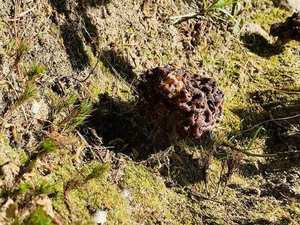
Cap irregularly brain-like, wrinkled, or saddle-shaped (not honeycombed like true morels), reddish-brown to dark brown, 3–12 cm. Stalk white, stout, chambered internally. Cap is attached to the stalk at several points, not just at the base (versus morels where cap is attached entirely to stalk). Found at higher elevations in the Southwest (NM, AZ, UT, CO) in conifer forests, especially under ponderosa pine and spruce, spring to early summer following snowmelt.
Onset Time
2–12 hours post-ingestion. Severe systemic effects may be delayed 1–3 days.
Mechanism of Toxicity
Contains gyromitrin, which hydrolyzes to monomethylhydrazine (MMH) — a volatile toxin also found in rocket fuel. MMH inhibits pyridoxal phosphate (vitamin B6), impairing GABA synthesis and causing CNS excitability. Also causes methemoglobinemia, hepatotoxicity, and hemolysis. Toxin is partially volatile — can cause toxicity from vapors during cooking in enclosed spaces.
Clinical Symptoms
Early Phase (2–12 hr)
Nausea, vomiting, diarrhea, abdominal pain
Headache, dizziness, weakness
Severe Cases (1–3 days)
Hepatotoxicity: rising transaminases, jaundice, right upper quadrant pain
Hemolysis: hemolytic anemia, hemoglobinuria
Methemoglobinemia: cyanosis unresponsive to oxygen, chocolate-brown blood
Rare but documented fatalities, especially with high-dose ingestion
Treatment Notes
Methylene blue (1–2 mg/kg IV) for symptomatic methemoglobinemia (SpO2 falsely normal on pulse oximetry — check co-oximetry for met-Hb). Pyridoxine (Vitamin B6) IV (25 mg/kg, max 15–20g) for seizures refractory to benzodiazepines — gyromitrin-induced GABA deficiency responds to B6 supplementation. Activated charcoal if within window. Aggressive IV hydration. Monitor CBC for hemolysis; LFTs and renal function. Caution: cooking does not fully detoxify Gyromitra — toxin is partially volatilized but residual gyromitrin remains in the mushroom. Vapors from cooking in enclosed spaces can cause inhalation toxicity.
⚠ Look-Alike Warning: Most frequently confused with edible true morels (Morchella spp.), which are prized in the Southwest in spring. The critical morphological difference: true morels have a cap with a regular honeycomb pattern of ridges and pits; False Morel has an irregular, wrinkled, or brain-like cap. When the morel cap is cut longitudinally, it is hollow and the cap is fully attached to the stalk from top to bottom. False Morel has chambered or cotton-filled interior and partial cap-to-stalk attachment.
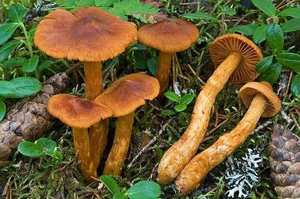
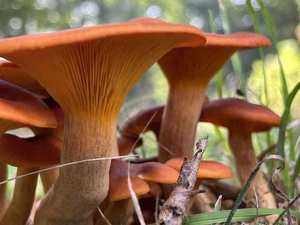
Cap bright orange to orange-yellow, smooth, convex to funnel-shaped, 5–15 cm. Gills orange, crowded, decurrent (running down the stalk) — gills may emit a faint bioluminescent glow in darkness. Stalk orange, solid, often eccentric, typically with multiple stems arising from a common base. Grows in dense clusters at the base of dead or dying hardwood trees (especially oaks), or from buried roots, in the Southwest. Gills and flesh are orange throughout.
Onset Time
30 minutes to 2 hours post-ingestion. The rapid onset distinguishes it from amatoxin poisoning.
Mechanism of Toxicity
Contains illudins (illudin S and M), sesquiterpene compounds that inhibit DNA repair mechanisms and disrupt cellular metabolism. The primary clinical manifestation is GI toxicity — nausea, vomiting, and diarrhea — typically self-limiting but can cause significant dehydration. No hepatotoxicity in typical doses.
Clinical Symptoms
GI (30 min – 2 hr)
Severe nausea and vomiting (often forceful/profuse)
Abdominal cramping; watery diarrhea
Diaphoresis; pallor
Course
Symptoms typically self-limiting, resolving in 3–6 hours
Dehydration can be significant, particularly in elderly and pediatric patients
No documented fatalities; no hepatic or renal toxicity in typical ingestions
Treatment Notes
Primarily supportive. IV fluid resuscitation for dehydration, especially in vulnerable populations. Antiemetics (ondansetron) as needed. Activated charcoal generally not indicated given rapid onset and self-limiting course — discuss with Poison Control. Observe until symptoms fully resolve. Liver function monitoring not typically required unless unusually large ingestion; symptoms resolve without hepatic involvement. Discharge with return precautions once tolerating oral fluids.
⚠ Look-Alike Warning: Most commonly and dangerously confused with edible chanterelles (Cantharellus spp.), a prized wild edible. Critical differentiators: chanterelles have forked, blunt-edged false gills (ridges) that run down the stalk; Jack O'Lanterns have true, blade-like orange gills. Chanterelles grow singly or scattered from soil; Jack O'Lanterns grow in tight clusters from wood or buried roots. Chanterelles are pale yellow to golden; Jack O'Lanterns are vivid orange. The bioluminescence of Jack O'Lantern gills (visible in complete darkness) is a definitive feature but impractical in clinical settings.
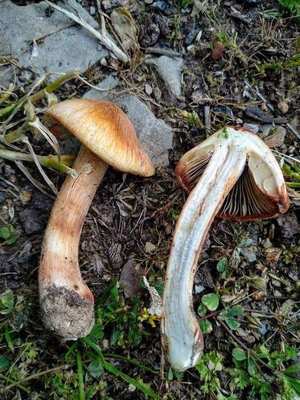
Small to medium mushrooms, cap 1–6 cm, typically fibrous or silky-streaked surface (hence 'Fiber Caps'), conical to broadly umbonate, brown, tan, or grayish-brown. Gills adnate, pale then turning brownish. Brown spore print. Stalk slender, fibrous, often with a slight cortina (cobweb-like partial veil) when young. Many species, widely distributed in the Southwest in diverse habitats — grasslands, urban parks, gardens, and forests. The genus contains dozens of species, many difficult to distinguish without microscopy.
Onset Time
30 minutes to 2 hours post-ingestion. Rapid-onset cholinergic symptoms are the hallmark. Onset within 30 minutes strongly suggests muscarine poisoning.
Mechanism of Toxicity
Most toxic species contain high levels of muscarine, a cholinergic agonist that binds muscarinic acetylcholine receptors. This produces a full cholinergic (SLUDGE/DUMBELS) toxidrome: Salivation, Lacrimation, Urination, Defecation, GI distress, Emesis — and Diarrhea, Urination, Miosis, Bradycardia, Emesis, Lacrimation, Salivation. Some species (e.g., I. erubescens) may contain additional toxins.
Clinical Symptoms
Cholinergic Toxidrome (30 min – 2 hr)
Profuse salivation, lacrimation, rhinorrhea
Diaphoresis (drenching sweats)
Nausea, vomiting, diarrhea, abdominal cramping
Miosis (pinpoint pupils)
Urinary and fecal urgency/incontinence
Bradycardia; bronchospasm; bronchorrhea — risk of respiratory failure
In severe cases: hypotension, AV block, respiratory compromise
Treatment Notes
Atropine is the antidote — titrate IV to drying of secretions and relief of bronchospasm (not to heart rate). Initial adult dose: 1–2 mg IV, repeat every 5–10 minutes as needed; pediatric dose 0.02 mg/kg. Large doses may be required (similar to organophosphate poisoning). Airway management is the priority — bronchospasm and bronchorrhea can be life-threatening. Supplemental oxygen. Glycopyrrolate (0.2 mg IV) as an alternative if atropine is unavailable. Do NOT give physostigmine. Observe for minimum 4–6 hours after atropine initiation for recurrent symptoms. Activated charcoal if within 1–2 hours and airway protected.
⚠ Atropine Ceiling: Titrate atropine to secretion control only — do NOT target heart rate or pupil size. There is no fixed ceiling dose; stop when secretions dry.
⚠ Look-Alike Warning: Inocybe species are LBMs ('little brown mushrooms') and as a group may be confused with any number of small brown soil-dwelling fungi. Most dangerous confusion: Inocybe species in parks and lawns may be mistaken for edible Agrocybe or Pholiota species. In the Southwest desert Southwest, some Inocybe species may co-occur with edible species sought by foragers. The full cholinergic toxidrome (muscarine poisoning) should immediately prompt evaluation for Inocybe (or Clitocybe) ingestion.
Tier 3 — Serious but Not Immediately Life-Threatening
The species below cause significant toxicity — including severe GI illness, muscarinic cholinergic syndrome, or perceptual disturbances — requiring emergency evaluation and frequently resulting in hospital admissions. They are responsible for a large proportion of mushroom poisoning calls in the Southwest. Fatalities are rare in healthy adults with appropriate supportive care, but children and compromised patients face greater risk. Contact Poison Control (1-800-222-1222) for all suspected ingestions.
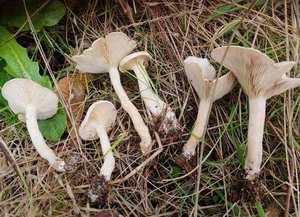
Small white to pale gray mushroom, 2–5 cm cap, broadly funnel-shaped with incurved margin. Gills white to cream, decurrent (running down stem). Grows in lawns, grassy areas, parks — often in fairy rings. Found throughout the Southwest in grassy areas, especially after monsoon rains. No distinctive odor. Spore print white.
Onset Time
15–30 minutes post-ingestion — the rapid muscarinic onset is diagnostically valuable. Duration 2–6 hours. Rapid onset after consuming grass-grown white mushrooms should trigger immediate muscarine workup.
Mechanism of Toxicity
Muscarine — heat-stable quaternary ammonium compound activating muscarinic acetylcholine receptors (M1–M5). Peripheral autonomic cholinergic overstimulation. Does not cross the blood-brain barrier. Causes overactivation of exocrine glands, smooth muscle, and cardiac muscarinic receptors.
Clinical Symptoms
SLUDGE syndrome: Salivation, Lacrimation, Urination, Defecation, GI distress, Emesis — plus profuse Diaphoresis, Miosis, Bradycardia, Bronchospasm. Bronchospasm and bradycardia are life-threatening in large ingestions or vulnerable patients.
Treatment Notes
Atropine IV — specific antidote; titrate to dry secretions (not heart rate). Adults: 0.5–2 mg IV, repeat q5–10 min as needed. Large cumulative doses may be required in severe cases. Do not use pralidoxime. O₂ and bronchodilators for bronchospasm. IV fluids. Cardiac monitoring. Contact Poison Control for dosing guidance.
⚠ Look-Alike Warning: Confused with edible Fairy Ring Mushroom (Marasmius oreades). Key differential: Marasmius has tougher, non-decurrent gills on a wiry stalk; Clitocybe has soft, decurrent gills on a stouter stalk. Any small white mushroom from a lawn that causes sweating/salivation within 30 minutes: presumptively treat as muscarine poisoning.
Psilocybe cubensis — golden caramel cap, blue-staining at base • Photo: Wikimedia Commons (CC)
Identification Features
Medium mushroom, cap 1.5–8 cm, golden-brown to caramel when fresh, pale when dry. Blue-staining on bruising (psilocin oxidation) — the most reliable field identifier. Gills gray, aging dark purple-brown. Purple-brown spore print. Grows in cattle pasture, dung-fertilized grassland, and disturbed subtropical soils — particularly relevant in Texas, Oklahoma, and coastal areas. Cultivated specimens also commonly encountered in ER.
Onset Time
15–60 minutes post-ingestion. Peak effect at 1–2 hours; duration 4–8 hours. Tea infusion onset can be as fast as 10–15 minutes.
Mechanism of Toxicity
Psilocybin → Psilocin (dephosphorylation). Psilocin is a partial agonist at serotonin 5-HT2A receptors in the cortex and thalamus, causing perceptual distortion, synesthesia, and altered time/ego perception. ER presentations are typically adverse reactions (panic attacks, acute psychosis, dangerous behavior) or accidental ingestion.
Clinical Symptoms
Visual and auditory hallucinations, perceptual distortions, ego dissolution; euphoria OR panic, anxiety, acute psychosis (rare); tachycardia, mild hypertension, mydriasis; hyperthermia (high-dose, agitated patients). No significant GI or cholinergic toxidrome. Typically self-limiting within 6–8 hours.
Treatment Notes
Supportive and reassurance-based: calm, low-stimulation environment; reassuring attendant ("talk-down technique"). Lorazepam or diazepam IV/PO for severe anxiety or agitation — first-line pharmacotherapy. Monitor for hyperthermia and treat aggressively (cooling measures, benzodiazepines). Avoid antipsychotics as first-line. Cyproheptadine for serotonin syndrome features. Most cases self-resolve in 4–8 hours with supportive care. Document for substance use screening.
⚠ Look-Alike Warning: Critically, Psilocybe species can be confused with deadly Galerina marginata (amatoxin-containing, similar brown cap and habitat). Blue bruising is absent in Galerina. If any ingested brown mushroom's identity is unclear — especially from wood or mulch — evaluate for amatoxin exposure with delayed onset protocol.
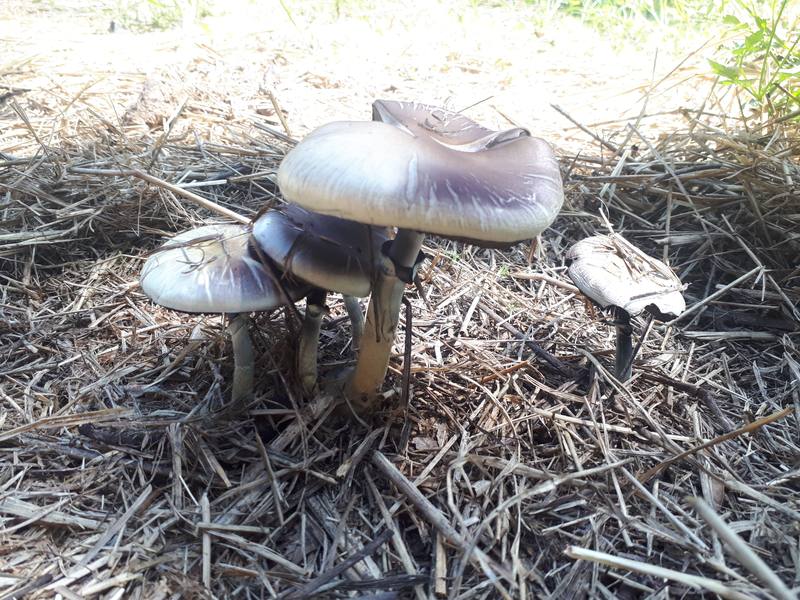
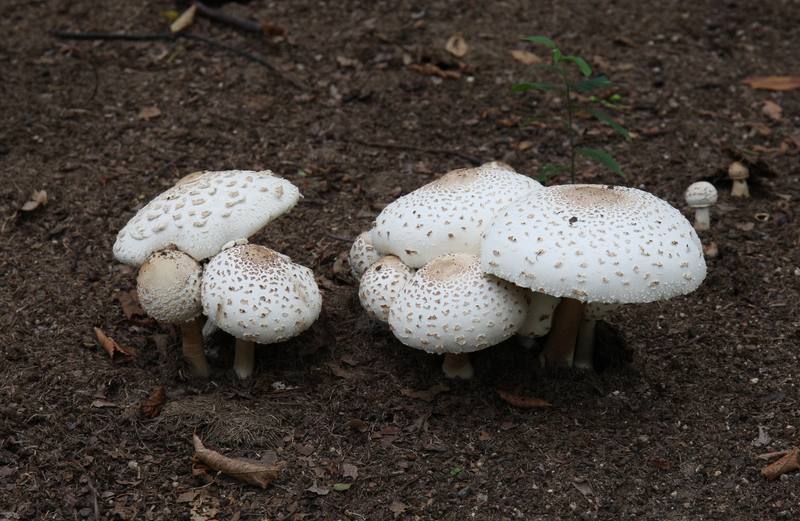
Large white mushroom, cap 10–30 cm, covered in brownish scales. Gills white when young, turning greenish as spores mature. Green spore print — the definitive identifier (most mushrooms have white, brown, or black spores). Double ring (annulus) on stalk; stalk has dark-staining pattern. Grows in lawns, parks, golf courses, and gardens throughout the Southwest — one of the most common large lawn mushrooms in the region, especially after summer rains.
Onset Time
1–3 hours post-ingestion. Symptoms can be severe — this is the most commonly ingested toxic mushroom in the United States, responsible for more Poison Control calls than any other species. Severity is dose-dependent.
Mechanism of Toxicity
GI toxins — exact nature incompletely characterized; may include proteinaceous lectins and other compounds. Causes direct mucosal irritation of the GI tract. No systemic organ damage in typical cases. Some patients develop severe cholera-like vomiting/diarrhea requiring hospitalization. No hepatotoxicity.
Clinical Symptoms
Severe nausea, profuse vomiting (often explosive), watery to bloody diarrhea, abdominal cramping. Dehydration, electrolyte imbalance, weakness. Children can become critically ill from fluid losses. No CNS effects, no hepatic/renal injury. Self-limiting in 12–24 hours with rehydration.
Treatment Notes
IV fluid resuscitation — aggressive rehydration is the mainstay. Anti-emetics (ondansetron IV). Electrolyte monitoring and replacement. Activated charcoal if within 1–2 hours and vomiting controlled. Hospitalization for pediatric cases, elderly patients, or anyone with severe dehydration. Prognosis excellent with hydration — no antidote needed. No hepatic or renal follow-up required in uncomplicated cases.
⚠ Look-Alike Warning: Strongly resembles edible Parasol Mushroom (Macrolepiota procera) and immature edible large Agaricus species. The critical differentiator is the green spore print — obtain a spore print from any large scaly white lawn mushroom before consuming. Gills that turn greenish at maturity are also diagnostic but may not be obvious in young specimens.
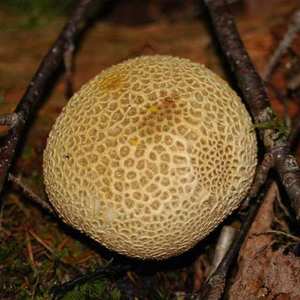
Common Earthball — Scleroderma citrinum • Photo: Wikimedia Commons (CC)
Identification Features
Round to irregular, 3–12 cm, resembles a puffball but has a thick, hard, leathery outer skin (peridium) with warty or scaly surface. Pale yellowish-tan exterior. Interior is solid purple-black to dark gray (not white like edible puffballs) — the most critical differentiator. Grows in sandy soils, woodland edges, and disturbed ground throughout the Southwest, especially under oaks and in ectomycorrhizal forest. No stalk; often partially buried.
Onset Time
30 minutes to 2 hours post-ingestion. GI symptoms predominate in most cases. Rare CNS effects (confusion, dizziness) reported with larger ingestions.
Mechanism of Toxicity
GI toxins — specific compounds not fully characterized; may include sclerodermin and related terpenoids. Causes gastric and intestinal irritation. Rarely, systemic toxicity with CNS effects at high doses. Not an amatoxin-containing species; no hepatorenal mechanism.
Clinical Symptoms
Nausea, vomiting, diarrhea, abdominal cramping. Dizziness, headache, and mild confusion reported in some cases (may reflect dehydration or direct effect). No hepatic/renal involvement in typical ingestions. Self-limiting in most cases within 12–24 hours.
Treatment Notes
Supportive care: IV fluids, anti-emetics, electrolyte replacement. Activated charcoal if within 1–2 hours. Observe for neurological symptoms; if present, consider broader differential. No antidote. Prognosis good in typical ingestions. Hospitalization for severe dehydration, pediatric cases, or any persistent neurological symptoms.
⚠ Look-Alike Warning: The most dangerous confusion is with edible True Puffballs (Calvatia, Lycoperdon species). True puffballs: interior uniformly white and homogeneous (no internal structure). Earthballs: interior purple-black/gray, and a faint outline of the developing "gill" structure may be visible when cross-sectioned when young. Always cross-section any puffball before eating: white throughout = safe; purple/dark interior = earthball, discard.
The Southwest presents a distinctive mix of poisoning risks shaped by elevation gradients and seasonal rainfall. Amanita ocreata (Western Destroying Angel) is a spring-fruiting species tied to California and Southwest oak habitats and is responsible for documented fatalities in the region. Amanita phalloides (Death Cap) is an introduced species that has established itself in urban and suburban tree plantings, particularly oaks, across Texas, California, and the Southwest broadly. Galerina marginata is found in higher-elevation conifer forests (Mogollon Rim, Jemez Mountains, Wasatch, Sierra Nevada). Conocybe filaris is a lawn and garden species particularly concerning for pediatric exposures throughout the region. In desert lowlands, Inocybe species fruit opportunistically after monsoon rains (July–September in the Arizona/New Mexico monsoon belt). Healthcare providers in the Southwest should be particularly aware of the spring (Feb–May) Amanita season in the lower elevations and the summer monsoon mushroom season at all elevations.
Look-Alike Comparison Table
The most dangerous field identification errors in the Southwest — toxic species confused with edible or non-toxic ones. This table supports clinical history-taking and communication with patients and family members.
Toxic Species
Commonly Confused With
Key Differentiators
Risk Level
Death Cap A. phalloides
Paddy Straw Mushroom Volvariella volvacea
Death Cap: greenish cap, ring on stalk, white gills. Paddy Straw: no ring, pink gills at maturity. Both have a volva sac at base — do not confuse.
Lethal
W. Destroying Angel A. ocreata
Button Mushrooms Agaricus bisporus
Destroying Angel: pure white gills (not pink/brown), volva sac at base, grows in soil under oaks. Button Mushroom: gills turn pink then chocolate-brown, no volva, cultivated.
Lethal
Deadly Galerina G. marginata
Honey Mushrooms Armillaria spp.
Galerina: rusty-brown spore print, grows on conifer wood. Honey Mushroom: white spore print, often on hardwood. Spore print is mandatory before eating any wood-inhabiting LBM.
Lethal
Deadly Conocybe C. filaris
Harmless Lawn LBMs Panaeolus, Mycena spp.
Conocybe filaris: ring on stalk (key feature), rusty-brown spore print, lawn habitat. Most other lawn LBMs: no ring or dark/black spore print. All lawn LBMs should be treated as potentially toxic.
Lethal
Fly Agaric A. muscaria var. flavivolvata
Caesar's Mushroom Amanita caesarea
Fly Agaric: white warts on cap, white gills, white volva. Caesar's: smooth orange cap without warts, yellow/orange gills, white volva enclosing egg — found in the Southwest but less commonly.
Serious
False Morel G. esculenta
True Morel Morchella spp.
False Morel: irregular wrinkled/brain-like cap, cap attached at multiple points, chambered interior. True Morel: honeycomb cap of regular pits and ridges, fully hollow, cap attached entirely to stalk at base.
Serious
Jack O'Lantern O. olearius
Chanterelle Cantharellus spp.
Jack O'Lantern: true blade-like orange gills, grows in dense clusters from wood/roots, vivid orange throughout. Chanterelle: forked blunt ridges (not true gills), grows singly from soil, egg-yolk yellow color, fruity apricot aroma.
Serious
Inocybe spp. (Fiber Caps)
Edible LBMs Agrocybe, Pholiota spp.
Inocybe: fibrous/radially streaked cap surface, brown spore print, often with cobweb-like cortina when young, strong earthy/spermatic odor. Cholinergic toxidrome (SLUDGE) is the key clinical indicator.
Serious
AI Data Methodology & Source Curation
AI Data Methodology & Source Curation
The Spore & Scout Clinical Reference Series was developed using advanced AI technology trained on peer-reviewed toxicological literature, published medical journals, documented mycological field research, and established poison control protocols. Regional species distribution data reflects multi-decade observational records cross-referenced against verified scientific sources.
Clinical content was synthesized by isolating complex mycological field markers and translating them into high-utility rapid triage protocols tailored specifically for frontline emergency healthcare providers.
All information reflects the accumulated documented expertise of professional mycologists, clinical toxicologists, and emergency medicine physicians. This AI-driven methodology ensures clinicians have immediate access to high-fidelity regional reference data for managing toxic mushroom ingestions.
🧪 Sample Preservation Checklist — Specimen for Mycological ID
Wrap specimen in paper or aluminum foil — never plastic (plastic accelerates decomposition)
Refrigerate immediately — do not freeze
Preserve the entire specimen including base, cup (volva), and any soil attached
Photograph in situ before collection if possible
Document GPS coordinates or precise location description
Deliver to poison control or mycologist as quickly as possible