Common yard mushrooms dogs actually eat
Most dogs don't wander into deep forest and eat a rare mushroom — they eat whatever popped up in the yard after rain or mowing. Here are three of the most common ones found in lawns and grass. Use these only to help describe what you found to the vet — not to decide on your own whether it's "safe."
Dangerous look-alike species can grow in the exact same lawn, right next to harmless ones. These photos are here only to help you describe what you saw to your vet or poison control — always call regardless of which one it resembles. Never use this to decide it's safe.
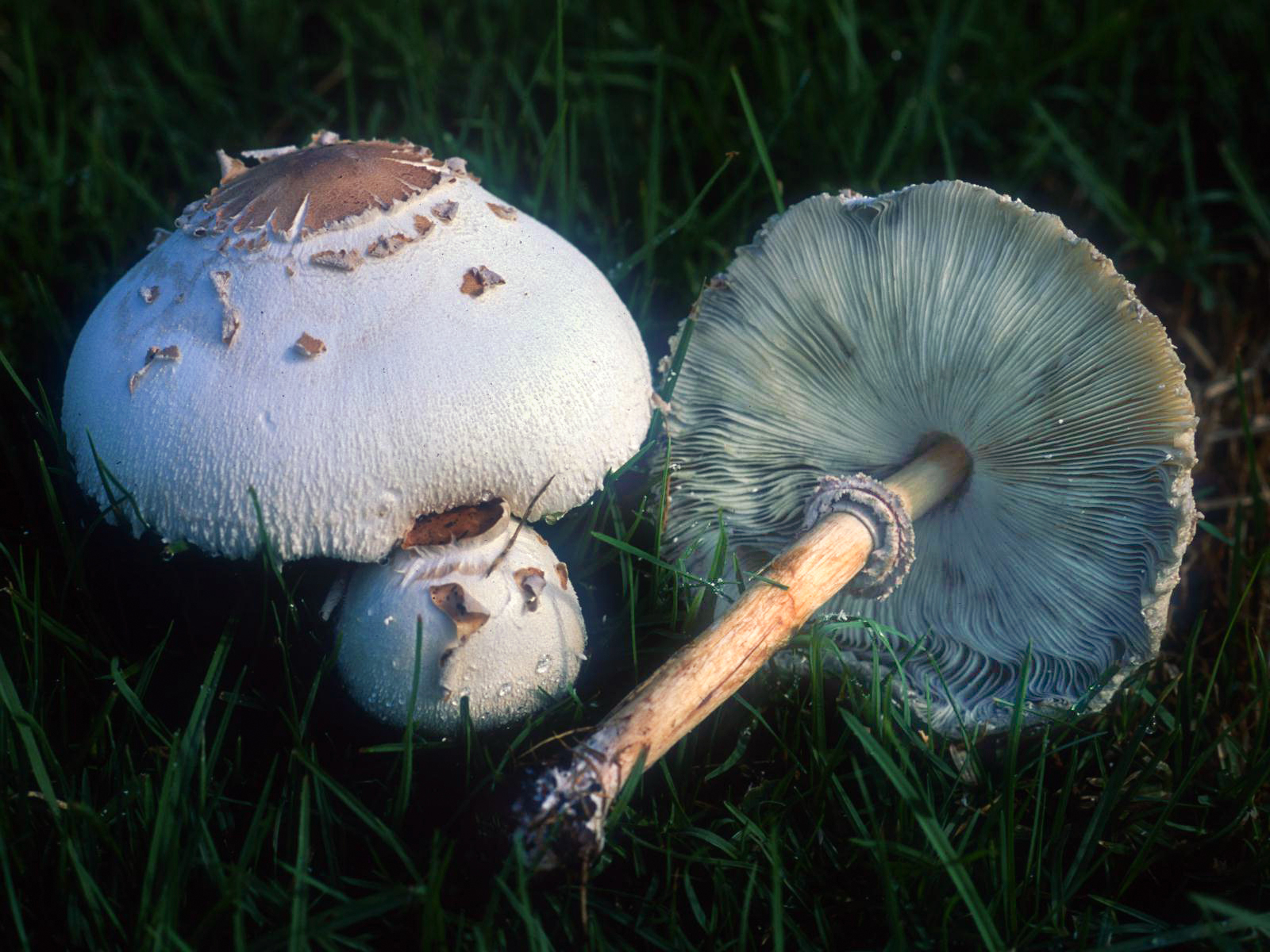
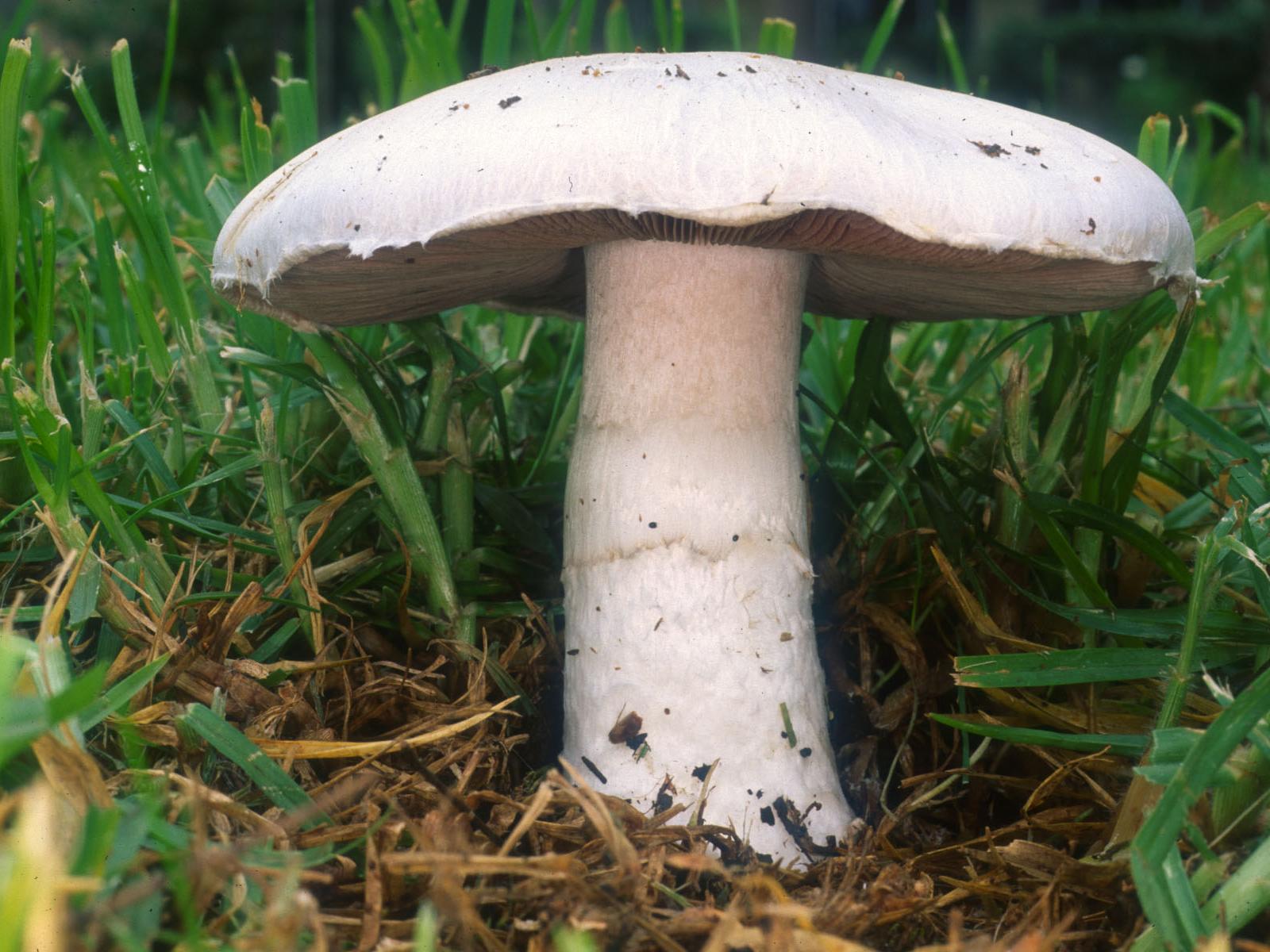
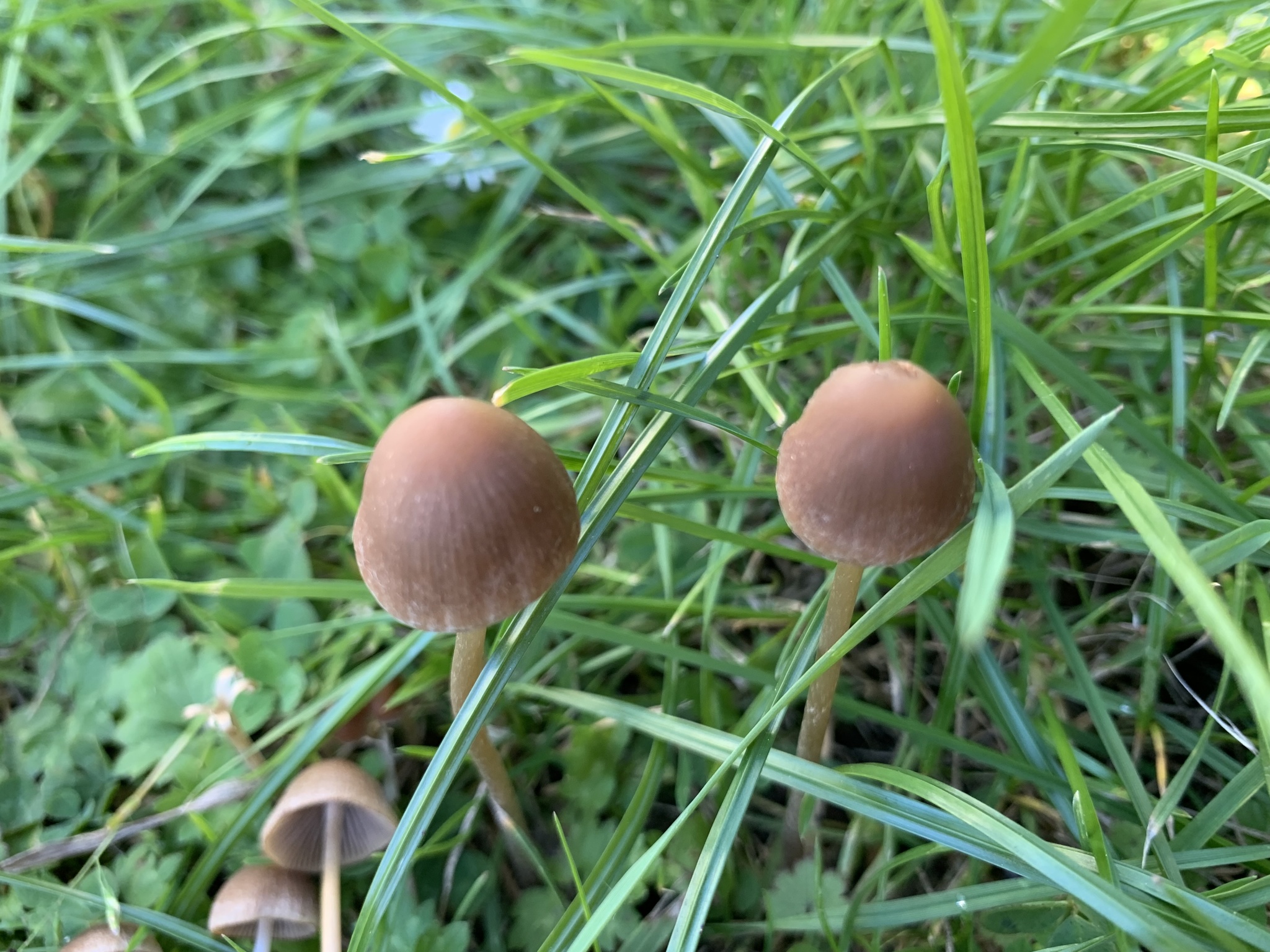
These photos are for visual comparison only — they do not replace identification by a vet or Poison Control, and a photo match alone is never enough to rule a mushroom "safe."
How to read your dog's body language
You don't need medical training to notice these signs — here's what they can mean in plain language.
🌀 Stumbling around, seeming disoriented or "drunk"
This can mean the toxin is affecting your dog's nervous system. Treat it as urgent — call right away, even if it seems to pass.
🙇 Front legs stretched out low, rear end up in the air (a "bowing" or "prayer" stance)
This posture is a common way dogs show significant belly pain. It's a clear signal something is wrong internally, even if your dog isn't crying out.
😌 Vomiting stops and your dog seems to feel better a few hours later
With some of the most dangerous mushrooms, this calm stretch can be misleading — it can mean a quiet period where the mushroom is still doing serious damage inside, especially to the liver. This is not a sign of recovery. Your dog should still be seen by a vet immediately, no matter how okay they seem right now.
Based on descriptions from the Merck Veterinary Manual and VCA Animal Hospitals on how certain mushroom toxins can cause a symptom-free or "quiet" period of several hours while damage continues internally.
Questions dog owners ask when this happens
My dog ate a mushroom in the yard — what do I do right now?
Call your vet or the ASPCA Animal Poison Control Center right now, even if your dog seems totally fine. Try to find a piece of the mushroom (or take clear photos of the cap top, gills underneath, and the stem) so the vet can help identify it — but do not spend time hunting for it if that delays your call. Making the call comes first.
Is the ASPCA Animal Poison Control Center free?
No. The ASPCA Animal Poison Control Center (1-888-426-4435) is a paid consultation service — there is currently a consultation fee charged per case. It is still one of the fastest ways to get real guidance from toxicology experts 24/7, and many pet insurance plans reimburse the fee. If cost is a concern, your regular vet or the nearest emergency animal hospital can also advise you, and some can consult ASPCA APCC on your behalf.
My dog seems totally fine — do I still need to call?
Yes. Some of the most dangerous mushroom toxins don't cause any symptoms for 6 to 24 hours, or even longer, after your dog eats them. By the time a dog 'looks sick,' the toxin may have already caused serious damage. Waiting to see if your dog gets sick before calling is one of the most common — and most dangerous — mistakes owners make.
What symptoms should I watch for?
Common symptoms after a dog eats a toxic mushroom include vomiting, diarrhea, drooling, weakness, wobbliness, tremors, seizures, yellowing of the eyes or gums (jaundice), and unusual sleepiness or agitation. But don't wait for these to show up before calling — some toxins cause no early symptoms at all, even while doing serious internal damage. Call regardless of how your dog looks right now.
Should I make my dog throw up?
Do not induce vomiting on your own. Some methods people try at home (like hydrogen peroxide) can be dangerous if done incorrectly or at the wrong time, and inducing vomiting is not the right move for every situation. Only do this if a vet or Poison Control specifically instructs you to, and follow their exact directions.
How can I tell if the mushroom my dog ate is dangerous?
You generally can't tell just by looking at it, and neither can most people — including many experienced foragers. There's no reliable rule of thumb (bright colors mean toxic, bugs won't eat toxic ones, etc.) that actually holds up. Some of the most lethal mushrooms look plain, dull brown or white, and totally unremarkable. This is exactly why a photo for the vet or Poison Control matters more than trying to self-diagnose from a picture online.
What if I don't have any of the mushroom left — my dog ate the whole thing?
Call anyway. Vets and Poison Control can still help based on your dog's size, weight, symptoms, and what you remember about the mushroom (color, size, where it was growing — lawn, mulch, near a tree). A photo helps, but it is not required to get help started.
What mushrooms commonly show up in yards and lawns that dogs eat?
The mushrooms dogs most often encounter and eat are common lawn and yard species — mushrooms that pop up in grass after rain, not deep-woods species. These include the green-spored parasol (Chlorophyllum molybdites), which is the most frequently reported cause of mushroom-related stomach upset in dogs in the US; the meadow mushroom (Agaricus campestris), a common lawn mushroom that closely resembles some toxic look-alikes; and small brown lawn mushrooms like the mower's mushroom (Panaeolus foenisecii), which sprout quickly after mowing or rain. See photos of these below.
Are lawn mushrooms less dangerous than 'wild' forest mushrooms?
Not necessarily. Some of the most common calls to poison control about dogs eating mushrooms involve ordinary-looking lawn mushrooms, not rare forest species. The green-spored parasol, one of the most frequently reported mushrooms in dog poisoning cases, grows almost exclusively in lawns and grassy areas — not deep woods. Location alone does not tell you whether a mushroom is safe.
How much does one mushroom matter — is a small bite dangerous?
It depends entirely on the species and your dog's size, and there's no way to know that safely without professional guidance. Some toxic mushrooms are dangerous in very small amounts. Don't assume 'it was just a little bit' means it's safe to skip the call.
Can I just search online to identify what my dog ate?
A photo search or general web search should never replace calling a vet or Poison Control. Visual identification of mushrooms is genuinely hard — many toxic and non-toxic species look extremely similar, and a wrong guess from a photo can cost time you don't have. Use identification tools only as a supplement while you're already on the phone with a professional, never as a substitute for the call.
What should I tell the vet or Poison Control on the phone?
Your dog's breed, weight, and age; when you think the mushroom was eaten; how much you think was eaten (whole cap, a bite, several mushrooms); any symptoms so far, even mild ones; and a description or photo of the mushroom (cap color and shape, gill color underneath, stem, and where it was growing — lawn, mulch, near dead wood). The more detail you can give, the faster they can help.
While you wait for guidance
Once you've made the call, these can help while you wait for instructions — they are supporting resources, never a substitute for calling a vet or Poison Control.
These tools can help you describe what you found for the professionals on the phone — they cannot diagnose your dog or replace veterinary guidance.
This page is provided free, for everyone, at all times. It is not a substitute for professional veterinary advice. If you are ever unsure, call your vet or Animal Poison Control.