Clinical Use Only. This reference is intended for healthcare providers, poison control specialists, and trained foragers. It is not a foraging identification guide. Always contact Poison Control (
1-800-222-1222) for real-time case management guidance. Treatment recommendations should be confirmed against current clinical guidelines.
Regional Scope: The Eastern Caribbean — Lesser Antilles — encompasses an arc of islands from St. Kitts in the north to Trinidad & Tobago in the south, including Barbados, St. Lucia, Martinique, Guadeloupe, Grenada, St. Vincent & the Grenadines, Dominica, and Antigua & Barbuda. Year-round tropical climate drives year-round mushroom activity peaking after rain events. Chlorophyllum molybdites is by far the most common cause of GI mushroom poisoning, thriving in resort lawns and suburban gardens across all islands. Lepiota cristata represents the primary amatoxin risk with delayed onset frequently misdiagnosed as tropical bacterial gastroenteritis or seafood poisoning. Inocybe (lilacina complex / geophylla) causes cholinergic crises in forested zones. Psilocybe cubensis is widespread on cattle pasture throughout the region. Macrocybe titans is a large edible-appearing species responsible for significant GI illness.
Quick Reference — Eastern Caribbean Species (5 Documented)
| Common Name |
Scientific Name |
Tier |
Toxin |
Onset |
Primary Risk |
| Small Lepiota / Stinking Dapperling |
Lepiota cristata |
Tier 1 |
Amatoxins / Cytotoxins |
6–24 hr |
Amatoxin risk documented in Caribbean — potentially fatal in small quantities |
| Lilac Fibrecap / Fiber Cap |
Inocybe lilacina complex (I. geophylla) |
Tier 2 |
Muscarine |
15 min–2 hr |
Cholinergic toxidrome (SLUDGE / DUMBELS) |
| Golden Teacher / Magic Mushroom |
Psilocybe cubensis |
Tier 2 |
Psilocybin / Psilocin |
30 min–2 hr |
Hallucinogenic; pediatric risk: hyperpyrexia, seizures |
| Green-Spored Parasol / False Parasol |
Chlorophyllum molybdites |
Tier 3 |
GI irritants (heat-stable) |
30 min–3 hr |
Most common mushroom poisoning in Caribbean — resort lawns and gardens |
| Titan's Giant / Giant Caribbean Mushroom |
Macrocybe titans |
Tier 3 |
GI irritants |
30 min–3 hr |
Severe GI distress; often confused with edible species due to large size |
Sample Preservation Checklist — Collect Before Emergency Contact if Safe to Do So
- Photograph the mushroom in situ (top, underside, stem base/volva, habitat) before handling
- Collect the entire fruiting body including stem base using gloves or a paper bag (NOT plastic — plastic accelerates decomposition)
- Collect vomitus or gastric contents in a sealed container if available — for toxin confirmation
- Note time of ingestion, quantity consumed, part consumed (cap/stem/all), raw vs cooked
- Preserve refrigerated (not frozen) for toxicological analysis
- Record baseline LFTs and INR on patient presentation for delayed-onset monitoring
Identification Features
Small cap (2–6 cm), white with concentric reddish-brown scales; distinctive unpleasant odor (rubber, geranium); white gills free from stem; fragile ring on stem; no volva; white spore print. Found in grassy areas, gardens, roadsides, and forest edges across all Eastern Caribbean islands.
Toxin Class
Amatoxins and cytotoxic cyclopeptides. Amatoxin risk is documented in the Lepiota genus across Caribbean and tropical regions. Fatal even in small quantities — a single small cap can be lethal to a child.
Symptom Onset
6–24 hours after ingestion (asymptomatic latent phase). Three-phase syndrome: Latent → GI crisis (24–48h) → Hepatorenal failure (48–96h). Delayed presentation commonly misdiagnosed in the Caribbean.
Clinical Presentation
Phase 1 latent (6–24h, asymptomatic); Phase 2 severe GI (24–48h: vomiting, profuse diarrhea, abdominal cramps); Phase 3 hepatorenal failure (48–96h: ALT/AST elevation, rising INR, coagulopathy, oliguria). Mortality without liver transplant: 10–30%.
Mechanism of Toxicity
Alpha-amanitin inhibits RNA polymerase II, blocking protein synthesis in hepatocytes and renal tubular cells. Enterohepatic recirculation prolongs toxin exposure and severity.
Treatment Protocol
Immediate: Gastric decontamination if <2h from ingestion. Multi-dose activated charcoal: 1 g/kg q4h for 24–48h (interrupts enterohepatic recirculation). IV fluid resuscitation.
Antidotes: N-Acetylcysteine (NAC): 150 mg/kg IV over 60 min, then 50 mg/kg over 4h, then 100 mg/kg over 16h. Silymarin (Milk Thistle extract / Legalon): 20–48 mg/kg/day IV if available. Penicillin G: 300,000–1,000,000 units/kg/day if silymarin unavailable.
⚠ INR Tracking alongside LFTs — every 6–8 hours: INR changes frequently precede AST/ALT elevation and are a more sensitive early indicator of hepatic synthesis failure. Baseline INR on presentation is essential. INR >2.5: escalate care. INR >4 or hepatic encephalopathy: urgent liver transplant consultation.
Escalation: ICU for any confirmed/suspected amatoxin ingestion. Transplant evaluation for INR >4, factor V <20%, or encephalopathy.
🐾 Veterinary / Canine Note: Dogs are highly susceptible. Decontamination window approximately 2–4 hours from ingestion. Emesis induction (apomorphine 0.03 mg/kg IV). Activated charcoal 1–3 g/kg PO. SAMe hepatoprotection. Aggressive IV fluids. LFTs at 24h, 48h, 72h. Prognosis poor if hepatic failure develops; supportive ICU care.
⚠ Look-Alike Warning: May be confused with small edible Lepiota species or young button mushrooms. Unpleasant rubbery odor is a key differentiator. All small Lepiota species must be considered potentially deadly.
Bilingual Alert / Alerte bilingue (Martinique / Guadeloupe)
EN:
Lepiota cristata — deadly. Do not eat. Call poison control immediately.
FR:
Lepiota cristata — mortelle. Ne pas consommer. Appeler le Centre Antipoison immédiatement. CPIC France:
0800 59 59 95
NL (Dutch islands): Giftige paddenstoel — onmiddellijk bellen NVIC:
+31 30 274 8888
Identification Features
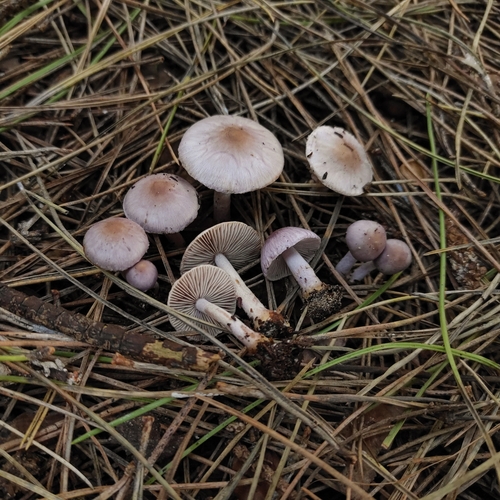
Small (1–5 cm cap); silky-fibrous white or lilac-tinged cap, often conical or umbonate (central bump); brown to grayish gills; strong earthy/spermatic odor. Found in tropical forests, gardens, and disturbed ground throughout the Eastern Caribbean, particularly on larger forested islands.
Toxin Class
Muscarine — potent, heat-stable cholinergic agonist. Acts on muscarinic acetylcholine receptors throughout the autonomic nervous system. The I. lilacina complex includes several morphologically similar tropical Inocybe species; all are toxic.
Symptom Onset
15 minutes to 2 hours. Rapid-onset cholinergic crisis.
Clinical Presentation
Full SLUDGE / DUMBELS cholinergic toxidrome: Salivation, Lacrimation, Urination, Defecation, GI cramps/Emesis, Bronchospasm/Bradycardia/Miosis. Severe cases: pulmonary edema, respiratory failure, cardiac dysrhythmia.
Mechanism of Toxicity
Muscarine is a selective agonist at peripheral muscarinic acetylcholine receptors (M1–M5). Causes excessive parasympathetic stimulation. Does not significantly cross the blood-brain barrier at typical ingestion doses.
Treatment Protocol
Antidote: Atropine
Adults: 1–2 mg IV q5–10 min. Children: 0.02 mg/kg IV (minimum 0.1 mg) q5–10 min.
⚠ Atropine Ceiling — CRITICAL: Titrate atropine to secretions only (drying of excessive salivation, lacrimation, bronchospasm, pulmonary edema). Do NOT titrate to heart rate or pupils. Using heart rate or pupils as endpoints causes dangerous over-atropinization. Endpoint is dry secretions and adequate oxygenation.
Supportive: Airway management; supplemental oxygen; bronchodilators for persistent bronchospasm. Gastric decontamination if <1h and airway is protected. Glycopyrrolate 0.2 mg IV may substitute if atropine unavailable.
🐾 Veterinary / Canine Note: Decontamination window approximately 2–4 hours. Emesis induction; activated charcoal. Atropine: 0.02–0.04 mg/kg IV/IM. Titrate to secretions — not heart rate. Supportive oxygen.
Bilingual / Martinique & Guadeloupe
EN: Muscarine poisoning. Cholinergic crisis. Antidote: atropine — titrate to secretions.
FR: Empoisonnement à la muscarine. Crise cholinergique. Antidote: atropine — titrer sur les sécrétions.
Identification Features
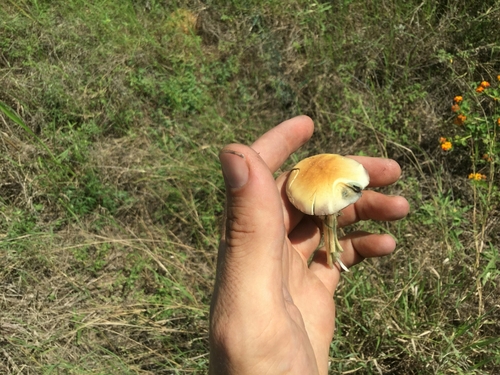
Cap 2–8 cm, golden to caramel-brown, hygrophanous (paler when dry); characteristic blueing reaction when bruised or cut (diagnostic for psilocybin content); purple-black spore print; skirt-like ring on stem. Grows exclusively on cattle or buffalo dung or heavily fertilized pasture throughout all Eastern Caribbean islands with livestock.
Toxin Class
Psilocybin (dephosphorylated in vivo to psilocin) — serotonin 5-HT2A receptor agonist. Schedule I controlled substance. Not classically lethal in adults at typical recreational doses.
Symptom Onset
30 minutes to 2 hours. Duration 4–6 hours. Pediatric onset may be faster and severity greater per unit dose.
Clinical Presentation
Visual/auditory hallucinations, altered time perception, euphoria or panic, mydriasis, tachycardia, nausea. Pediatric: Significantly higher risk of hyperthermia, hypertension, and seizures relative to body weight dose. Accidental pediatric ingestion requires emergency evaluation.
Mechanism of Toxicity
Psilocin is a partial agonist at serotonin 5-HT2A receptors in the prefrontal cortex. Also activates dopaminergic pathways and other serotonin receptor subtypes. CNS effects are dose-dependent.
Treatment Protocol
Adults: Primarily supportive. Calm environment. Benzodiazepines (lorazepam 1–2 mg IV/IM) for severe agitation. Haloperidol 2.5–5 mg IV/IM for prolonged psychosis unresponsive to BZD.
Pediatric: Activated charcoal if <1h and airway protected. Continuous temperature, BP, and neuro monitoring. Benzodiazepine for seizures. Antipyretics for hyperthermia (avoid aspirin). ICU if seizures or hyperthermia develops.
🐾 Veterinary / Canine Note: Decontamination window approximately 2–4 hours. Induce emesis if recent; activated charcoal. Monitor for hyperthermia and seizures. Diazepam for tremors/seizures. IV fluids. Prognosis generally good with supportive care.
Bilingual / Martinique & Guadeloupe
EN: Hallucinogenic mushroom. Supportive care. Call poison control.
FR: Champignon hallucinogène. Soins de support. Appeler le Centre Antipoison.
Identification Features
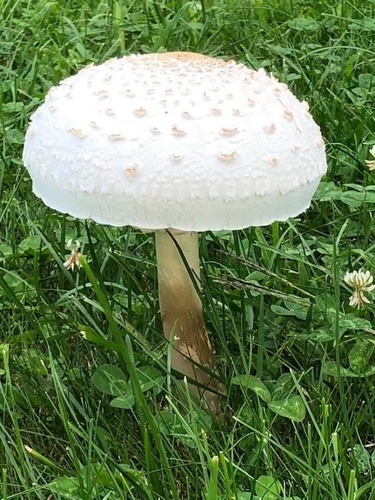
Large cap (8–30 cm), white with brown scaly patches; moveable double ring on stem; green spore print (diagnostic); gills turn greenish with age. Grows in lawns, golf courses, resort grounds, parks, and roadsides throughout all Eastern Caribbean islands. Most common mushroom poisoning presentation in the region.
Toxin Class
Uncharacterized heat-stable GI irritants and lectins. Toxin is not fully characterized; symptoms occur even after cooking. Does not contain amatoxins; no delayed systemic toxicity.
Symptom Onset
30 minutes to 3 hours. Early onset (1–3h) is the key clinical differentiator from amatoxin species, which present after 6–24 hours.
Clinical Presentation
Severe nausea, projectile vomiting, profuse watery diarrhea, abdominal cramping. Dehydration and electrolyte imbalance in severe cases. Self-limiting over 6–12 hours. No hepatic or renal toxicity. Children and elderly at highest risk from dehydration.
Mechanism of Toxicity
Direct GI mucosal irritation by heat-stable toxins (possibly lectins or peptides). Not destroyed by cooking. No known enterohepatic recirculation or systemic distribution.
Treatment Protocol
Supportive: Oral rehydration if tolerating fluids; IV crystalloid for moderate-to-severe dehydration. Antiemetics (ondansetron 4 mg IV/PO). Electrolyte monitoring and replacement. No antidote required. Activated charcoal generally not indicated unless within 1h of ingestion and concurrent exposure to other species is suspected.
🐾 Veterinary / Canine Note: Decontamination window approximately 2–4 hours. Emesis; activated charcoal. IV fluids for dehydration. Antiemetics. Prognosis excellent.
⚠ Look-Alike Warning: Frequently confused with edible Macrolepiota procera (Parasol Mushroom). Key differentiator: C. molybdites has green gills and green spore print; edible parasols have white gills and white spore print.
Bilingual / Martinique & Guadeloupe
EN: Most common toxic mushroom in Caribbean. GI symptoms 30 min–3 hr. Supportive care only.
FR: Champignon toxique le plus fréquent aux Caraïbes. Symptômes 30 min–3 h. Soins de support.
Identification Features
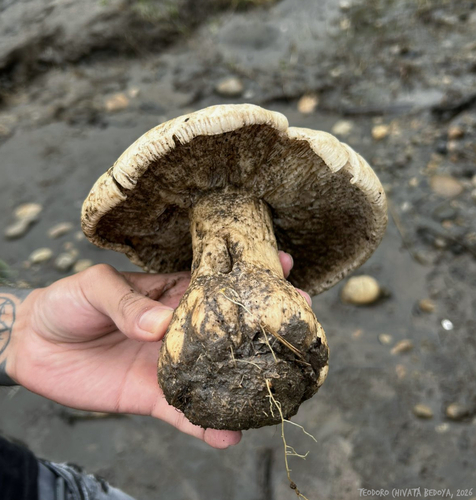
One of the largest mushrooms in the Americas; cap 20–70+ cm; pale buff to cream-white; thick meaty stem; white gills; white spore print. Found in tropical grasslands, forest margins, roadsides, and disturbed ground throughout the Eastern Caribbean. Often foraged due to impressive size; mistaken for an edible species.
Toxin Class
GI irritants (not fully characterized). No amatoxins confirmed. Uncooked fruiting bodies more likely to cause symptoms; GI distress also reported after cooking in some cases.
Symptom Onset
30 minutes to 3 hours. Typical GI toxidrome without delayed systemic effects.
Clinical Presentation
Nausea, vomiting, diarrhea, abdominal cramping. Severity correlates with quantity consumed. Self-limiting; no hepatic or renal toxicity reported. Dehydration is the primary clinical concern, particularly in children and elderly.
Mechanism of Toxicity
Direct GI mucosal irritation. Specific toxin compounds not fully characterized. No known systemic distribution or delayed effects.
Treatment Protocol
Supportive: Oral or IV rehydration. Antiemetics (ondansetron 4 mg IV/PO). Electrolyte monitoring. Symptoms typically resolve within 6–24 hours. No antidote required.
🐾 Veterinary / Canine Note: Decontamination window approximately 2–4 hours. Emesis if recent ingestion; activated charcoal. IV fluids for dehydration. Prognosis excellent with supportive care.
Bilingual / Martinique & Guadeloupe
EN: Giant tropical mushroom — GI irritant. Supportive care. No delayed toxicity.
FR: Grand champignon tropical — irritant gastro-intestinal. Soins de support. Pas de toxicité retardée.
Antidote Matrix — Eastern Caribbean Toxidromes
| Toxidrome / Species |
Primary Antidote |
Dose (Adult) |
Notes |
| Amatoxin (Lepiota cristata) |
N-Acetylcysteine (NAC) + Silymarin |
NAC: 150 mg/kg IV load, then maintenance. Silymarin: 20–48 mg/kg/day IV |
MDAC q4h; INR + LFT q6–8h; transplant eval if INR >4 |
| Muscarine (Inocybe lilacina complex) |
Atropine |
1–2 mg IV q5–10 min; repeat until secretions dry |
Titrate to secretions ONLY — NOT heart rate or pupils |
| Psilocybin/Psilocin (P. cubensis) |
Supportive; BZD for agitation |
Lorazepam 1–2 mg IV/IM; haloperidol 2.5–5 mg for psychosis |
No specific antidote; pediatric: ICU for seizures / hyperthermia |
| GI Irritant (C. molybdites, M. titans) |
No antidote — supportive care |
Ondansetron 4 mg IV/PO; IV crystalloid for dehydration |
Monitor pediatric dehydration; rule out concurrent amatoxin exposure |
📅 Caribbean Seasonal Epidemiology
Mushroom fruiting in the Eastern Caribbean is year-round, with peaks driven by rainfall rather than temperature. Key epidemiological patterns for clinicians:
- Wet season (June–November): Peak fruiting for all species. Hurricane-related rainfall events cause sudden flush fruiting; highest poisoning incidence. C. molybdites and M. titans are most abundant after heavy rain in resort areas and suburban lawns.
- Dry season (December–May): Reduced fruiting but year-round presence on all islands. P. cubensis maintains continuous presence wherever cattle are grazed.
- Tourist/visitor risk: Visitors unfamiliar with local mycology account for a disproportionate share of GI poisoning presentations, particularly at hotels and rental properties with ornamental lawns.
- Subsistence foraging risk: Rural communities on forested islands (Dominica, St. Lucia, Grenada, Trinidad) with a history of wild mushroom consumption face the highest risk of Lepiota cristata ingestion.
- Pediatric risk: Children across all islands face highest accidental exposure in grassy areas near homes, schools, and resort grounds where C. molybdites and P. cubensis grow.
- Martinique & Guadeloupe (French départements): Report to French CPIC (Centre Antipoison et de Toxicovigilance) as required. Inocybe complex is of particular concern in forested zones of these islands.
Emergency Contacts — Eastern Caribbean
Regional Clinical Note
In jurisdictions where specific poison control centers are not documented (Grenada, Dominica, Antigua & Barbuda, St. Kitts & Nevis, St. Vincent & the Grenadines), the US Poison Control Network (1-800-222-1222) provides 24/7 consultation and is the recommended first call alongside local emergency services. Tele-toxicology consultation through regional health networks should be considered for complex presentations.