Clinical Use Only. This reference is intended for healthcare providers, poison control specialists, and trained foragers. It is not a foraging identification guide. Treatment recommendations should be confirmed against current clinical guidelines and institutional protocols.
Regional Scope: This guide covers the Windward and Leeward Islands — St. Lucia, Grenada, St. Vincent & the Grenadines, Dominica, Antigua & Barbuda, and St. Kitts & Nevis. It is organized by time-to-onset, the most clinically actionable framework for mushroom poisoning triage. The most common toxic species across all islands is Chlorophyllum molybdites (False Parasol), ubiquitous on resort lawns and golf courses. Psilocybe cubensis and Copelandia cyanescens are found on cattle pasture throughout the island chain. Note: Temperate Amanita amatoxin species are absent from this ecosystem.
▲ Immediate Emergency Protocol — All Suspected Toxic Ingestions
- Assess ABCs, establish IV access if patient is symptomatic
- Contact local emergency services immediately — see island-specific numbers below
- Secure the sample: collect remaining mushroom pieces and photos of the fungus for botanical consultation
Toxidrome 1 — Onset < 3 Hours
Early-Onset GI Distress
Primary culprit: Chlorophyllum molybdites (False Parasol)
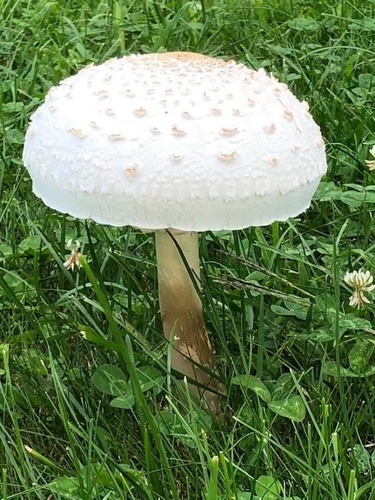
Ecology & Habitat
Ubiquitous on resort lawns, golf courses, coastal grass, and suburban fields after heavy rain across all Windward and Leeward Islands.
Symptoms
Rapid violent onset: projectile vomiting, explosive diarrhea, severe abdominal cramping.
Treatment Protocol
- Aggressive IV crystalloids (Normal Saline or Ringer’s Lactate)
- IV antiemetics — Ondansetron 4–8 mg
- Activated charcoal NOT routinely indicated if active vomiting has already cleared stomach
- Monitor 4–6 hours
- Discharge when tolerating oral fluids and electrolytes stable
Expected Outcome: High morbidity, low mortality. Most patients fully recover within 24–48 hours.
Toxidrome 2 — Onset 30 mins – 2 Hours
Neurotoxic / Hallucinogenic
Primary culprits: Psilocybe cubensis AND Copelandia cyanescens
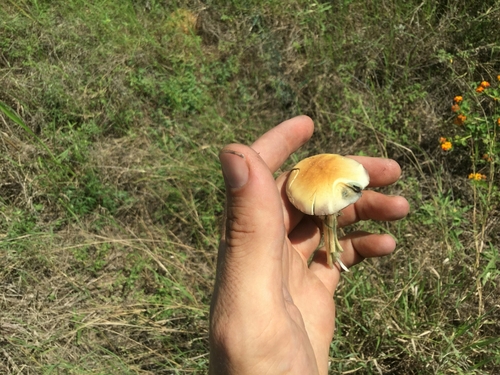
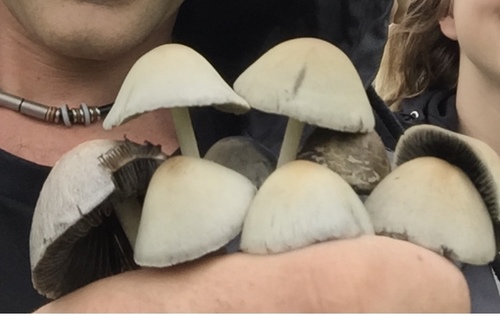
Ecology & Habitat
Found growing on cattle dung in agricultural pastures and rural livestock areas across all Windward and Leeward Islands.
Symptoms
Visual and auditory distortions, altered time perception, emotional lability, mid-range pupillary dilation, mild tachycardia.
Treatment Protocol
- Place patient in quiet, dimmed, low-stimulus room
- For severe agitation, panic, or muscle tremors: Diazepam 2–5 mg IV or Lorazepam 1–2 mg IV
- Treat active pediatric/canine seizures immediately with standard benzodiazepine loading
- Adults rarely require admission
- Monitor pediatric cases to neurological baseline
⚠ PEDIATRIC / VETERINARY WARNING: In toddlers and dogs, high doses trigger hyperpyrexia (dangerously elevated body temperature) and tonic-clonic seizures — not just hallucinations. Treat immediately.
Toxidrome 3 — Onset > 6 Hours
Delayed-Onset Systemic Toxicity CRITICAL EMERGENCY
Important Regional Note
Temperate Amanita species (amatoxins) are absent from the Lesser Antilles — they cannot survive without host hardwood forest trees which do not exist in this tropical ecosystem. However, unknown tropical cyclopeptide or cytotoxic species present a real delayed threat.
Symptom Pattern
Zero symptoms for hours → sudden severe diarrhea and vomiting → apparent improvement → acute liver or kidney failure.
Treatment Protocol
- Immediate baseline labs: LFTs (AST, ALT, Total Bilirubin), Renal (BUN, Creatinine), Coagulation (PT/INR)
- Aggressive high-rate IV fluids for high urine output
- IV N-Acetylcysteine (NAC) if liver enzymes elevated or delayed toxic ingestion highly suspected
- ICU admission
- Coordinate early for potential medical evacuation if advanced hepatic support or transplantation needed
Expected Outcome: High risk of organ failure / fatality without immediate intervention.
🐾 Veterinary Protocol
Within 2 Hours of Ingestion — Animal Asymptomatic
Induce emesis or administer activated charcoal immediately.
After 2 Hours OR Symptomatic
DO NOT induce emesis (aspiration risk). Aggressive IV fluid diuresis. Hepatoprotectants: SAMe or Silibinin. Transfer immediately to nearest 24-hour veterinary facility.
⚠ CRITICAL — Dogs and Cats: Terminal hepatic necrosis can occur within 24–48 hours (vs 3–5 days in humans). Immediate emergency admission, high-rate IV fluids, baseline blood panels, aggressive hepatoprotectants.
Island-Specific Emergency Contacts — Windward & Leeward Islands
St. Lucia
Emergency
Hospitals
Owen King EU Hospital (OKEU), Castries
OR St. Jude Hospital, Vieux Fort
OR St. Jude Hospital, Vieux Fort
St. Kitts & Nevis
Emergency
Hospitals
Joseph N. France General Hospital, Basseterre (St. Kitts)
OR Alexandra Hospital, Charlestown (Nevis)
OR Alexandra Hospital, Charlestown (Nevis)