Venom Classification Overview
Understanding Pit Viper Venom
All North American pit vipers deliver primarily hemotoxic venom — a complex mixture of enzymes and proteins targeting blood, blood vessels, and tissue. The hallmark syndromes are coagulopathy, disseminated intravascular coagulation (DIC), and progressive tissue necrosis.
Hemotoxic mechanism: Phospholipases, proteases, and hyaluronidases disrupt cell membranes and the clotting cascade. Thrombin-like enzymes deplete fibrinogen, causing a paradoxical anticoagulant state despite initial pro-coagulant activity. The result: simultaneous clotting and bleeding.
Coagulopathy: Fibrinogen drops precipitously within 1–6 hours post-bite. PT/INR rises. Platelets fall. Clinically significant bleeding risk begins well before the patient appears critically ill.
DIC risk: Severe envenomations — particularly from rattlesnakes — can trigger disseminated intravascular coagulation with multi-organ involvement. Monitor fibrinogen, D-dimer, platelet count, and PT/INR serially.
Tissue necrosis: Proteolytic enzymes cause direct local cell death. Necrosis may progress for 12–48 hours and can require surgical debridement. Myotoxic components in some populations cause myonecrosis beyond the bite site.
Species Clinical Reference Cards
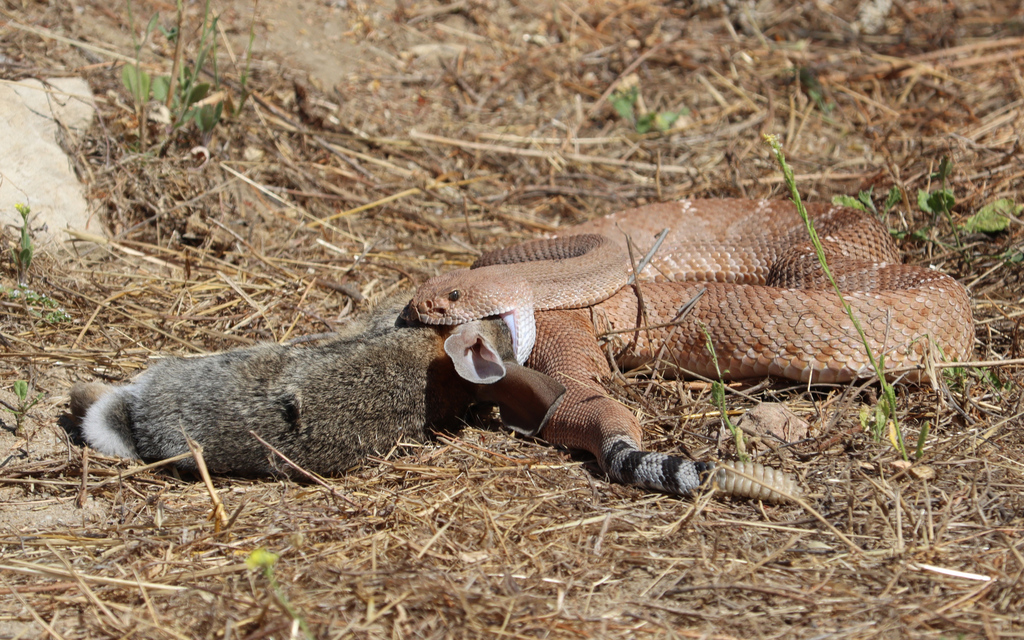
Western Diamondback Rattlesnake
Field Identification
- Triangular head, distinct neck
- Heat-sensing loreal pit between eye and nostril
- Black-and-white banded tail (equal width bands) before rattle
- Diamond dorsal pattern in gray, brown, or pink
- Rattle present — may not rattle before striking
- Adults 3.5–5 feet; max ~7 feet
- Keeled scales; elliptical pupils
Clinical Presentation
- Immediate intense pain and swelling at bite site
- Progressive edema spreading proximally
- Ecchymosis (bruising) and blistering within hours
- Coagulopathy: fibrinogen depletion within 1–2 hours
- Possible DIC in severe envenomations
- Tissue necrosis — may be extensive
- Nausea, weakness, metallic taste, hypotension
Symptom Timeline
1–2 hours: Rapid edema progression, coagulopathy onset
2–6 hours: Coagulopathy peaks — check PT/INR, fibrinogen
6–12 hours: Swelling peaks; ecchymosis/blistering develop
12–48 hours: Necrosis progression; monitor for compartment syndrome
Field Response
✓ Do
- Call 911 immediately
- Keep patient calm and still
- Remove rings, watches, tight clothing
- Keep limb at or below heart level
- Note exact time of bite
- Mark swelling margin with pen
- Call 1-800-222-1222
✗ Do Not
- Apply tourniquet
- Cut or incise the wound
- Suck out venom by mouth
- Apply suction device
- Apply ice or cold water
- Use electric shock treatment
- Give aspirin or NSAIDs
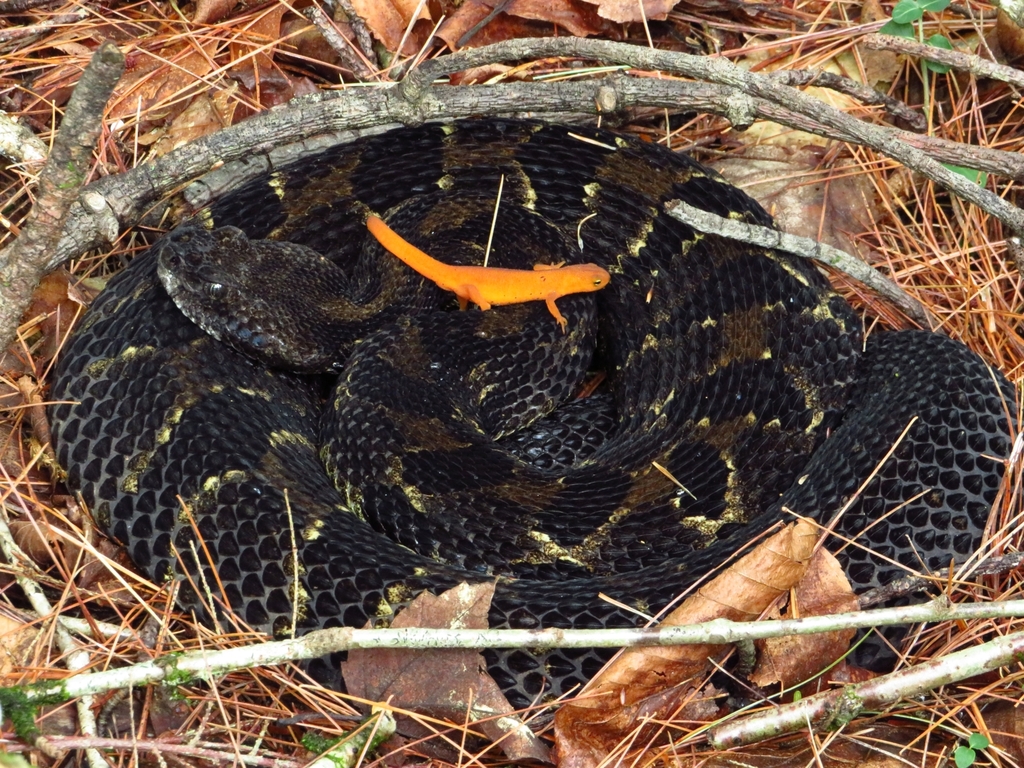
Timber Rattlesnake
Field Identification
- Heavy-bodied; 3–5 feet typical length
- Black chevron crossbands on yellow, brown, or gray base
- Black tail with prominent rattle
- No facial stripe (distinguishes from many other rattlesnakes)
- Color morphs: yellow phase, gray phase, black phase
- Head distinctly wider than neck
- Sulfur-yellow dorsal stripe in some populations
Clinical Presentation
- Severe envenomation — among most dangerous eastern US snakes
- Pronounced coagulopathy with rapid fibrinogen depletion
- Significant local tissue destruction
- ⚠ Southern populations: Mojave-like neurotoxin (crotoxin) — may cause respiratory compromise
- Myotoxicity — rhabdomyolysis, elevated CK
- Systemic effects: hypotension, tachycardia, weakness
Symptom Timeline
1–4 hours: Coagulopathy onset; monitor PT/INR, fibrinogen closely
2–6 hours: Southern populations: monitor for dyspnea, ptosis, diplopia (neurotoxic signs)
6–24 hours: Myotoxicity progression; check CK, urine myoglobin
24–72 hours: Tissue necrosis risk; ongoing coagulopathy monitoring
Field Response
✓ Do
- Call 911 immediately — treat as severe
- Immobilize the bitten extremity
- Keep patient calm and supine
- Monitor breathing continuously
- Note bite location and time
- Transport emergently
✗ Do Not
- Apply tourniquet
- Incise or suck the wound
- Apply ice or cold compress
- Give food or water
- Leave patient unmonitored
- Dismiss as "probably a dry bite"
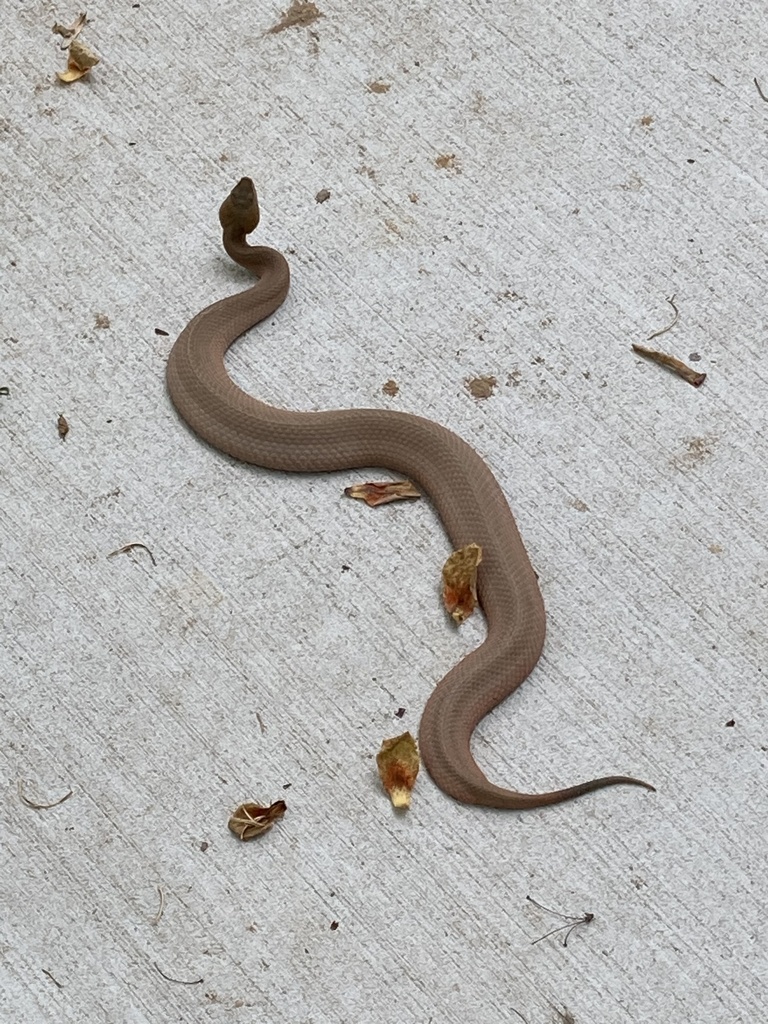
Copperhead
Field Identification
- Hourglass crossbands — narrow at the spine, widening at the sides
- Copper-red to pinkish head (gives the name)
- No rattle — silent snake
- Adults typically 2–3 feet; tan to reddish-brown
- Heat-sensing pit between eye and nostril
- Elliptical (cat-eye) pupils
- Often found near leaf litter, logs, stone walls
Clinical Presentation
- Painful local envenomation with immediate swelling
- Moderate edema and bruising — usually less severe than rattlesnakes
- Coagulopathy less common and less severe than rattlesnakes
- Tissue necrosis possible but less frequent
- Dry bite rate ~25% — still requires medical evaluation
- Rarely fatal in healthy adults
- Children and elderly at higher risk for systemic effects
Symptom Timeline
30 min–6 hours: Edema progresses; mark margins with pen and time
12–24 hours: Swelling peaks; bruising and tissue involvement
24–48 hours: Swelling peaks and begins to resolve; monitor for late coagulopathy
Note: Antivenom (CroFab) typically reserved for moderate–severe cases or children
Field Response
✓ Do
- Call Poison Control: 1-800-222-1222
- Seek medical evaluation — even if symptoms seem mild
- Mark swelling margins with a pen and note time
- Remove jewelry and constrictive clothing
- Keep limb below heart level
- Monitor for spreading swelling
✗ Do Not
- Assume "dry bite" without evaluation
- Apply tourniquet
- Apply ice or cold compress
- Incise or suck the wound
- Give aspirin or blood thinners
- Delay care for "watching to see"
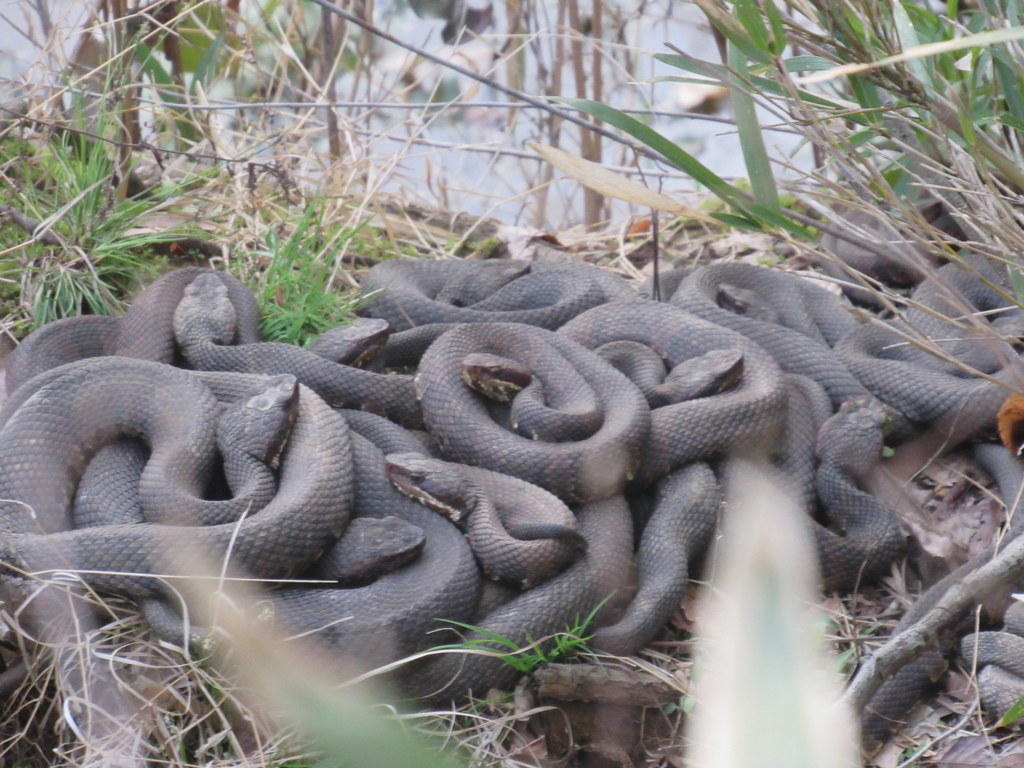
Cottonmouth / Water Moccasin
Field Identification
- Heavy-bodied; 2–4 feet; dark olive to black
- Dark crossbands (may be faint or absent in older adults)
- Distinctive threat display: coils and opens mouth, revealing bright white lining ("cottonmouth")
- Swims with body high on water surface (unlike harmless water snakes)
- Triangular head, pit organs visible
- Keeled scales; thick body relative to length
- Dark facial stripe from eye to jaw
Clinical Presentation
- Severe local tissue destruction — among worst of US pit vipers
- Significant coagulopathy with rapid onset
- Secondary infection risk: aquatic environment introduces bacteria (Aeromonas, Pseudomonas)
- Tissue necrosis common — frequently requires surgical debridement
- Systemic envenomation: hypotension, nausea, weakness
- Blistering and ecchymosis develop rapidly
Symptom Timeline
1–3 hours: Coagulopathy onset; significant edema progression
3–12 hours: Blistering, ecchymosis; tissue destruction advancing
12–48 hours: Necrosis risk high — monitor for compartment syndrome
Ongoing: Watch for secondary infection; broad-spectrum antibiotics may be indicated
Field Response
✓ Do
- Call 911 immediately
- Exit the water safely
- Gently rinse wound with clean water if available
- Remove jewelry/constrictive clothing
- Keep limb below heart level
- Transport urgently — infection risk is real
✗ Do Not
- Apply tourniquet
- Cut or incise the wound
- Suck venom by mouth
- Apply ice
- Re-enter water (risk of second bite)
- Dismiss swelling as minor
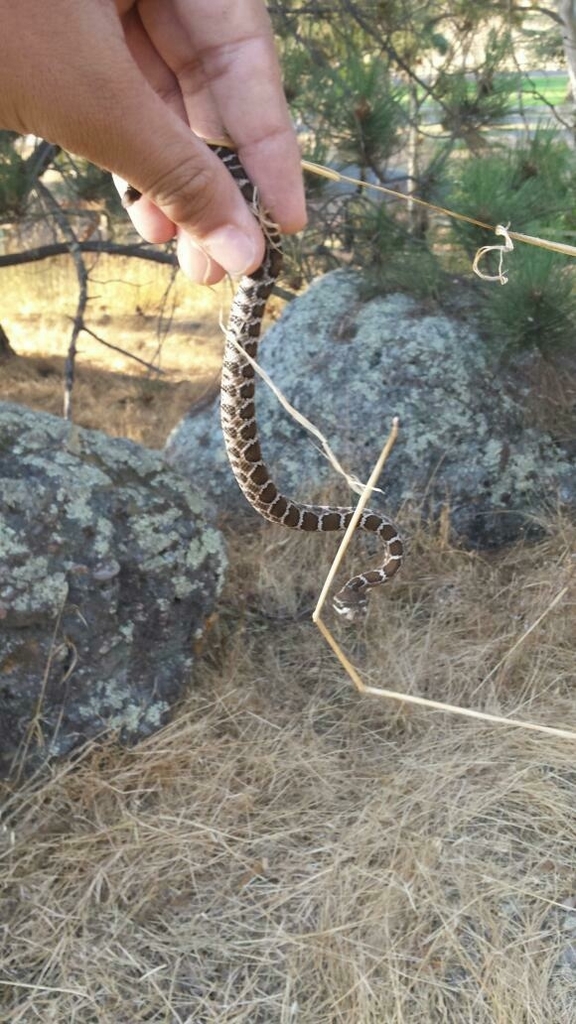
Prairie Rattlesnake
Field Identification
- Greenish-gray to brown or olive; dark brown blotches
- Blotches fade to banded pattern near tail
- Lighter colored tail with prominent rattle
- Facial stripe from eye to jaw angle
- Adults typically 3–4 feet; heavy-bodied
- Keeled scales; triangular head
- Often found near prairie dog burrows (uses as shelter)
Clinical Presentation
- Hemotoxic envenomation with local and systemic effects
- Coagulopathy — fibrinogen depletion, elevated PT/INR
- Local tissue damage with swelling and ecchymosis
- Myotoxicity — elevated creatine kinase
- Possible systemic effects: nausea, weakness, hypotension
- Necrosis risk — moderate; less severe than cottonmouth
Symptom Timeline
1 hour: Significant edema; mark margins with time
2–6 hours: Coagulopathy onset — lab monitoring critical
6–24 hours: Myotoxicity may develop; check CK levels
12–48 hours: Necrosis risk; ongoing coagulopathy monitoring
Field Response
✓ Do
- Call 911 or evacuate immediately
- Keep patient calm and still
- Remove constrictive items
- Note time of bite precisely
- Mark swelling margin with time
- Transport to hospital — antivenom may be needed
✗ Do Not
- Apply tourniquet
- Apply suction device
- Apply ice
- Incise wound
- Give alcohol or food
- Assume small snake = mild envenomation
Antivenom Dosing Reference
CroFab® Antivenom Dosing (Crotalidae Polyvalent Immune Fab)
Initial Dose
Dilute in 250mL normal saline. Infuse over 60 minutes. Observe for allergic reaction during infusion. Begin at slow rate for first 10 minutes.
Reassessment at 1 Hour
If initial control achieved (swelling progression halted, coagulopathy improving, systemic symptoms controlled): 2 additional vials every 6 hours × 3 doses.
No Initial Control
Repeat 4–6 vials until initial control is achieved, then proceed with maintenance dosing schedule.
Pediatric Dosing
Same initial dose as adult. CroFab dosing is based on envenomation severity — not patient weight. Children do not receive reduced vials.
Longer plasma half-life compared to CroFab. May reduce risk of late coagulopathy recurrence (documented with CroFab due to shorter half-life). Standard initial dose: 10 vials IV. Follow institutional protocol. Both agents are effective for all US pit viper envenomations covered on this page.
Regional Distribution Table
Which pit vipers a forager may encounter by US terrain region.
| US Region / Terrain | W. Diamondback | Timber Rattler | Copperhead | Cottonmouth | Prairie Rattler |
|---|---|---|---|---|---|
| Northeast Forests (ME, NH, VT, MA, CT, RI, NY, PA) | — | ● | ● | — | — |
| Appalachian Corridor (VA, WV, KY, TN, NC) | — | ● | ● | ● | — |
| Southeast Swamps & Coastal Plain (FL, GA, SC, AL, MS, LA) | — | ● | ● | ● | — |
| Mid-South / Ozarks (AR, MO, OK, east TX) | ● | ● | ● | ● | — |
| Midwest Prairies (KS, NE, IA, MN, ND, SD) | ● | ● | ● | — | ● |
| Southwest Desert (AZ, NM, west TX, NV, southern CA) | ● | — | — | — | ● |
| Rocky Mountain / Great Plains (MT, WY, CO, ID) | — | — | — | — | ● |
| Pacific Coast Ranges (CA coast, OR foothills) | ● | — | — | — | ● |
● = Present in region. Ranges overlap and individual specimens may occur outside typical distribution. Consult local wildlife agencies for precise regional data.
Master Field Response Protocol
🐍 Universal Pit Viper Bite Response
Apply to all pit viper bites — rattlesnakes, copperhead, cottonmouth — until hospital evaluation confirms species and severity.
✓ Do Immediately
- Call 911 immediately or activate emergency response
- Call Poison Control: 1-800-222-1222
- Keep the patient calm and still — movement accelerates venom spread
- Remove rings, watches, bracelets, tight clothing near bite site
- Keep the bitten limb at or below heart level
- Note the exact time of the bite
- Mark swelling margins with a pen — note time with each mark
- Photograph the snake from a safe distance (do not approach)
- Transport to the nearest hospital with antivenom capability
- Tell EMS: species if known, time of bite, progression of swelling
✗ Never Do
- Apply a tourniquet or constricting band
- Cut the bite wound or attempt incision
- Attempt to suck out venom by mouth
- Apply a suction device (e.g., Sawyer Extractor)
- Apply ice or immerse in cold water
- Apply electric shock (no evidence; dangerous)
- Give aspirin, NSAIDs, or anticoagulant medications
- Give alcohol in any form
- Allow the patient to walk if transport is available
- Capture, kill, or handle the snake to bring it in
- Wait to see if symptoms develop before seeking care
Copies all species data, dosing protocols, and field response to clipboard