⚠ If you suspect ingestion of this species, call Poison Control immediately:
1-800-222-1222 (US) · poison.org
1-800-222-1222 (US) · poison.org
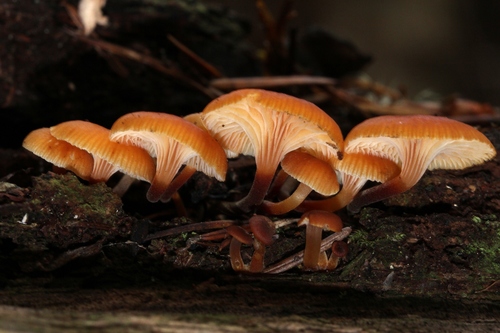
Key Identification Features
- Tiny (0.5–3 cm) yellow-orange convex to bell-shaped cap with strongly striate margin
- crowded yellowish gills running down stem
- very slender hairy/velvety dark brown stem
- grows in dense clusters on conifer logs and stumps throughout W coast forests. Too small to be of culinary value. Mildly toxic.
Symptoms & Toxicity
Contains mildly toxic compounds. Causes GI distress if consumed. Not a foraging target.
Regions Found
- Northeast
Look-Alikes
No documented look-alikes on record.
Safety disclaimer: This page is for educational purposes only. Never eat a wild mushroom based solely on online information. Always verify identification using multiple reliable field guides and, when possible, consult an experienced forager or mycologist. When in doubt, don't eat it. Spore & Scout accepts no responsibility for identification errors or adverse reactions. If you believe someone has ingested a toxic mushroom, call Poison Control (1-800-222-1222) immediately.