⚠ If you suspect ingestion of this species, call Poison Control immediately:
1-800-222-1222 (US) · poison.org
1-800-222-1222 (US) · poison.org
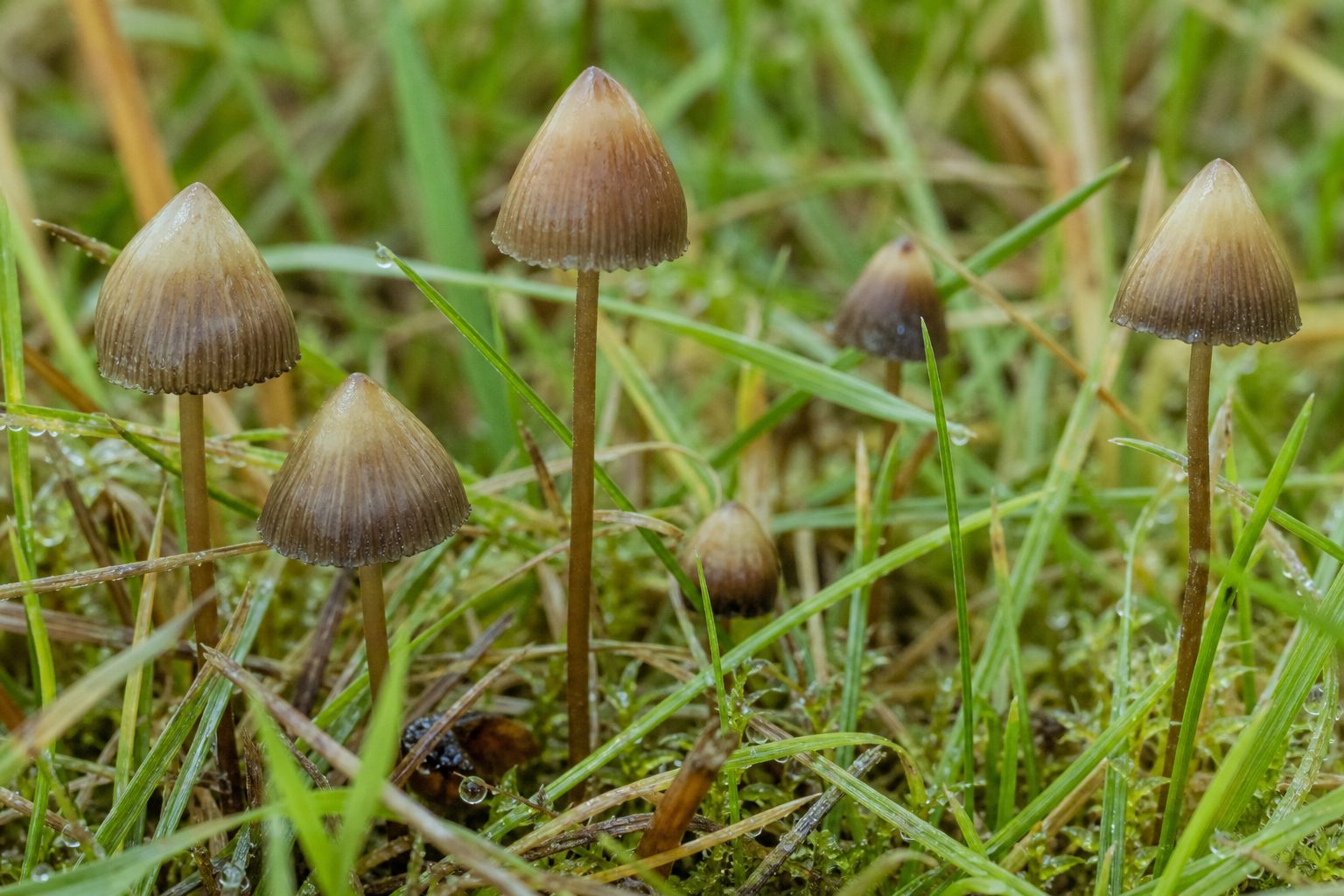
Key Identification Features
- Cap 0.5-2 cm, conical with sharp pointed nipple-like apex. Olive-brown to pale tan, hygrophanous. Thin wavy stem. Blue bruising on stem or damage. Grows in grassy fields and sheep pastures. Dark purple-brown spore print. Very common in Pacific Northwest and Mid-Atlantic.
Symptoms & Toxicity
Onset 30 min-1 hr: psilocybin effects — visual/auditory hallucinations, altered perception, anxiety, confusion, tachycardia, hypertension. Usually resolves in 4-6 hr. Serotonin syndrome risk with SSRIs/MAOIs.
Regions Found
Region data not available
Look-Alikes
No documented look-alikes on record.
Safety disclaimer: This page is for educational purposes only. Never eat a wild mushroom based solely on online information. Always verify identification using multiple reliable field guides and, when possible, consult an experienced forager or mycologist. When in doubt, don't eat it. Spore & Scout accepts no responsibility for identification errors or adverse reactions. If you believe someone has ingested a toxic mushroom, call Poison Control (1-800-222-1222) immediately.