⚠ If you suspect ingestion of this species, call Poison Control immediately:
1-800-222-1222 (US) · poison.org
1-800-222-1222 (US) · poison.org
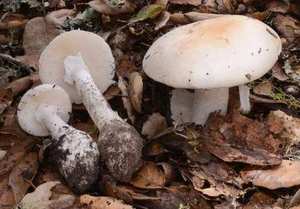
Key Identification Features
- Entirely pure white — cap, gills, stem, ring, and volva. White sac-like volva at base. Pacific Coast native, fruits in spring under live oak (Quercus agrifolia) and other oaks. Pure white coloration is major confusion risk with button mushrooms and puffballs. Same lethal amatoxin profile as A. bisporigera.
Symptoms & Toxicity
Phase 1 (6–24 hr): severe nausea, vomiting, profuse diarrhea. Phase 2 (24–48 hr): apparent recovery — dangerous false improvement. Phase 3 (2–4 days): fulminant hepatic and renal failure. Identical amatoxin syndrome to Death Cap.
Regions Found
Region data not available
Look-Alikes
No documented look-alikes on record.
Safety disclaimer: This page is for educational purposes only. Never eat a wild mushroom based solely on online information. Always verify identification using multiple reliable field guides and, when possible, consult an experienced forager or mycologist. When in doubt, don't eat it. Spore & Scout accepts no responsibility for identification errors or adverse reactions. If you believe someone has ingested a toxic mushroom, call Poison Control (1-800-222-1222) immediately.