Why Mushrooms Suddenly Appear in Your Yard After Rain
Grass one evening. A little forest of caps the next morning. Here's what's actually going on — and the one simple rule worth teaching your kids about it.
You know the feeling. It rains overnight, and by the time you're out getting the mail or letting the dog into the yard the next morning, there they are — a small cluster of mushrooms that definitely weren't there yesterday, standing right in the middle of the lawn like they've always been part of it. Kids notice them almost instantly. There's something about a mushroom popping up out of nowhere that gets a kid's attention faster than almost anything else outside — they'll crouch down next to it, poke at the cap, maybe try to pick one before you've even had your coffee, and inevitably ask some version of "where did that come from?"
It's a fair question, and it's not actually mysterious once you know what's happening underground.
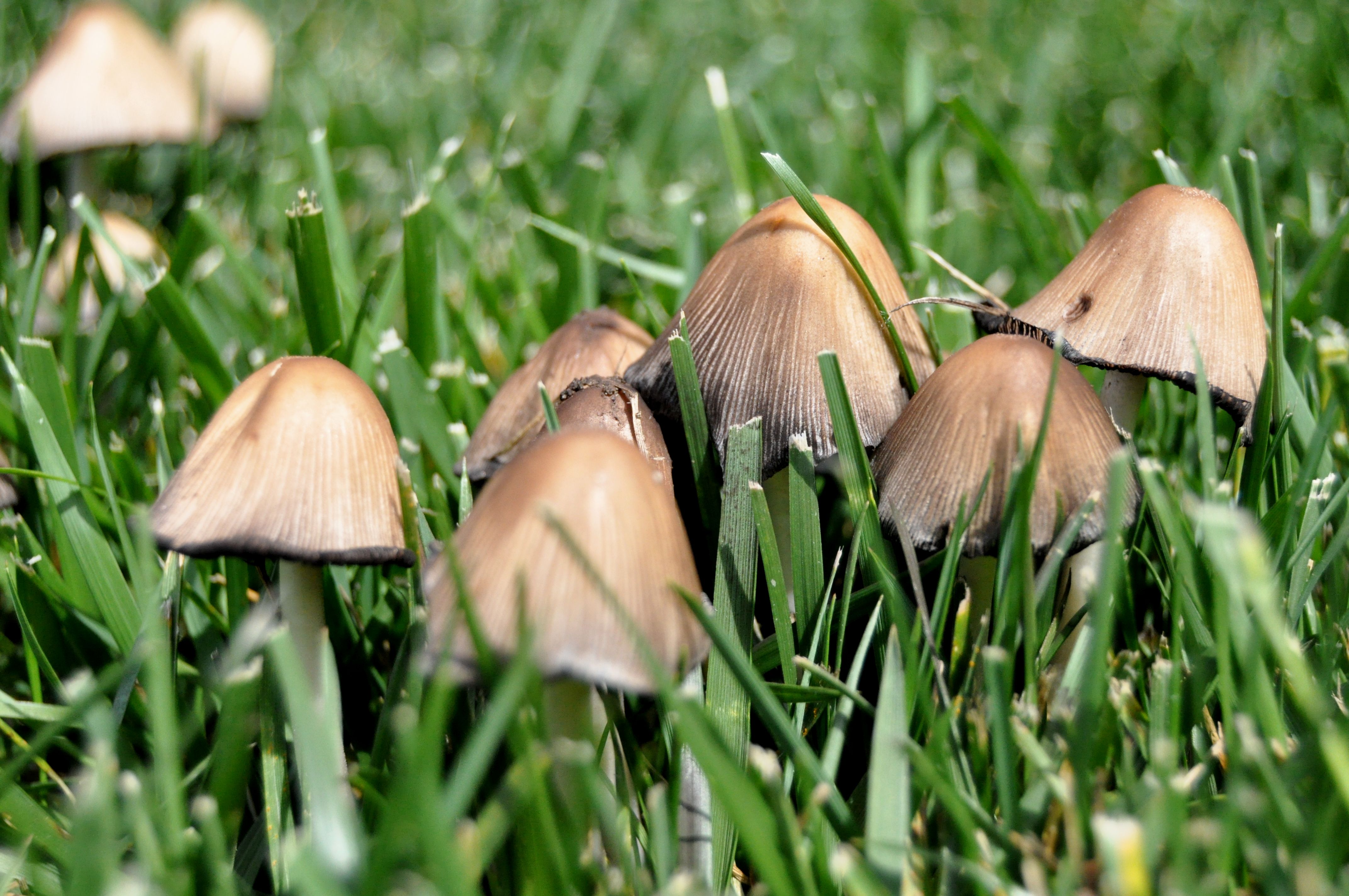
The mushroom isn't new. It's just visible now.
Here's the part most people never get told: the fungus itself was already there, quietly living in your lawn all along. What lives underground most of the time is a network of fine, thread-like strands called mycelium, spreading through the soil, through decaying grass roots, through old buried roots and organic matter. It's been down there for a while — sometimes years — doing nothing anyone would notice from the surface.
A mushroom cap is really just the part of the fungus built to spread spores, and fungi are picky about when they bother making one. They need the right combination of moisture, warmth, and humidity to trigger it — which is exactly what a good rain, especially a warm one, provides. Once those conditions line up, the fungus can push a fruiting body up through the grass almost overnight. That's why it feels so sudden. It isn't that the mushroom grew from nothing in twelve hours — it's that the underground part finally had what it needed to send something up where you could see it.
Three common lawn mushrooms worth recognizing on sight
You don't need to identify these with any real confidence — most yard mushrooms are genuinely difficult to pin down precisely, even for people who've studied them for years. But knowing roughly what a few common categories look like helps make sense of what your kids are pointing at.
- Little brown mushrooms. This is less a single species and more a catch-all for the small, brownish, unremarkable-looking mushrooms that show up in lawns everywhere — thin stems, small caps, nothing especially distinctive about them. Even experienced mycologists often can't tell many of these apart without a microscope. They're one of the most common things a kid finds in the grass, and one of the least identifiable by eye.
- Puffballs. Round, white, ball-shaped, sometimes the size of a golf ball or bigger, sitting right in the grass with no obvious cap or gills at all. They tend to show up in the same spots year after year and are one of the more recognizable shapes a kid will spot in a lawn.
- Fairy ring mushrooms. Not one specific look so much as a pattern — mushrooms that grow in a circular ring across the grass, sometimes a faint ring you'd barely notice, sometimes a wide, obvious circle that makes the whole lawn look like something drew on it. The ring shape comes from how the underground fungal network spreads outward from a center point over time.
Notice what's missing from that list on purpose: no advice on which of these are safe to eat, and no confidence-building tips for telling them apart in the field. That's not what this is for. Recognizing that a shape in your lawn is "a puffball-type mushroom" or "growing in a fairy ring" is just pattern recognition — it's not the same as knowing whether a specific mushroom is safe, and nothing here should be read as permission to treat it that way.
The part that actually matters: you can't tell by looking
This is the honest, calm truth of it: some mushrooms that turn up in yards are completely harmless, and some are genuinely dangerous — and neither a kid nor an adult in a hurry can reliably tell which is which just by looking at it. There's no shortcut rule that holds up ("the pretty ones are bad," "the plain brown ones are fine") — some of the most dangerous mushrooms in North America look plain and unremarkable, easy to mistake for the harmless little brown mushrooms sitting right next to them in the same patch of grass.
That's exactly why the safety rule here is so simple, and worth repeating to kids until it's automatic: don't touch, don't eat, tell an adult right away. Not because every mushroom in the yard is dangerous — most days, most of them aren't — but because there's no way to know that from a glance, and the stakes for getting it wrong are high enough that "just to be safe" is the only reasonable approach.
If it's already happened
If your child has already put a wild mushroom in their mouth, or you're not sure whether they did, this article isn't the place to figure out what to do next — go straight to our child ate a wild mushroom emergency page, which walks through exactly what to do right now, step by step, starting with the call to make first.
And if you'd like to understand just how common this actually is — the real, sourced numbers behind how often kids end up in these situations, and why acting fast matters so much — our sourced statistics article goes through the U.S. poison control data in detail.
A note on how this gets written: this article, like the rest of our field notes, was drafted with AI assistance and reviewed by our team before it went up. We try to be upfront about that process the same way we are about everything else on this site — if something here ever needs a correction, we'll make it in the open.