The Daily Walk
Not every walk in the woods is an adventure — some are just Tuesday, and that's exactly where the good habits get built
It isn't a special trip. That's the first thing to understand about it. My daughter and I take this same stretch of trail behind the house most afternoons, the same half-mile loop past the stone wall, down through the low spot where the ferns get tall in July, and back up along the ridge before the light starts to go. Some days we talk the whole way. Some days we don't talk much at all. Today was somewhere in between — she'd brought her magnifying glass again, the one with the cracked plastic handle she refuses to let me replace, and I'd brought the field guide, the same one I've carried on this trail for longer than she's been alive, its cover soft and rounded at the corners from years of being opened and closed in the rain.
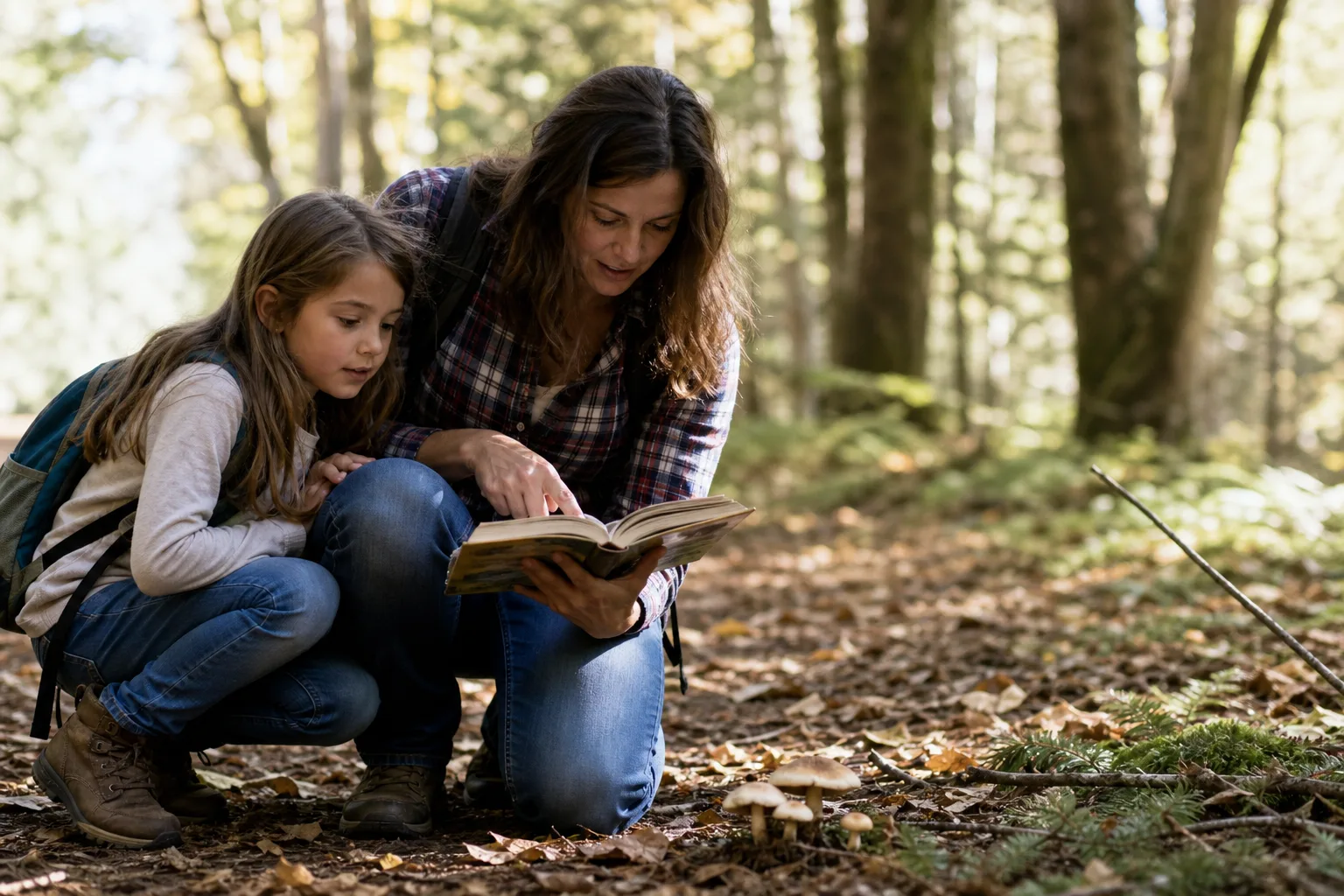
She stopped near the old maple at the bend, the one with the roots that push up through the trail like knuckles. There was a small cluster of mushrooms growing right at its base, tucked into the moss where the bark meets the ground — nothing dramatic, just a handful of caps, pale and unassuming, the kind of thing you could walk past a hundred times without ever really seeing. She saw it. She always sees these things now, which is its own kind of quiet reward for a parent, watching a kid's eyes start to catch details that used to slide right past them.
"What is it?" she asked, already crouching down, already turning the magnifying glass over in her hand like she was deciding where to point it first.
"I'm not sure yet," I told her, and I meant it exactly as plainly as I said it. That's always been the honest answer more often than people expect, even after years of doing this. I crouched down next to her and we looked together — really looked, the way you have to if you want an answer instead of a guess. The color of the cap. The way the underside was arranged, gills instead of pores, running close together in a pattern that meant something even if I couldn't yet say exactly what. Whether it was growing straight out of the wood or up through the soil beside it, which matters more than people think.
"Can we eat it?" she asked, and I could hear that she already half-knew what I was going to say, because we've had this exact conversation more times than either of us could count.
"Not unless we know for certain," I said. "And right now, we don't." I opened the field guide anyway, not because I expected it to hand us a name in thirty seconds, but because that's the habit I want her to have long after I'm not the one crouched down next to her — you look, you compare, you take your time, and if the answer still isn't certain at the end of all that, the answer is no. Not maybe. Not probably fine. No.
We got partway there. I could tell her, with real confidence, what family it likely belonged to, and a couple of features that ruled out the things I was most worried it might be. I could not tell her, with the same confidence, exactly which species it was, and I said so out loud, because I'd rather she hear a grown-up say "I don't know" about something in the woods than hear a grown-up guess and call it knowing. She nodded like this was completely unremarkable, because to her, at this point, it is. That's the whole idea.
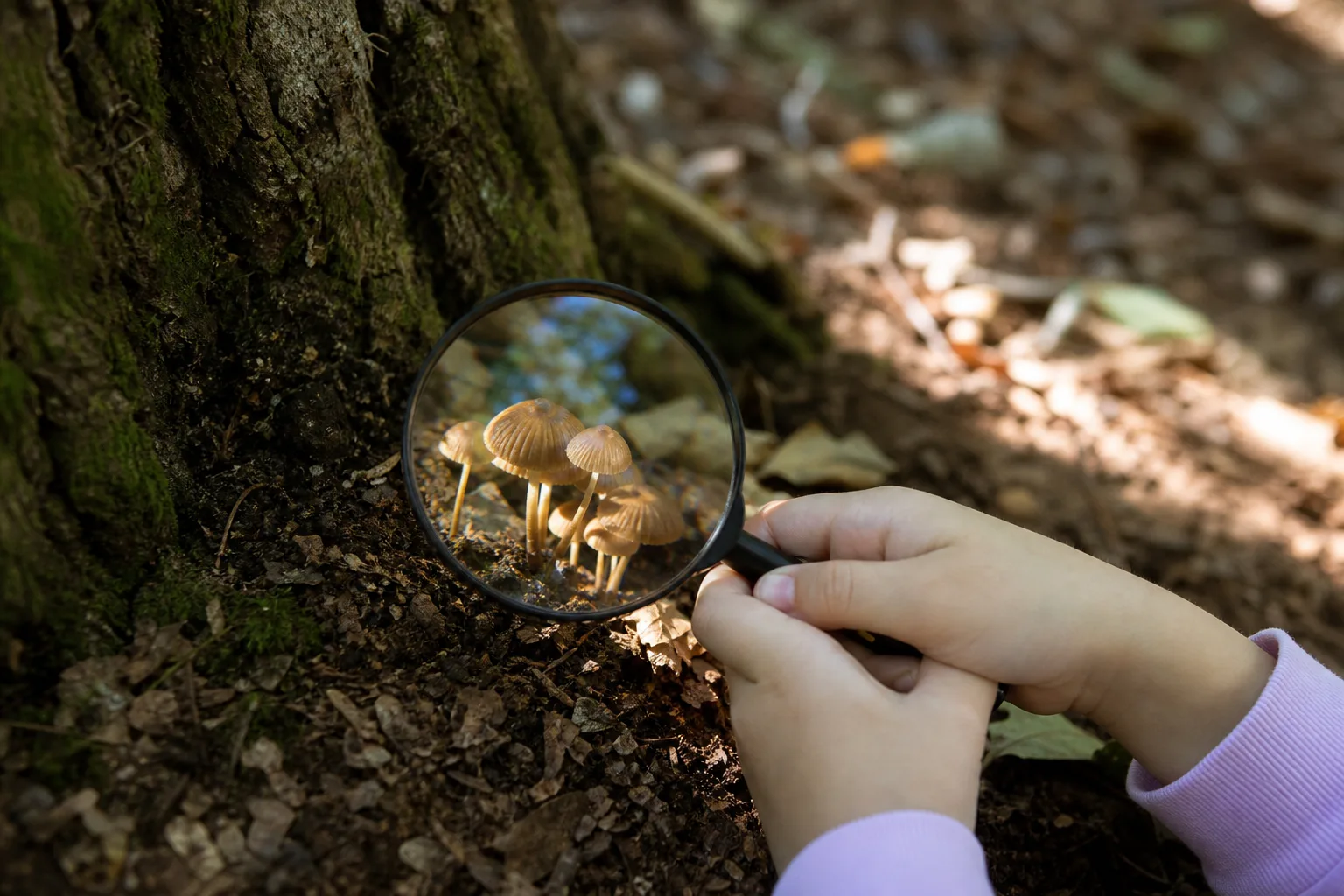
She held the magnifying glass over it for a long minute, turning her head this way and that, asking why the gills were spaced the way they were, why some of the caps in the cluster looked a little different from the others, whether the smaller ones were younger or just a different kind entirely. I didn't have every answer. I gave her the ones I had, and told her plainly when I was guessing versus when I was sure, because the difference between those two things is the entire lesson, more than any single mushroom's name ever could be.
Eventually she stood back up, brushed the leaf litter off her knees, and we kept walking — no photo for the record books, no name written down, nothing resolved except the one thing that actually mattered: we'd looked closely at something we didn't understand, admitted what we didn't know, and left it exactly where we found it. The trail curved up toward the ridge the way it always does, the light was doing the thing it does in late afternoon where everything gets a little gold at the edges, and she was already asking about the next thing she'd spotted a few steps ahead.
This is most of what foraging with a kid actually looks like, day to day. Not a big discovery. Not a close call. Just an ordinary walk, taken slowly enough to notice something small, and a habit of asking before assuming that I hope she carries with her long after she's stopped needing me to crouch down next to her to look.