The Second Thought
A reasonable call in the field, an uneasy feeling two hours later, and the quiet difference between panic and a plan
He'd been foraging alone long enough to trust his own eye, and the mushroom he found that morning gave him every reason to. Tall, white, ringed stem, cap starting to flatten out the way a good parasol's does with age — the kind of find that, ten minutes earlier, he'd have called textbook. It was growing in the open grass at the edge of a field he'd walked a dozen times, the exact habitat where he'd found the same species clean before. He checked what he knew to check. Cap shape, ring, growth habit, the general size and bearing of the thing. Nothing about it waved a flag he recognized.
What he didn't do, and later wished he had, was wait for a spore print. He knew, in the abstract, that the difference between an edible parasol and a false one comes down to a detail you can't always see at a glance in the field — and that the honest, complete answer was sitting a few hours away, back home, in the time it takes spores to fall and settle into a visible color on a piece of paper. Out there, mid-morning, with a decent haul already in his bag and no obvious reason for doubt, he made the call that this one was fine. It wasn't a reckless decision. It was a judgment call, made the way judgment calls get made in the field — with the information he had, at the moment he had to make it.
He ate a portion of it that afternoon, cooked simply, nothing that should have masked anything if something had actually been wrong. For a while, nothing was.
It was close to two hours later, back on the trail and a good distance from the car, that he noticed something had shifted. Not dramatic. Just a low, unfamiliar unease in his stomach that didn't match the pace he was walking or the weight of his pack. He stopped walking and stood there a second, running through the morning the way you do when a feeling doesn't match a good explanation. The mushroom was the only thing that afternoon that hadn't come with full certainty behind it. That was the second thought — not proof of anything yet, just a specific, nameable doubt arriving exactly where the vague confidence had been that morning.
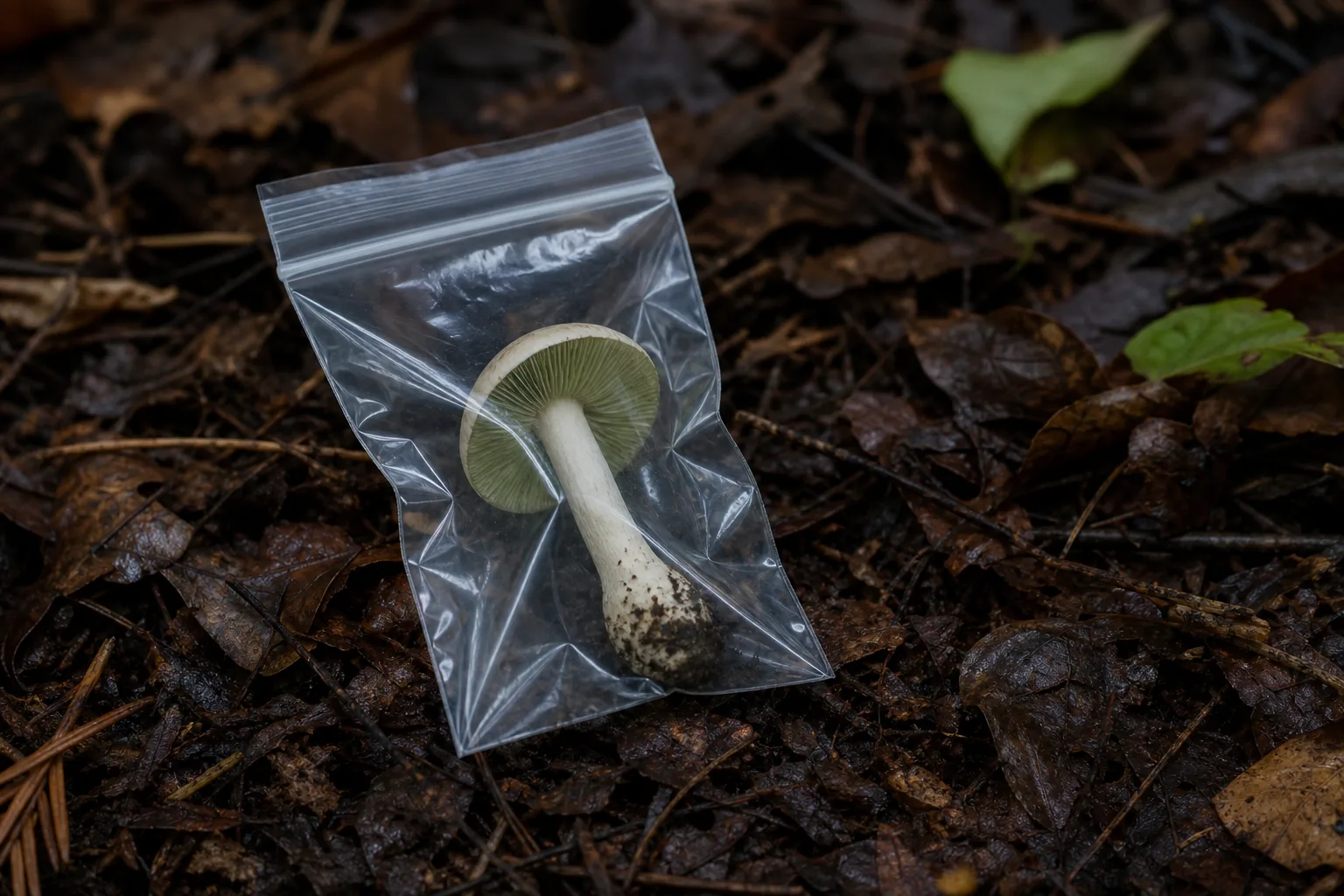
He didn't wait to see if it would pass on its own, and he didn't eat anything else out of the bag he was carrying, just in case. That was the first thing he settled on: whatever was or wasn't happening, nothing more was going in his mouth until he understood it better. He still had a couple of pieces of the same mushroom left over, along with the scraps from the one he'd already cut into that morning, and instead of tossing them, he did the opposite — sealed them into a spare bag from his pack and took a few clear photos of them from different angles, cap and gills both, right where he stood. Whatever this turned out to be, someone downstream of him — a mycologist, a toxicologist, whoever ended up looking at it — was going to need the actual specimen, not his memory of it.
Then he called a friend. Not because the feeling had turned into an emergency yet, but because he was alone, further from the car than he liked, and it seemed like exactly the kind of moment where somebody else should know where he was and what had happened, in case the next hour went a different direction than he expected. He kept it short and factual: what he'd eaten, when, how he was feeling, roughly where he was on the trail. His friend stayed on the line long enough to have all of it, and told him to call back the moment anything changed.
The second call went to Poison Control, right away, before the feeling had a chance to get worse or better on its own. 1-800-222-1222 rang through to an actual person, and he gave her the same details, plainly: species he thought it was, what he suspected it might actually be, how much he'd eaten, how long ago, what he was feeling now. She asked him things he hadn't thought to track — exactly how the discomfort had progressed over the last twenty minutes, whether he'd vomited yet, whether he felt lightheaded. Nothing about the call felt like an overreaction. It felt like exactly the kind of information he should have had somebody else weighing in on the second he'd noticed the feeling at all.
What he didn't do next mattered almost as much as what he did. He didn't push his pace to get out faster, and he didn't try to tough it out on the theory that moving fast would get the whole thing over with sooner. Poison Control's advice, and his own sense of what his body could handle, pointed the same direction: get out steadily, not heroically. He picked the shorter of two routes back, not the fastest one on paper, and he paced himself the way you'd pace a long walk with a headache, not a sprint with a deadline. A mile alone in the woods, feeling uncertain about his own stomach, wasn't the place to find out what happened if he pushed harder than he needed to.
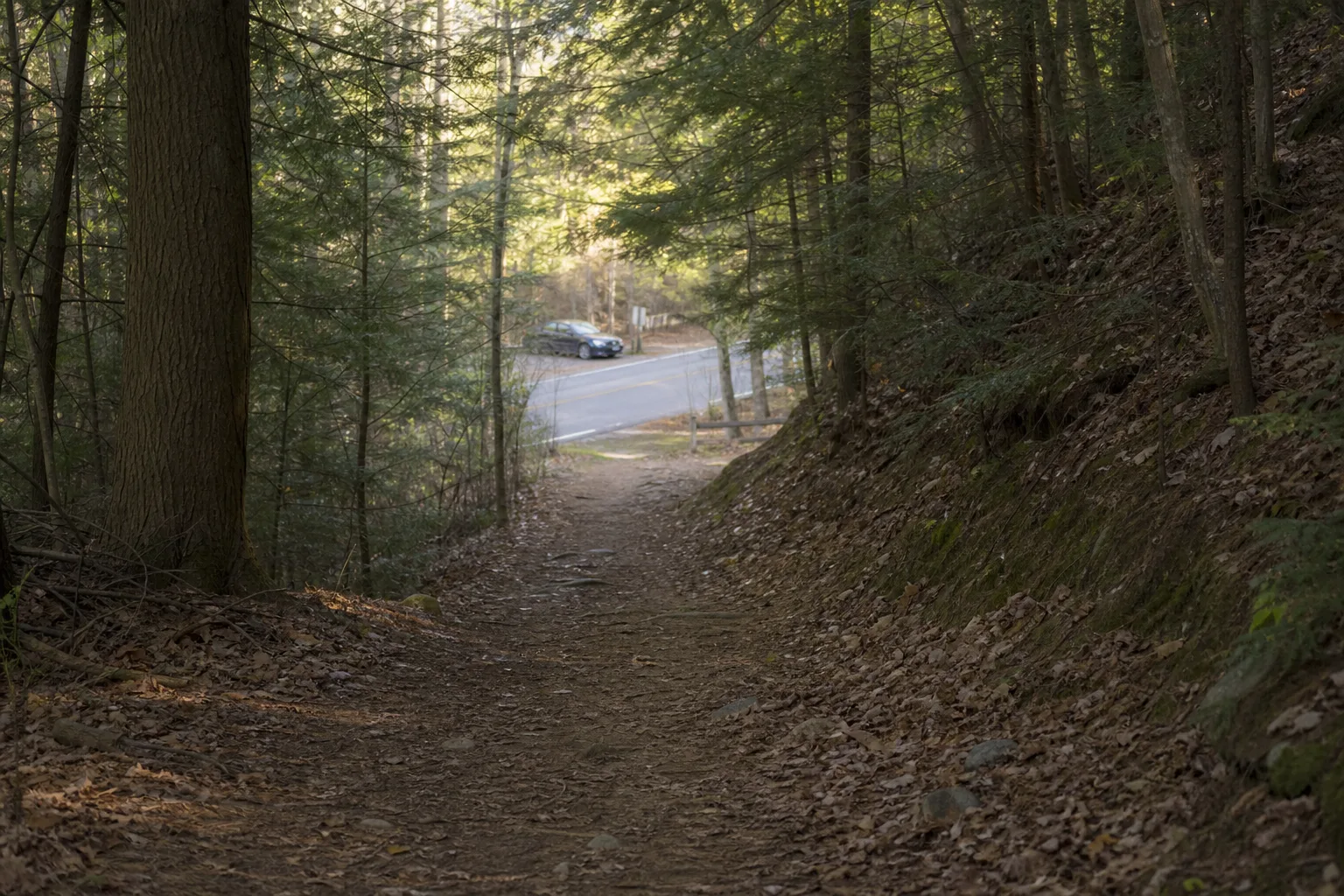
By the time he reached the car, the discomfort had settled into something unmistakable — cramping, the beginning of nausea that wasn't going to stay theoretical much longer. He drove himself to urgent care rather than waiting to see if it would pass at home, the bagged specimen and the photos on the passenger seat next to him, exactly the way he'd have wanted them if he were the one about to examine them instead of the one who'd eaten from the same batch.
He was sick for a good stretch of that evening — the kind of severe, dehydrating gastrointestinal illness that a green-spored false parasol is known for, watery and cramping and unpleasant enough that the IV fluids they started him on made a real difference within a couple of hours. It was never the kind of poisoning that threatens the liver or needs a transplant list; it was the kind that needs supportive care, hydration, and time, which is exactly what he got. The specimen went to the toxicologist on staff, still bagged, still photographed, everything intact for someone with the right training to actually confirm what his stomach had already made clear on its own.
He was discharged the next day, tired and several pounds lighter on fluids, with a confirmed identification he could have had for free the morning before, if he'd waited the few hours a spore print takes. He doesn't tell the story as a cautionary tale about carelessness, because it wasn't carelessness — it was a reasonable call made with incomplete information, the same kind every forager makes sooner or later. What he tells people instead is the part that came after the feeling changed: that the moment he noticed something was off, he stopped, he documented, he called someone, he called Poison Control, and he got himself out at a pace his body could actually manage. None of that undid the uncertain morning. All of it is the reason the evening ended in a hospital bed instead of somewhere worse.
— A Spore & Scout Story