The Spider Bite That Changed How I Forage
A brown recluse bite, a doctor's office every other day, and what I actually learned about the four spiders worth knowing before your next trip afield
I didn't feel it happen. That's the part people find hardest to believe when I tell this story, but it's true, and it's also the single most important thing to understand about brown recluse bites before we get into anything else: I never saw the spider. I was out checking a stand of trees on the edge of a field I forage regularly, moving old bark and leaf litter around the base of a downed log the way I always do when I'm looking for what's fruiting underneath, and at some point during that stretch of an otherwise unremarkable afternoon, something bit me on the forearm. It didn't hurt enough to stop what I was doing. I brushed it off as a scratch from a branch and kept working.
By the next morning it was clear something was wrong. There was a small, tender red mark that had gone from "annoying" to genuinely painful overnight, with a strange, almost blistered center to it. I went to my doctor mostly to rule things out. He looked at it for about four seconds and said, calmly, the way doctors say things they've clearly seen before: "That's a recluse bite." He couldn't be completely certain — nobody can, without having actually seen the spider, which is true of almost every recluse bite case and is one of the most maddening parts of the whole thing — but the presentation was textbook enough that he wasn't going to wait around to find out he was wrong.
What followed was not a dramatic emergency-room story. It was something slower and, in its own way, more grinding: weeks of going back to the doctor's office every other day to have the wound scraped out and repacked with fresh gauze, on top of a full course of antibiotics to keep any secondary infection from taking hold. Necrotic tissue doesn't heal like a normal cut — it has to be actively managed, cleaned out, and given time, and "given time" turned out to mean a genuinely long, uncomfortable stretch of my life built around appointments I hadn't planned for. There's no dramatic single moment I can point to and say "that's when it got bad." It was just steady, unglamorous maintenance, over and over, for longer than I expected, on a wound from a spider I still, to this day, never actually saw.
I want to be clear about something before I go any further, because it matters more than the story itself: I'm not telling you this to scare you out of the woods. Most spiders you'll ever brush past while foraging or hiking are completely harmless, and the overwhelming majority of spider encounters in the field end in absolutely nothing — no bite, no reaction, nothing worth a second thought. What changed for me wasn't how much I feared spiders. It's how much I actually know about them now, and how much calmer that knowledge has made me, even standing in the exact kind of leaf litter and under the exact kind of log where this happened. I'd rather know what I'm looking at than either panic at every spider I see or ignore all of them the way I used to. So here's the plain-language version of what I wish I'd known before that afternoon — the four spiders actually worth being able to recognize while you're out foraging or hiking, what makes two of them medically different from an ordinary bug bite, and what to do if you ever end up in the situation I did.
Brown Recluse (Loxosceles reclusa): the one you probably won't see coming
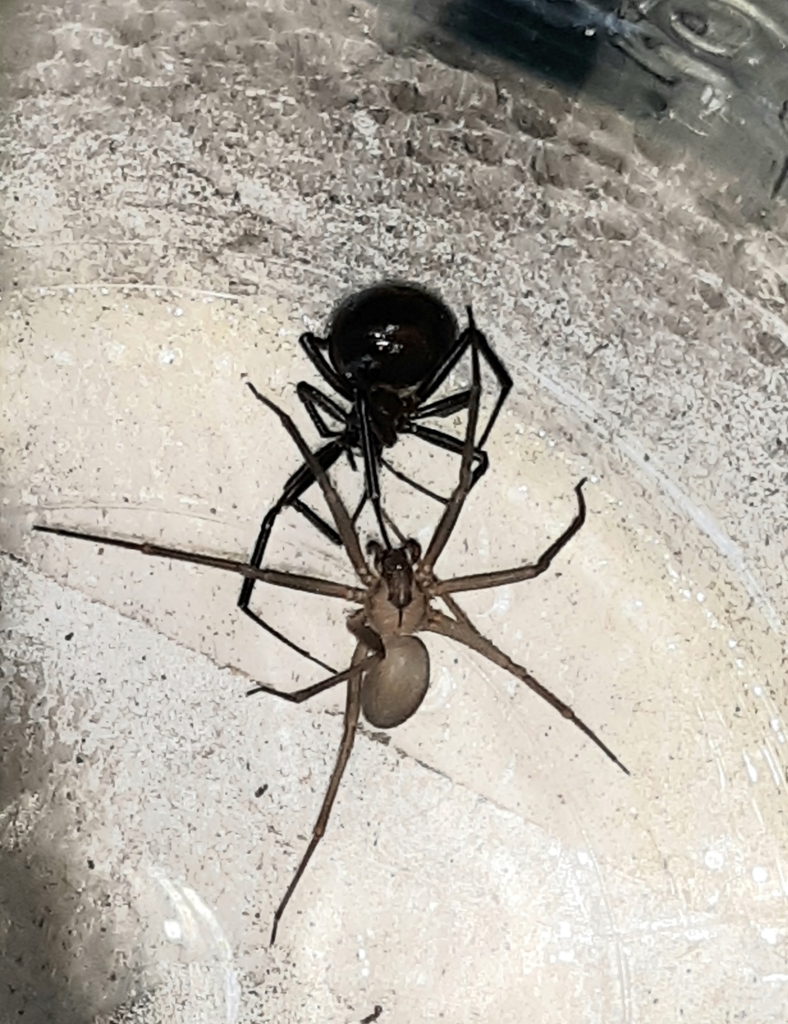
The brown recluse is a small, plain-looking spider — tan to grayish-brown, about the size of a quarter including its legs, with six eyes instead of the usual eight (not something you're going to check in the field, but a real identifying trait) and, in many individuals, a faint darker marking on the front section of the body that's sometimes described as violin-shaped. That marking is not reliable for identification on its own; plenty of harmless brown spiders have similar smudges, and plenty of true recluses have markings too faint to see clearly. This is exactly why brown recluse bite identification is so difficult after the fact — as the Cleveland Clinic and other sources note, doctors usually diagnose a recluse bite from the wound's appearance and the patient's history, not from seeing the spider itself, because by the time symptoms show up, the spider is long gone.
Recluses earn their name honestly: they're reclusive, nocturnal, and they actively avoid contact. You're most likely to encounter one under logs, under loose bark, in leaf litter, inside stacked firewood, or in dark undisturbed corners like sheds, garages, and boxes that haven't been moved in a while — exactly the kind of spots a forager's hands go looking through leaf litter and around downed wood without a second thought. Most people who get bitten, like me, never see it happen. The spider isn't aggressive; it bites defensively when trapped against skin, often when someone reaches into a spot where it's already hiding, or pulls on a piece of bark or clothing it's tucked into.
A recluse bite often doesn't hurt much at first, then over the following hours to a day or two develops into redness, swelling, and in some cases a blistered or ulcerated center as the venom breaks down tissue locally — the necrotic spider bite presentation the species is known for. Not every bite progresses to significant necrosis; many resolve as a mild, self-limited local wound. But when it does progress, this is what actually separates a recluse bite from an ordinary bug bite: an ordinary bite or sting causes localized swelling and irritation that resolves within days on its own. A necrotic recluse bite instead of resolving can continue to worsen, break down surrounding tissue, and require real wound care — which is exactly what happened to me. According to StatPearls' clinical overview of Loxosceles envenomation, there is no antidote for recluse venom; treatment is entirely supportive, focused on wound care, infection prevention, and time.
What to actually do: Wash the area with soap and water, apply a cold compress to slow the spread of venom locally, and keep the wound clean. See a doctor promptly if you notice a spreading area of redness, a blister or ulcer forming, increasing pain, or any sign of infection like fever or pus — recluse bites in particular benefit from being evaluated early rather than waiting to see how bad it gets. If you can safely capture the spider (without further risk) it can help with identification, but don't go out of your way or risk a second bite trying.
Black Widow (Latrodectus spp.): a completely different kind of dangerous
Black widows are a different problem entirely, and worth knowing apart from recluses because the symptoms and the reason they matter aren't the same. Depending on where you are in the country, you're dealing with the southern black widow (Latrodectus mactans), the northern black widow (L. variolus), or the western black widow (L. hesperus) — all similar in the trait that actually matters for ID: a shiny, jet-black, rounded abdomen, often with a red or orange hourglass marking on the underside (sometimes broken into two separate marks, or occasionally absent or a different color depending on species and age).
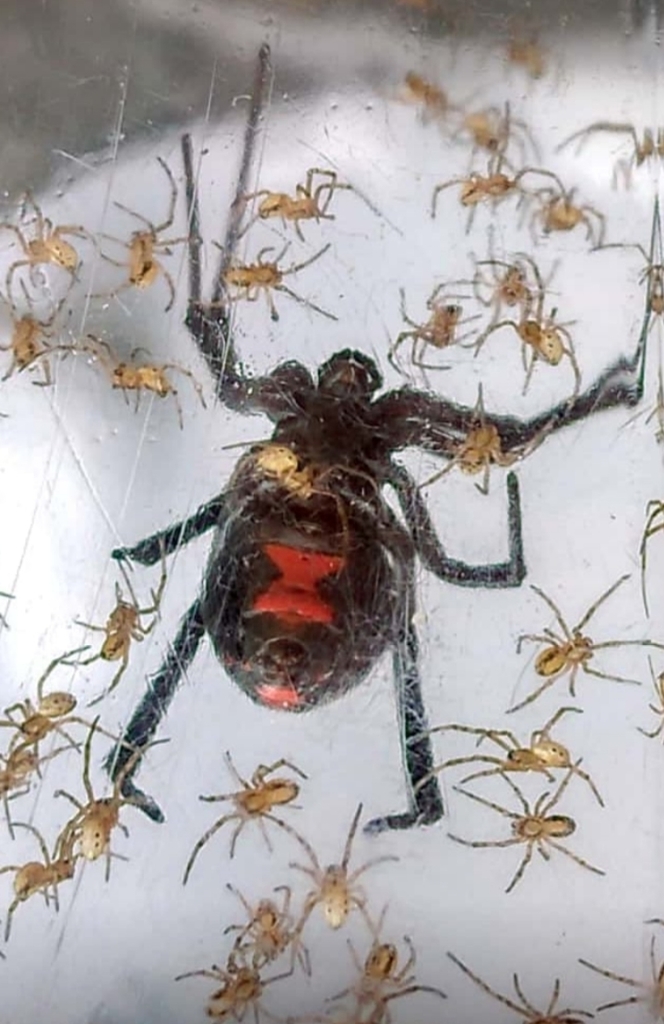
Widows build messy, irregular tangle-webs low to the ground — under rocks, in woodpiles, inside stumps, in undisturbed sheds, and around the base of dense brush. Foragers are most likely to run into one reaching into a woodpile, moving a rock, or working around a fallen log's underside, not out in open leaf litter the way a recluse might be encountered.
Here is what makes black widow bite symptoms different from just about anything else in the woods: widow venom is neurotoxic rather than tissue-destroying, and it produces a systemic reaction called latrodectism — muscle pain and cramping that can spread well beyond the bite site, sometimes affecting the abdomen, back, and chest, along with sweating, nausea, and elevated blood pressure. According to Poison Control (poison.org), roughly 2,600 black widow spider bites are reported to the National Poison Data System every year in the U.S., making it a recognized and regularly-seen category of bite, not a rare curiosity. The bite site itself may show only minor local redness — the real story is the muscle cramping that develops over the following hours. That's the key distinction from a recluse bite: recluse venom does damage locally at the wound; widow venom causes pain and cramping that can show up almost anywhere in the body.
What to actually do: A confirmed or suspected black widow bite with any spreading muscle pain, cramping, or systemic symptoms is worth an urgent trip to an emergency room or an immediate call to Poison Control at 1-800-222-1222 — this is not a "wait and see" bite the way a lot of insect bites are. Healthy adults typically recover fully with supportive treatment, but young children, the elderly, and anyone with underlying heart or respiratory conditions are at higher risk and should be seen promptly.
Wolf Spider (family Lycosidae): the one you don't need to worry about
If there's one spider on this list I want to actively talk you down from fearing, it's this one. Wolf spiders are large, fast, hairy, ground-dwelling hunters that don't build webs — they run down prey directly, which is exactly why they startle people so badly. A big wolf spider crossing a trail in front of you at speed looks alarming. It is, medically, almost nothing to worry about.

Wolf spiders are extremely common across almost every kind of terrain foragers actually walk through — leaf litter, tall grass, under rocks and logs, and along the edges of fields and trails, often at dusk when their eyes reflect light back at a headlamp in a way that can look startling in the dark. If you've ever wondered is a wolf spider dangerous, the honest, sourced answer is no — wolf spider bites, when they happen at all (they rarely bite defensively unless handled roughly), cause localized pain, redness, and swelling similar to a bee sting, with no tissue necrosis and no systemic venom effect. Multiple medical overviews, including Healthline's and WebMD's spider bite guides, list wolf spiders specifically as a non-medically-significant species despite their size. What to actually do: basic first aid — wash the area, ice it if it's swollen or sore, and move on with your day. If you see a wolf spider on the trail, the correct response is simply to let it go about its business; it wants nothing to do with you.
Hobo Spider (Eratigena agrestis): a reputation the current research doesn't support
The hobo spider is common in the Pacific Northwest and parts of the Rocky Mountain region, a brownish spider with a pattern of chevron-shaped markings on its abdomen, best known for building funnel-shaped webs in cool, dark, undisturbed spots — woodpiles, foundation cracks, retaining walls, and low vegetation. Foragers and hikers moving through brushy, damp ground cover in that region, or handling firewood and stacked stone, are the ones most likely to run into a web and its resident.
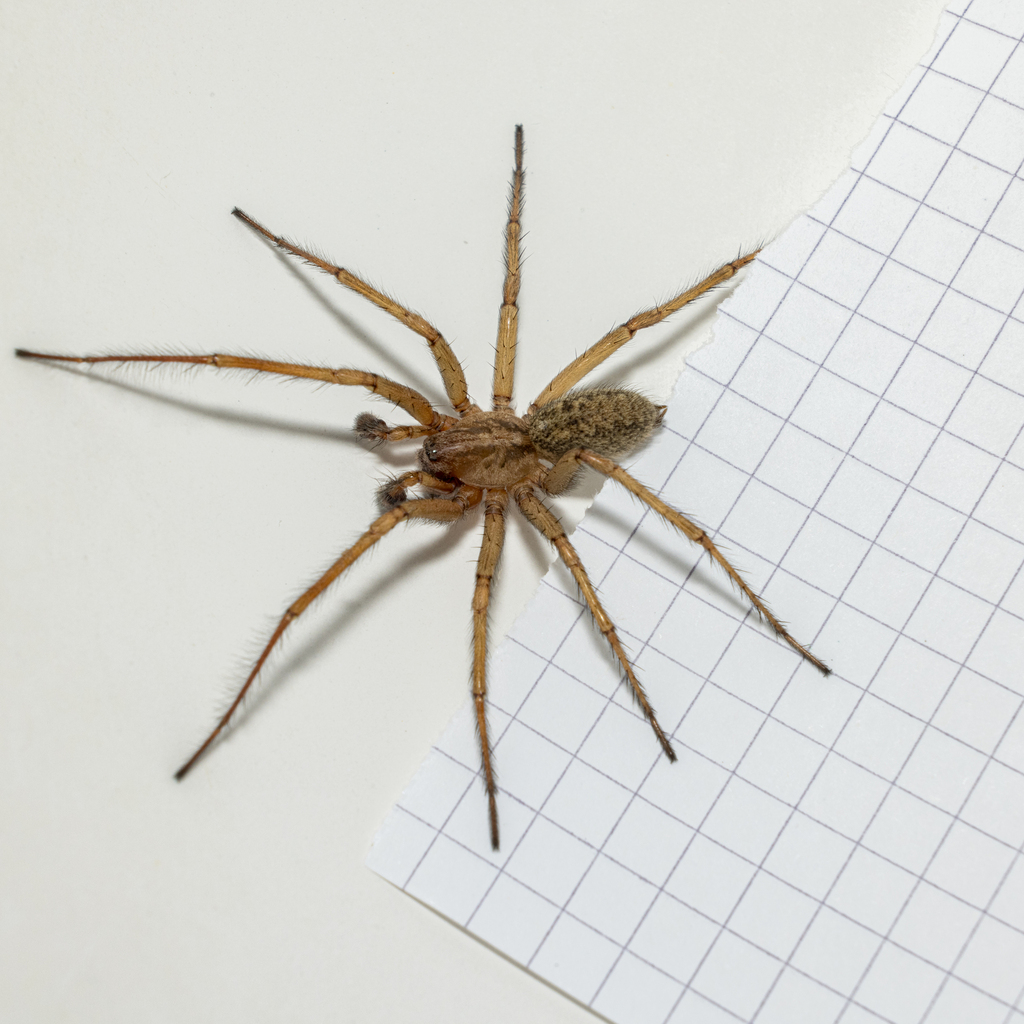
For decades, hobo spider bite reports were treated as a second "flesh-eating" species alongside the brown recluse, with early case reports linking the species to necrotic wounds similar to recluse bites. That reputation has not held up. More recent toxicology and entomology research — summarized in reviews cited by the CDC and university extension entomology programs — has walked the claim back significantly: controlled studies were unable to reproduce necrotic lesions from hobo spider venom, and the original case reports are now considered unreliable, likely misattributed bites from other causes. The current, better-supported picture is that most confirmed hobo spider bites cause only mild, self-limited redness and swelling, comparable to a wolf spider bite — not the necrotic wound the older reputation suggested. I want to say that plainly rather than repeat the older, disproven version of the story, because getting this one right matters: an outdated scare shouldn't be treated as settled fact just because it's the version that's been repeated the longest. What to actually do: treat a hobo spider bite like any other minor spider bite — clean it, ice it, monitor it for the first day or two, and see a doctor only if it's clearly worsening rather than settling down.
What actually separates a normal bite from a real emergency
After going through this myself, here's the plain version of the rule I use now, and the one I'd hand to any forager asking about dangerous spiders while hiking: almost every spider bite you'll ever get resolves like any other insect bite — some redness, some itching or soreness, gone in a few days. What should actually get your attention is a bite that keeps getting worse instead of better (possible recluse, especially if a blister or ulcer is forming), or one where pain and cramping spread away from the bite site into other muscles (possible widow, especially with sweating, nausea, or a racing heartbeat). Either of those patterns is worth spider bite treatment from an actual doctor, not a wait-and-see approach — and if you're ever unsure, Poison Control's line at 1-800-222-1222 is free, fast, and staffed by people who field exactly this question routinely.
None of this means treating the woods, or your own woodpile, like a minefield. It means knowing the handful of details that actually matter — where each of these spiders tends to be, what a bite from each one actually looks and feels like, and which two of the four are worth real attention if something changes. That's the whole difference between fear and readiness. I'd rather have known this before that afternoon with the log. I know it now, and it hasn't kept me out of the woods for a single day since — it's just changed exactly where I put my hands.
Sources
- Cleveland Clinic. "Brown Recluse Spider Bite." — Diagnosis is typically clinical (wound presentation + history), since the spider is rarely seen at the time of the bite; no antidote exists, treatment is supportive.
- StatPearls / National Center for Biotechnology Information (NCBI). "Loxosceles Envenomation" / "Brown Recluse Spider Bite" clinical review. — Wound progression, tissue necrosis mechanism, and supportive-care-only treatment approach.
- National Poison Data System, via Poison Control (poison.org). Black widow spider bite overview. — Approximately 2,600 black widow bites reported annually; latrodectism (systemic muscle pain/cramping) symptom pattern.
- CDC / university extension entomology reviews. Hobo spider (Eratigena agrestis) toxicology summaries. — Reassessment of the historical "necrotic" hobo spider bite reports; current evidence supports mild, self-limited bite presentation in most cases.
- Healthline & WebMD. Spider bite identification and symptom guides. — Wolf spider bites classified as painful but medically non-significant; general spider bite first-aid and when-to-seek-care guidance.
Field safety doesn't stop at spiders, either — if you're heading out for a real stretch of trail, it's worth reading up on water safety and filtration before you go, and if you're planning time on the Appalachian Trail, the Pacific Crest Trail, or the Adirondack High Peaks, our trail-specific forager's guides cover the same kind of practical, afield-safety ground as this one.
— James Conklin, Founder, Spore & Scout